


If you’re serious about organic growth, you’ve probably narrowed your all-in-one toolkit to two names: Ahrefs and Semrush. Both are mature, fast-moving platforms with huge datasets, lots of automation, and thriving user communities. But they’re not identical. One tends to shine for deep backlink intelligence and speed to insight, the other for end-to-end marketing coverage that stretches beyond SEO into PPC, social, and now AI-search visibility. So, what’s better, Semrush or Ahrefs?
Below is a clear, up-to-date Ahrefs Semrush comparison from NeedMyLink that calls out the differences that actually matter in day-to-day work – pricing, limits, trial options, databases, and strengths by use case.


🤔 Introduction to Ahrefs and Semrush
These platforms are among the most popular SEO tools, each with over a decade of proven trust and credibility. Ahrefs started primarily as a backlink analysis tool, and it remains one of the strongest players in link-related data. Semrush, on the other hand, grew as a full-scale digital marketing suite.
This side-by-side Ahrefs or Semrush table shows what actually feels different in daily work. Use it to decide which tool matches your workflow today – not an abstract “best overall.”
| Area | Ahrefs | Semrush |
| Backlink analysis | Huge live link index with fast refresh; crisp filters and charts. | Massive backlink database with continuous updates and flexible filtering. |
| Keyword research | Strong SERP-level detail; reliable difficulty and clicks data. | Giant keyword databases across many regions; rich intent and trend views. |
| Site audits | 170+ issue checks; “always-on” crawling and IndexNow options. | Clear errors/warnings; generous crawl limits on higher tiers. |
| Rank tracking | Weekly by default; daily available via add-on. | Daily updates included. |
| Content & social | Content Explorer, AI helpers; lean social scheduling. | Full content toolkit, social suite, and reporting. |
| Competitor intel | Content Gap, Link Intersect, SERP history. | Market and traffic research add-ons, robust competitive views. |
| Local SEO | GBP Monitor add-on. | Dedicated Local suite (GBP, listings, map rank tracking) |
| Learning & support | Help Center, Academy. | Help Center, Academy, and Product News. |
There isn’t a single definitive answer to the question: What is better Ahrefs or Semrush? – unless you’re reading a sponsored article. Pick based on the job, not the logo. If you’re chasing link opportunities, doing fast SERP checks, and want clean, focused UX, Ahrefs fits that rhythm. If your team plans campaigns end-to-end – keyword research, briefs, publishing, social scheduling, and daily tracking – Semrush keeps more work in one place.
📋 Core Reasons to Use These Tools
Both Semrush and Ahrefs cover the core areas of SEO. In the following sections, we’ll examine and compare Semrush Ahrefs across main services, unique features, user experience, and pricing.
🔗 Backlink Analysis
Which is better for backlink analysis, Ahrefs or Semrush? Both tools surface referring domains, anchors, new/lost links, and toxic patterns. Ahrefs excels at speed and clarity. The backlink index is frequently updated and powers Site Explorer metrics, like Domain Rating and URL Rating. That cadence makes “new/lost” views and link-gap analyses feel timely.
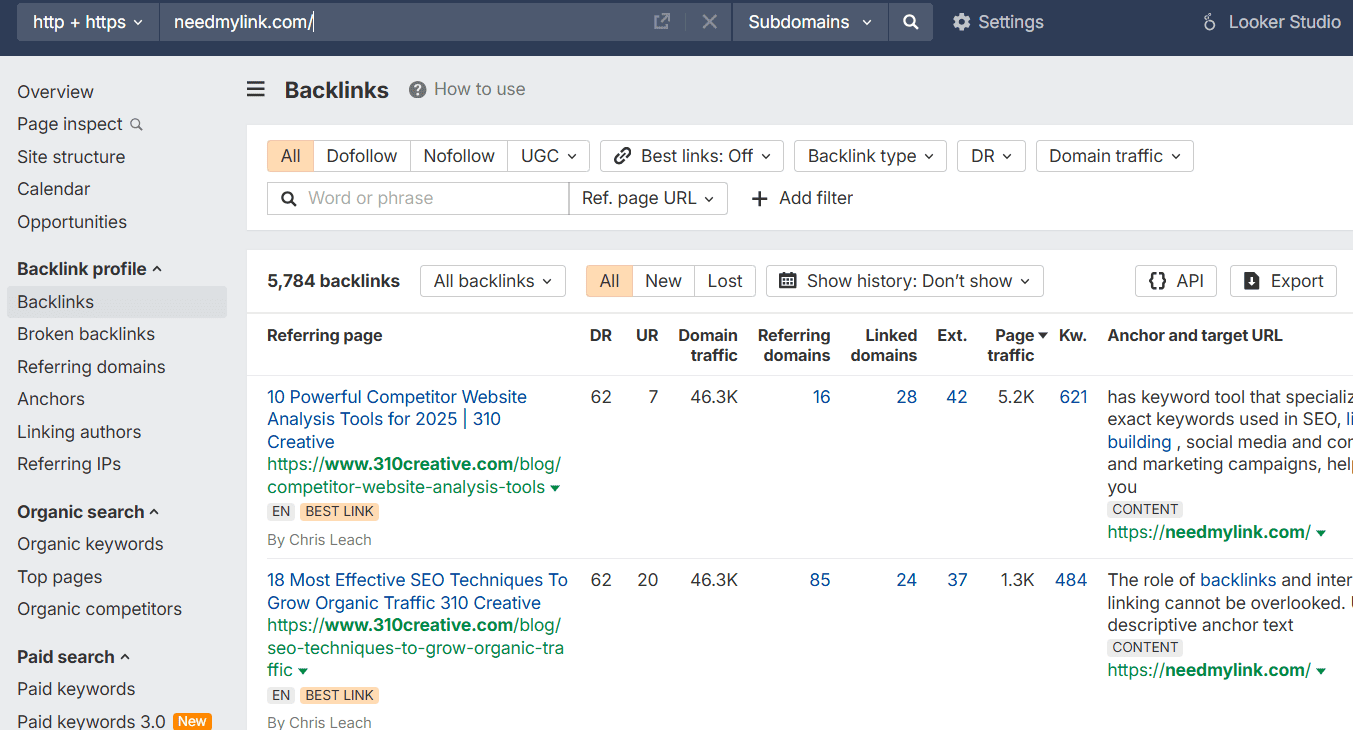
Semrush runs a very large link database (touting 43 trillion links) and continuously updates. Its Backlink Analytics adds handy filters (by type, anchor, IP, “lost,” etc.) for granular hunts.
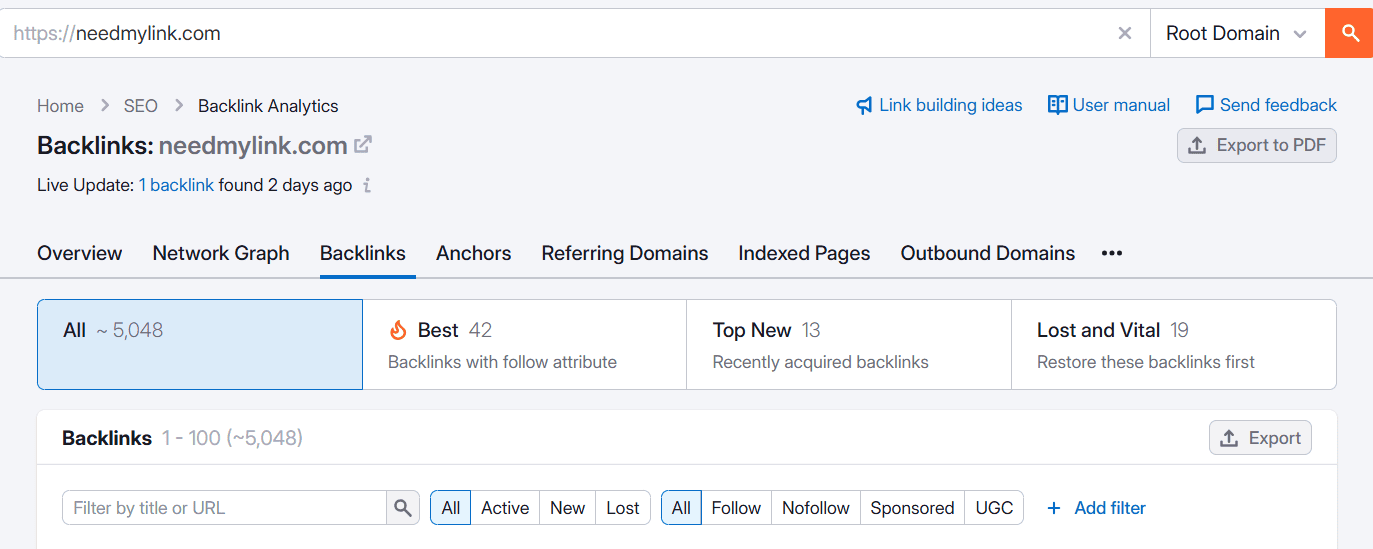
Even when you analyze the same site on both platforms, the numbers don’t match. Still, the estimates are close enough to provide valuable insights. To decide which works better for your site, run the same domain through both and see which one uncovers more actionable opportunities. Don’t just consider bigger Semrush vs Ahrefs totals.
🔑 Keyword Research
If your day starts with “what can we rank for next?”, both tools get you there – but they take different paths. Ahrefs is built for fast validation. In Keywords Explorer, you can pull SERP snapshots, check clicks per search (how often a query actually receives clicks), and jump straight from a term to the pages and authors that already earn links for it. That “from idea to proof” loop is tight, which helps you avoid chasing keywords that look big but don’t deliver traffic because answers are satisfied in SERP. For discovery, Content Explorer lets you mine billions of pages with filters for freshness, authors, and links – handy when you’re shaping an angle or mapping outreach.
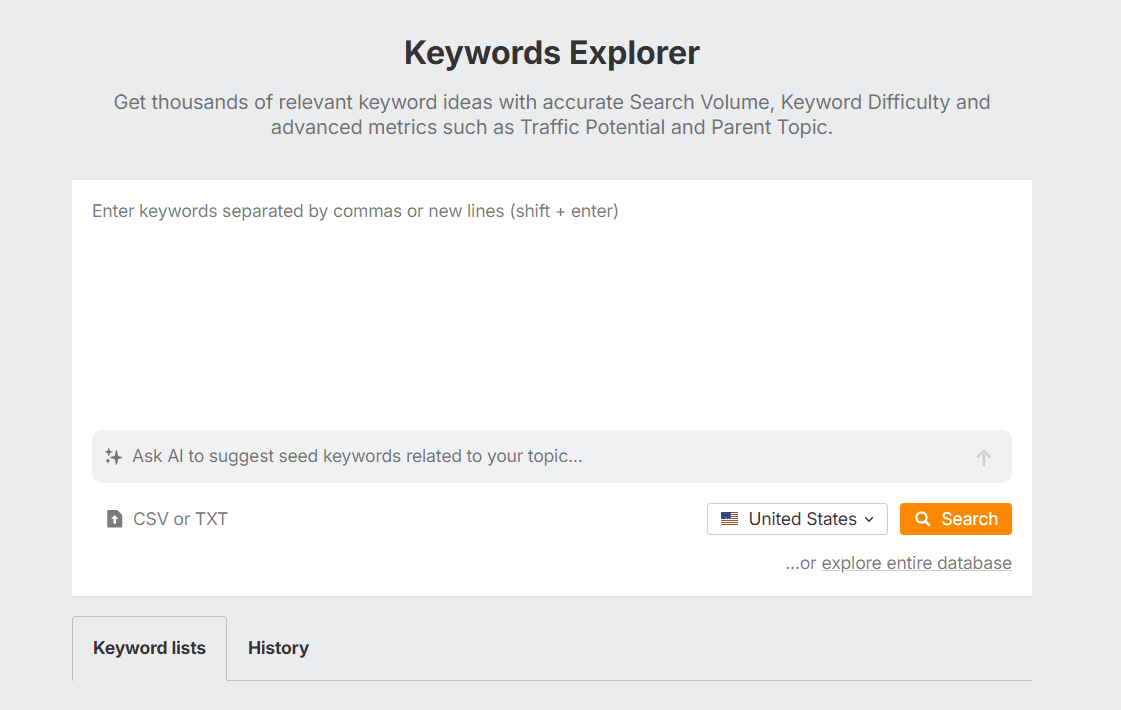
Semrush leans into scale and workflows. Keyword Overview gives a clean top-level read on volume, trend, CPC, and competition by country and device; then the Keyword Magic Tool explodes your seed into clusters with built-in intent labels (informational, navigational, commercial, transactional). This makes it easy to sort ideas by funnel stage and build topic maps fast.
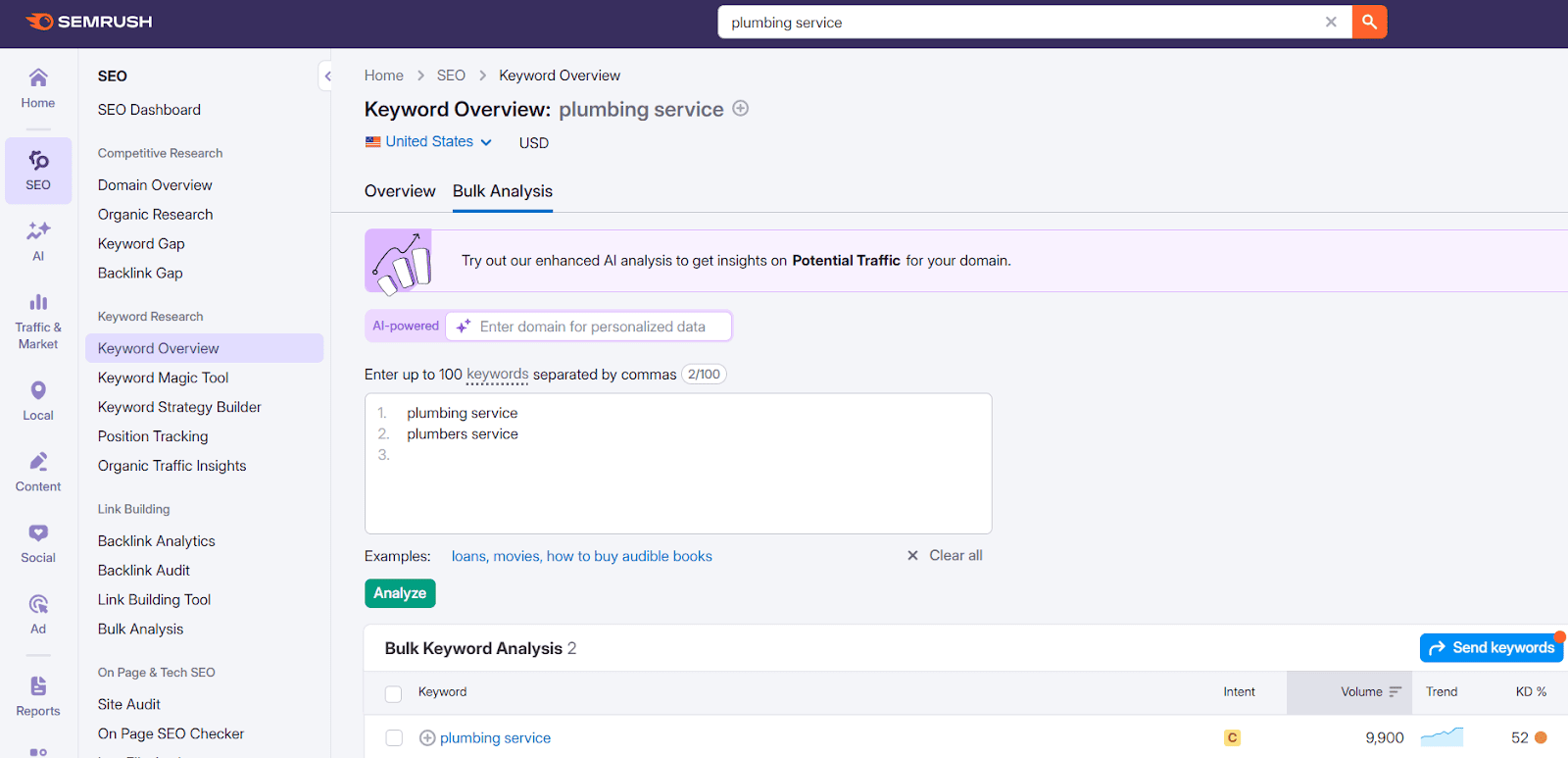
Use Ahrefs when you care about SERP reality and click potential (great for saving time on low-click terms). Use Semrush when you need a very large idea set you can cluster and brief at scale. That’s the core takeaway from Semrush vs Ahrefs for keyword research.
🔍 Off-Page and On-Page Site Audit
To stay aligned with shifting algorithms and best practices, it’s important to run site audits in Semrush or Ahrefs on a regular basis. Ahrefs runs 170+ checks and now offers an Always-on audit mode that crawls continuously at a moderate pace, prioritizes important pages, and emails alerts when issues pop up. It also integrates IndexNow – so your updates get pinged to participating search engines – and introduces Patches, one-click fixes for simple issues you can apply right from the report. This mix makes it strong for continuous monitoring and quick remediation.
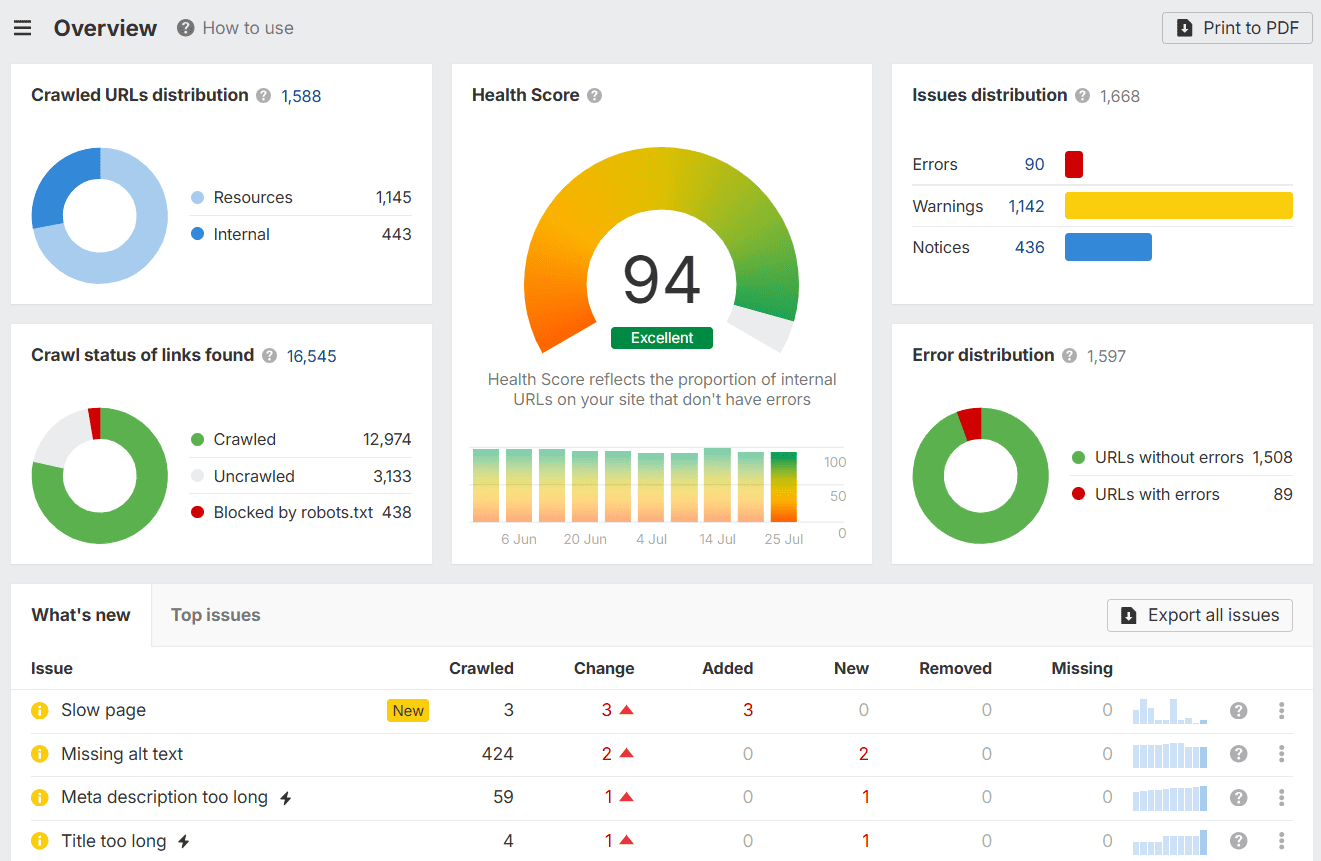
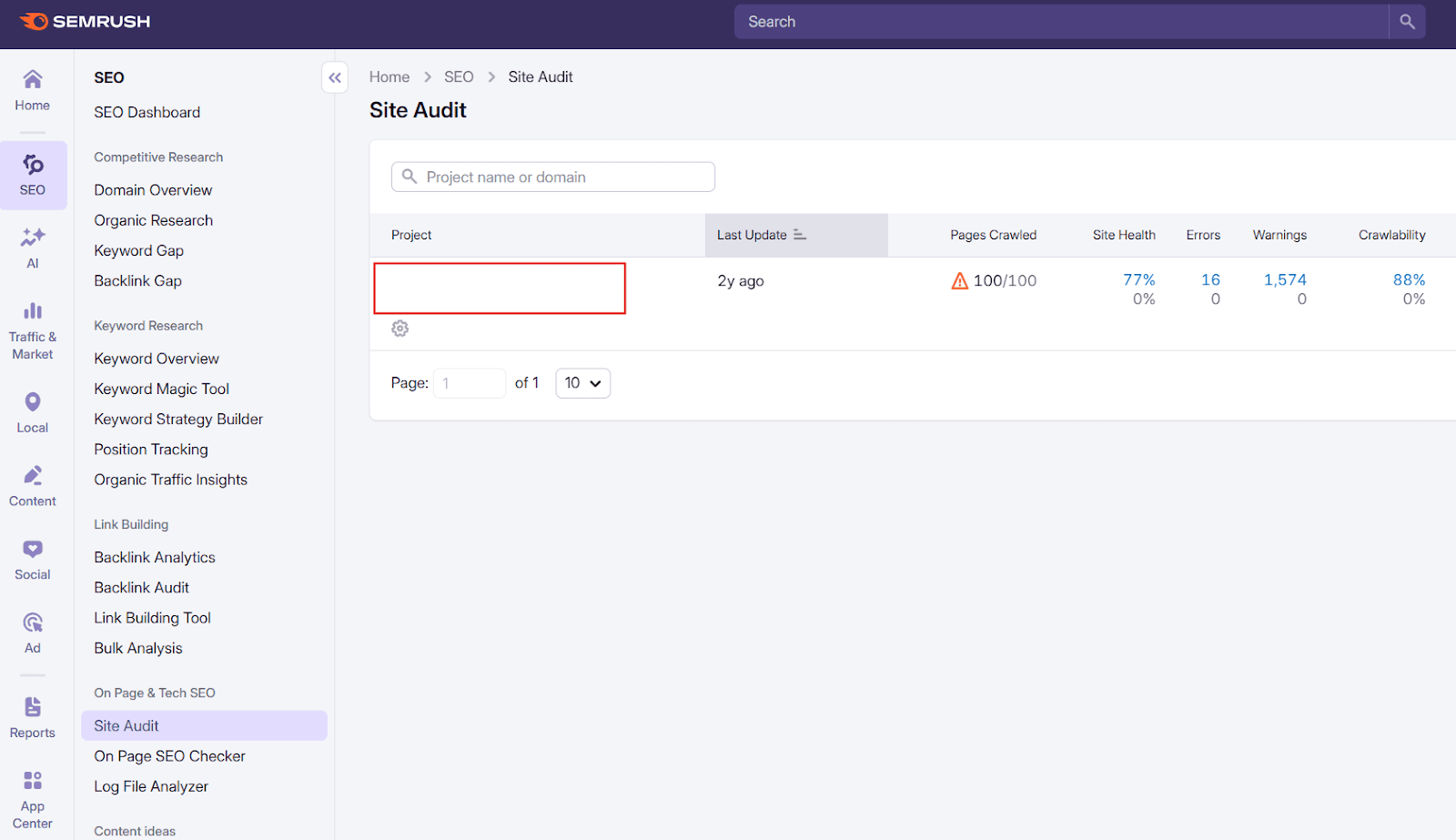
Semrush gives you clear health scores and sorts problems by severity. On higher tiers, monthly crawl capacity scales up to 1 million pages, which is useful for large sites or portfolios. For on-page refinement, the On Page SEO Checker suggests content and technical ideas per URL.
📈 Rank Tracking
Semrush or Ahrefs comparison is most noticeable when you dig into SERP results. Semrush Position Tracking updates daily by default, supports city-level locations and device targeting, and stores history for reporting – good for teams that monitor swings or run frequent tests.
Ahrefs Rank Tracker updates weekly on base plans; you can buy Project Boost Max to switch a project to daily updates. If day-by-day movement matters, include that add-on in your math (commonly cited as ~$200 per project/month). Use as the rule of thumb: weekly is fine for steady programs; daily is better for volatile SERPs, heavy PR cycles, or experimentation.
✍️ Content Marketing
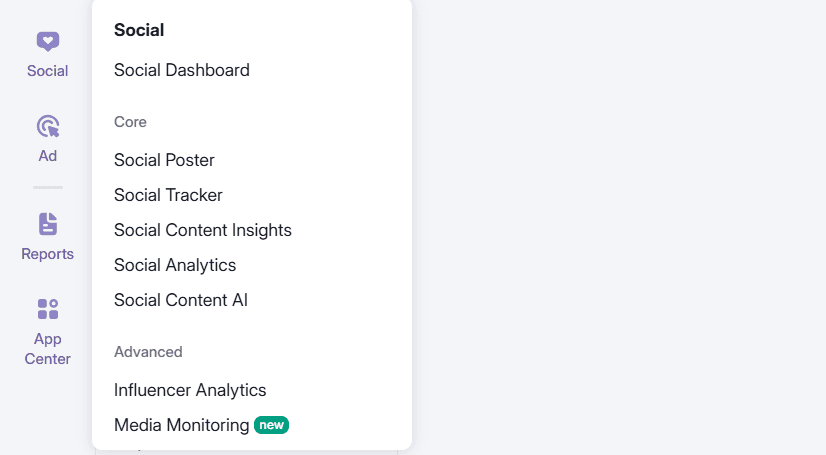
If content is your main pipeline, choose based on how far you need the tool to stretch beyond SEO. Semrush provides a full content workflow: plan topics, generate drafts with Brand Voice (trainable on your writing samples), optimize with the Content Toolkit, and push updates alongside a built-in Social Toolkit for scheduling and analytics. It’s designed to keep briefs, drafts, and distribution in one place.
Ahrefs brings strong ideation and prospecting through Content Explorer and now ships a Social Media Manager for planning and scheduling posts – useful if you want light social coverage inside the same platform you use for SEO. Pair that with its AI-assisted writing helpers when you need drafts or outlines. For idea validation, link-savvy research, and a leaner social layer, Ahrefs fits well. And for end-to-end content ops and reporting, Semrush feels like a hub.
🕵️♂️ Tracking Your Competitors’ SEO
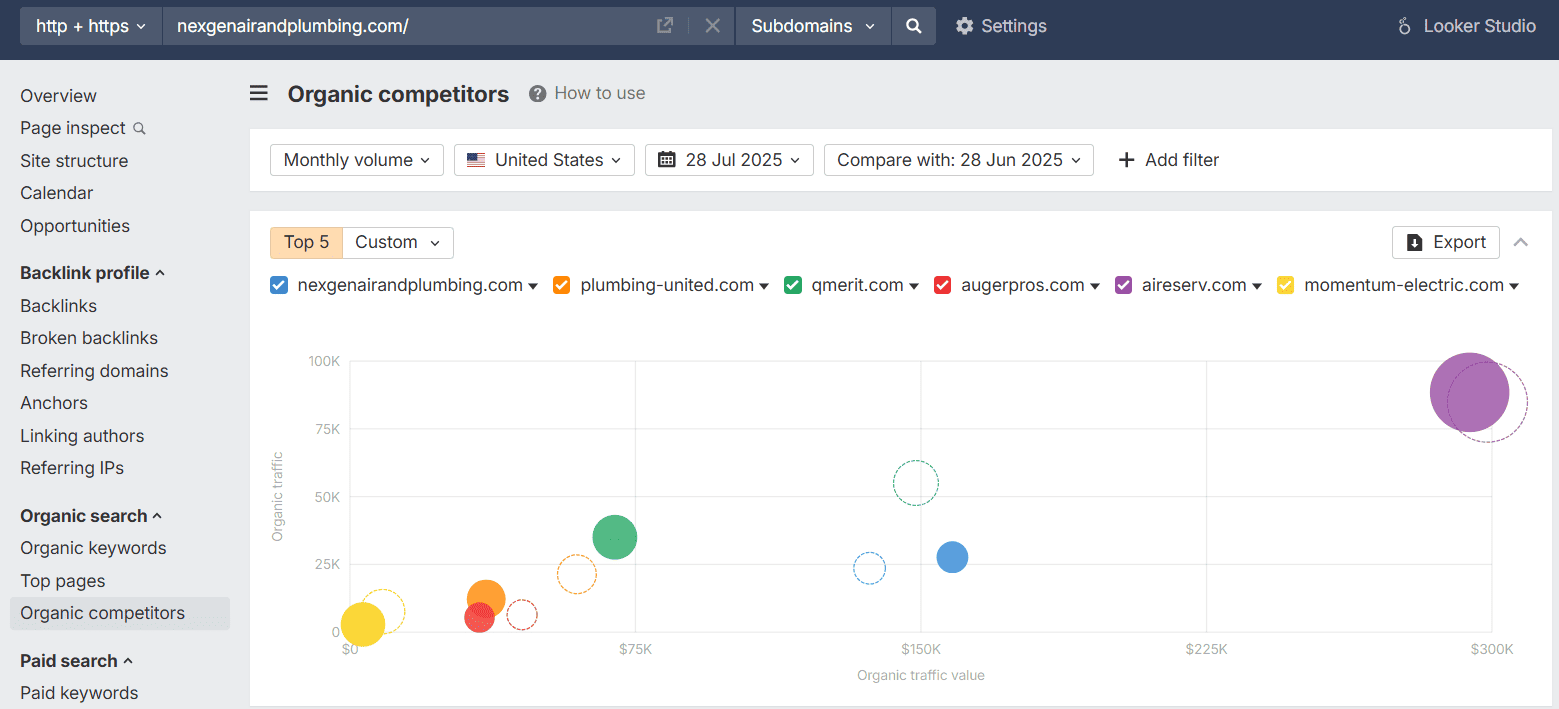
When it comes to Ahrefs vs Semrush competition research, Ahrefs Site Explorer is built for speed. You can inspect any site’s organic, paid, backlink, and even AI-answer visibility; then jump into Content Gap (keywords they rank for that you don’t) and Link Intersect (sites linking to them but not you). Ahrefs also offers “Organic competitors” views to surface overlapping rivals. This combo is excellent for turning research into outreach and content priorities fast.
Semrush provides multiple competitor angles, too. The Organic Research, Competitors report lists domains with the most shared keywords; from there, Keyword Gap compares you against up to several rivals to reveal opportunities by intent or match type.
Pick the tool that fits how you act on findings. If you live in link outreach and rapid SERP deconstruction, Ahrefs feels faster. If you need overlap lists that flow straight into content planning and reporting, Semrush keeps more of that workflow connected.
📍 Local SEO
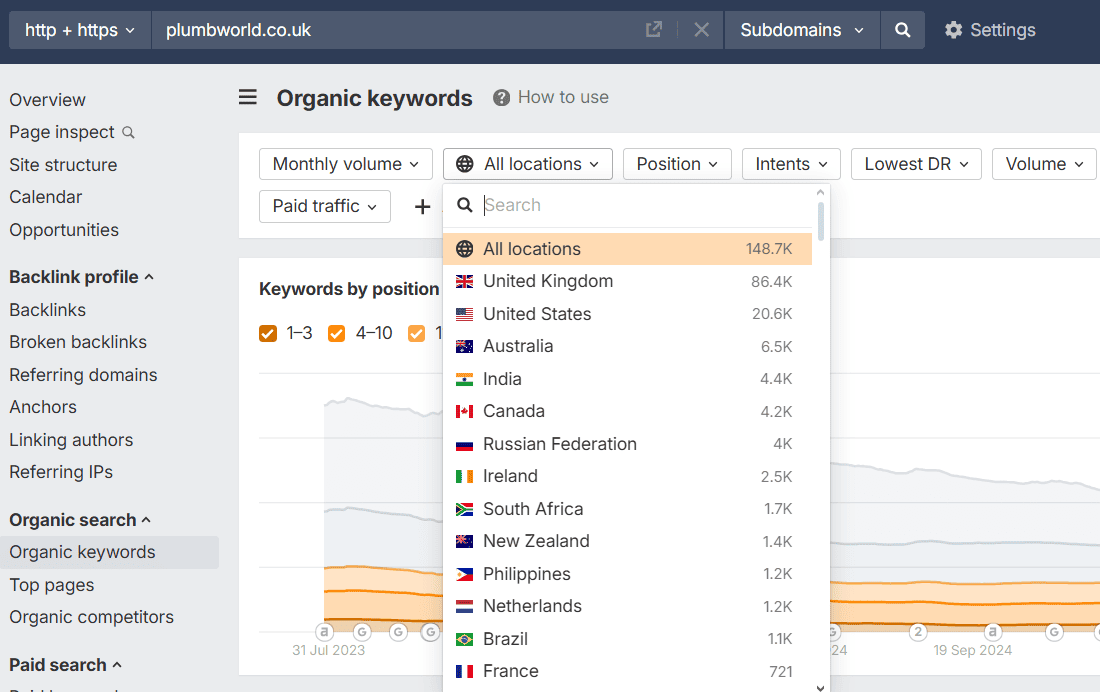
With Ahrefs, you can easily see which keywords a site or page ranks for in different countries, and filter results by specific regions. Recently, Ahrefs introduced the GBP Monitor, a tool that tracks visibility and performance across Google Business Profile. For teams already using Ahrefs for SEO, this integration is a practical addition, allowing you to keep local insights within the same workflow without switching platforms.
Semrush Local, however, takes things further. It includes Listing Management to keep business details consistent across directories, GBP optimization tools, and advanced map rank tracking to measure visibility across different parts of a city or region. It also supports managing reviews and citations, making it a more comprehensive solution for agencies or businesses handling multiple locations.
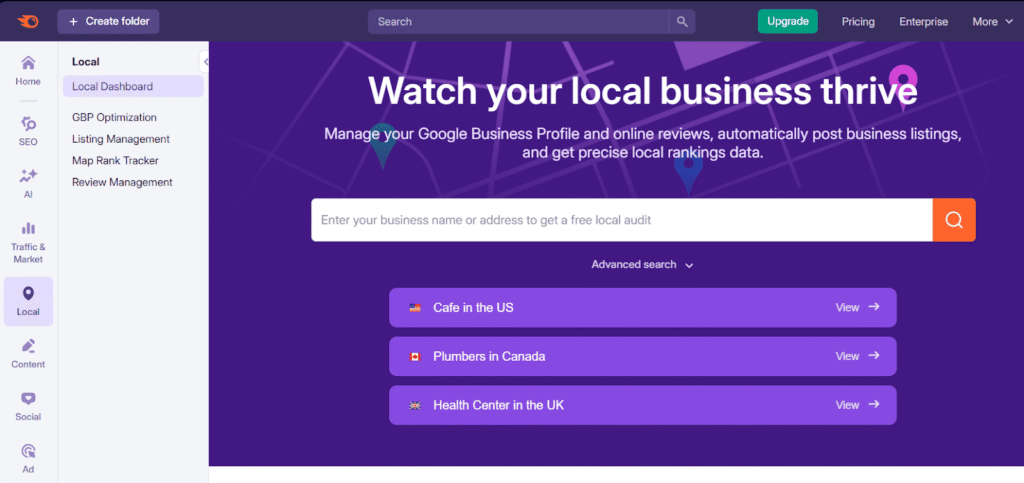
If you’re primarily focused on SEO and just need local visibility baked into your existing Ahrefs setup, the GBP Monitor does the job well. But if you’re running serious local campaigns – covering listings, reviews, citations, and multi-location management – Semrush’s Local toolkit is the stronger fit.
✨ Unique Features of Each Tool
Both platforms cover the SEO essentials, but in the Semrush vs Ahrefs battle, each has developed standout features that may tip the balance depending on your priorities. Ahrefs offers:
- Brand Radar. A relatively new feature that tracks brand mentions in AI-driven results like Google’s AI Overviews, ChatGPT, and Perplexity. This is especially useful as search shifts toward AI-assisted answers.
- Always-on Audits, IndexNow, and Patches. Continuous crawling with IndexNow integration means issues are flagged quickly, and the guided Patches make fixing them more straightforward.
- Free SEO Tools. A free package for verified site owners that includes scaled-down versions of Site Explorer, Site Audit, and Web Analytics. This makes Ahrefs accessible to smaller sites and site owners who may not need a full paid plan.
So, if you value link data, technical monitoring, and free tools for verified sites, Ahrefs’ extras will feel most useful. At the same time, Semrush presents:
- Content Toolkit. Supports the full content lifecycle: ideation, creating briefs, AI-assisted drafting through Brand Voice, and optimization. Ideal for content-heavy teams.
- Social Toolkit. Lets you schedule, publish, and monitor posts across multiple platforms directly from Semrush, turning it into more than an SEO tool.
- Local Add-ons and App Centerns. For agencies and local businesses, Semrush provides listing management, review monitoring, and map-pack tracking. Its App Center further extends functionality with dozens of integrations covering e-commerce, PPC, competitive intelligence, and more.
If your team manages content at scale, handles social campaigns, or runs multi-location businesses, Semrush’s ecosystem offers a broader marketing toolkit.
🖥️ User Experience and Design
There is little to no difference between Ahrefs and Semrush in terms of UI/UX. Both are easy and intuitive for new users. Ahrefs is renowned for UI clarity and speed. It’s easy to learn and hard to outgrow. Many practitioners love how quickly they can validate ideas without 20 toggles first.
Semrush, however, has a larger cockpit. The payoff is breadth (SEO, PPC, social, local, AI), but there’s more to configure. You need to invest a little more time so that it can become a control center for the whole marketing org.
If your team changes often (contractors, junior hires, etc.), Ahrefs’ “get-to-green-insights fast” experience reduces onboarding friction. If you’re a central team supporting multiple channels, Semrush’s integrations mean fewer tools and fewer logins.
🤝 Customer Support
Both Semrush and Ahrefs invest heavily in customer support, making it easy for users to get help, learn the tools, and stay updated on new features. Each platform maintains a well-structured help center with step-by-step guides, FAQs, and troubleshooting tips. Semrush leans on quick-start articles and “how-to” resources, while Ahrefs organizes its documentation with clear examples and visuals.
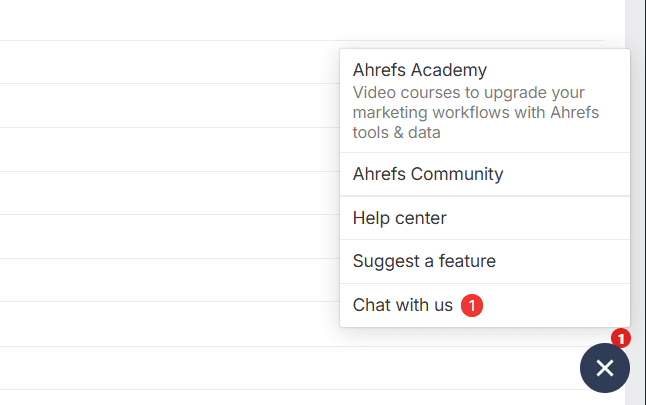
Both ecosystems provide free courses and certifications to help users improve their SEO and digital marketing skills. Semrush Academy, for instance, covers not just SEO but also PPC and content marketing, while Ahrefs focuses more narrowly on SEO fundamentals and advanced link-building tactics.
Ahrefs regularly publishes feature roundups and changelogs, so users can see what’s new at a glance. Semrush takes a broader approach, posting research studies, industry reports, and detailed product updates that highlight both new tools and workflow tips.
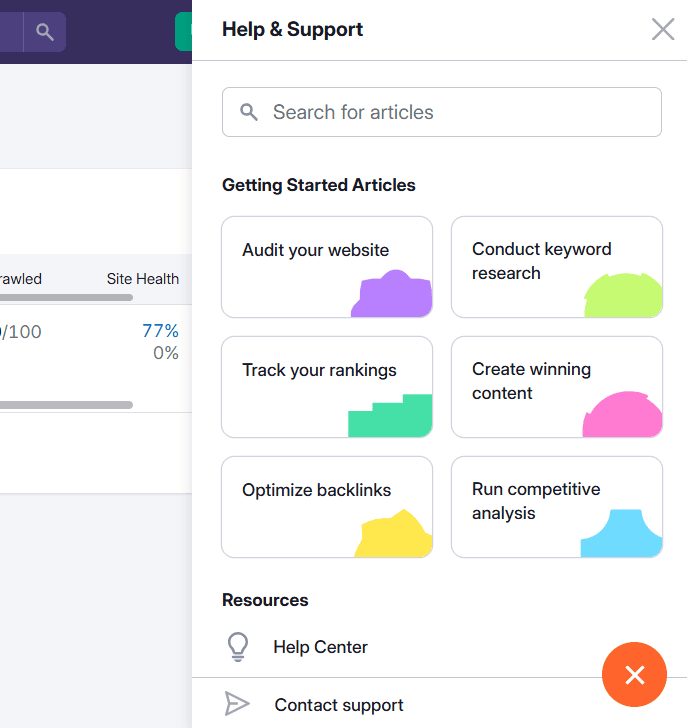
In practice, both support teams are responsive and effective at resolving problems. The main difference between Semrush and Ahrefs is breadth: Ahrefs keeps it simple and reliable, while Semrush layers on multiple support channels and richer educational content.
🗣️ Customer Reviews
When Reddit users compare Ahrefs and Semrush, they generally believe Ahrefs excels for focused tasks – particularly those involving backlinks and keyword deep dives. It’s favored for its clean interface, accuracy, and control when exploring link profiles and keyword performance. That said, some users also caution that Ahrefs’ pricing (especially since the implementation of credit systems) can be rigid or frustrating.
Meanwhile, Semrush is praised as a robust, all-encompassing platform. Its expansive array of features – spanning SEO, content, PPC, and competitor analysis – along with a more intuitive design, often earns it favor among generalists or digital marketers managing multiple channels. If you need a single tool for varied tasks with generous reporting and built-in workflows, Semrush is often seen as the smarter investment.
💲 Pricing Comparison
With new features rolling out regularly, pricing for both platforms changes over time – so it’s always worth double-checking official pages before subscribing. The amounts below are current as of September 2025.
| Platform | Core SEO Plans (monthly) | Notable Limits in the SEO tier | Trial / Free |
| Ahrefs | Lite: $129; Standard: $249; Advanced: $449; Enterprise: $1,499. | Examples: Lite includes 5 projects, 750 tracked keywords, 100k crawl credits; daily rank updates available via add-on; Enterprise adds API access. Also offers a Starter plan at $29/mo and Webmaster Tools (free, limited). | No free trial; Free SEO Tools; Starter $29 option helps new users test affordably. |
| Semrush | Pro: $139 or $117.33 (if billed annually); Guru: $249 or $208.33; Business: $499 or $416.66. | Pro: 5 projects, 500 tracked keywords, 100k crawl pages/mo. Guru: 15 projects, 1,500 keywords. Business: 40 projects, 5,000 keywords + API access. | 7-day free trial across toolkits; sometimes you can find 14-day trial offers. |
Ahrefs keeps its focus tight on SEO and backlinks, with the added flexibility of a low-cost Starter plan and free Webmaster Tools for small sites. Semrush is priced slightly higher on a monthly basis but includes a wider suite – covering SEO, PPC, content, and social – making it a stronger value for teams that want an all-in-one solution.
🗂️ Where Do These Tools Get Data?
Neither Ahrefs nor Semrush pulls its data directly from Google Search Console. They crawl the web independently and score links using their own formulas, so the totals won’t match.
Ahrefs runs its own crawlers (AhrefsBot) to build independent indexes of links and pages. Its documentation explains how the crawler schedules, parses, and indexes sites, and these datasets then fuel reports across the platform.
Semrush operates large keyword and backlink databases that span many countries. These databases are updated continuously, and the company publishes a public statistics page showing the current scale of its index.
No third-party tool can perfectly match Google’s own data. Treat the numbers as directional and compare trends, not exact figures. For decisions, look at the quality and freshness of discovered opportunities.
🏆 Which Tool Is The Best Overall Value?
Which is better Ahrefs vs Semrush? “Value” isn’t the cheapest price tag – it’s the shortest path from problem to result with limits you can live with. Look at four things: what job you do most often, how fast you need data to refresh (ranks, links, audits), how many teammates touch the platform, and whether you want one hub for multiple channels or a focused SEO workbench.
If your center of gravity is link building and quick SEO recon, Ahrefs often returns value faster. Its link index refreshes are frequent, the UI gets you from idea to prospects in a few clicks, and Content Explorer plus Link Intersect make prospecting feel immediate. Factor in that daily rank updates are an add-on (weekly is the default); if you genuinely need day-by-day movements, add that cost to your comparison. On the flip side, if your week spans SEO research, briefs, publishing, social scheduling, and daily tracking – with stakeholders expecting one report – Semrush usually wins on consolidation. You’ll trade a bit of simplicity for breadth, but you’ll also replace extra subscriptions and context-switching. A simple rule of thumb:
- Choose Ahrefs if you measure success in high-quality links found, gaps identified quickly, and clear SERP-level signals – and you’re okay with weekly ranks (or you’ll budget for daily).
- Choose Semrush if you publish at scale, manage social, report often, and want daily rank data included out of the box.
Plenty of teams end up with both: Ahrefs for deep backlink intelligence and fast validation; Semrush for planning, collaboration, and reporting. If you’re starting from zero, begin with the tool that matches your primary job today, prove ROI in one or two sprints, and only then expand. Alternatively, you can contact NeedMyLink to have the analysis done for you.
⁉️ FAQs: Ahrefs vs Semrush
-
If I switch tools, will my Domain Rating/Authority Score go up or down?
In terms of Semrush vs. Ahrefs, you shouldn’t worry about that. These are tool-specific metrics. A change after switching doesn’t mean your site suddenly got better or worse – only that the scoring system is different. Track one metric consistently over time inside the same platform.
-
Why do “toxic link” scores disagree between tools? Should I disavow everything they flag?
Each tool uses its own risk model. Use those flags to review links manually, not to mass-disavow. Look for clear-pattern spam, paid networks, or hacked pages before you act.
-
Are there any pitfalls with credit/limit systems?
That’s where the Ahrefs vs. Semrush difference becomes clearer. With Ahrefs, you need to plan your month. Bulk pulls and wide filters can burn through credits faster than you expect. Create saved reports, focus on a few markets at a time, and archive projects you’re not actively using.


