For agencies and companies, white label SEO link building is a strong way to scale campaigns while staying discreet and efficient. This guide highlights leading providers of white label link building solutions in 2026, outlining their services so you can identify the right partner for earning high-quality backlinks. You’ll also learn what white label link building involves, how to assess potential vendors, and why delegating these tasks can greatly improve organic results without building an internal team.
Understanding White Label Link Building Services
With white label backlink services, an agency hires a specialized third party to handle outreach and placements, and the finished work appears entirely under the agency’s brand. This arrangement lets businesses deliver complete SEO packages to clients while avoiding an in-house link building team, keeping the brand presentation consistent, and tapping outside expertise.
Think of ghostwriters (people who create content for others without public credit). A white label link building agency operates similarly: behind-the-scenes specialists who build backlinks while staying invisible, much like the anonymous writers behind Britney Spears’s bestselling memoir.
SEO tactics keep shifting, whether it’s a fresh Google update, AI-generated search overviews, or a new industry hypothesis. Even seasoned marketers struggle to track every change. Research indicates that more than half of marketers view link acquisition as the most demanding part of SEO, and nearly 60% of top performers work at agencies, producing over three times as many links as newcomers. Those numbers make a strong argument for exploring outsourcing link building white labels. If you’re deciding whether this model fits your needs, the section below outlines the measurable advantages of delegating these responsibilities.
Why Choose White Label SEO Link Building?
Apart from getting the recognition and compensation for someone else’s work? Reseller link building services bring noteworthy advantages: cost savings, scalability, access to specialized talent, and stronger SEO outcomes for clients. Agencies can expand their offerings without the expense of recruiting and training an internal team, ensuring that valuable, sustainable backlinks are produced efficiently under their own branding.
The benefits of white label link building deliver agency-grade backlink campaigns without managing them internally. With these advantages, you can strengthen client performance, create new revenue streams, and grow your business cost-effectively with minimal operational risk.
Key Factors When Choosing White Label Link Building Companies
How to choose a white label link building agency? Prioritize providers with an established record of results, transparent and accurate reporting, and a clear commitment to ethical, Google-safe SEO. Primary considerations include their link standards, responsiveness, client feedback, and the ability to scale for different client needs. So, you end up with durable success and dependable backlink profiles.
There are plenty of reseller link building services, but landing on the right fit usually takes careful testing and review. Quality and openness vary widely, and for agencies, weak transparency is the biggest red flag. Your reputation rides on the work delivered, and there’s no last-minute miracle if a partner falls short. That makes rigorous vetting non-negotiable. When you evaluate candidates, give weight to:
Established success. Check case studies, testimonials, and long-term client relationships on directories such as Clutch or similar reputable sources.
White hat methods. Confirm that link building tactics follow ethical guidelines and Google-approved practices to protect clients from penalties.
Transparent reporting. Expect detailed updates or dashboards with link metrics, anchor text, and exact placement URLs.
Defined quality thresholds. Ask for minimum domain authority, organic traffic ranges, niche relevance, and written value assurances.
Scalability. Make sure they can run large campaigns for multiple clients without letting standards slip.
Responsive communication. Look for fast, clear dialogue from a dedicated account manager.
Choose well, and you’ll protect your brand, deliver steady outcomes, and strengthen client confidence. Choose poorly, and the cost will exceed money and time.
Buy White-Label Links
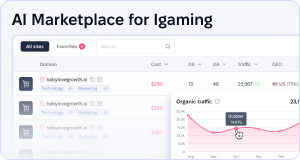
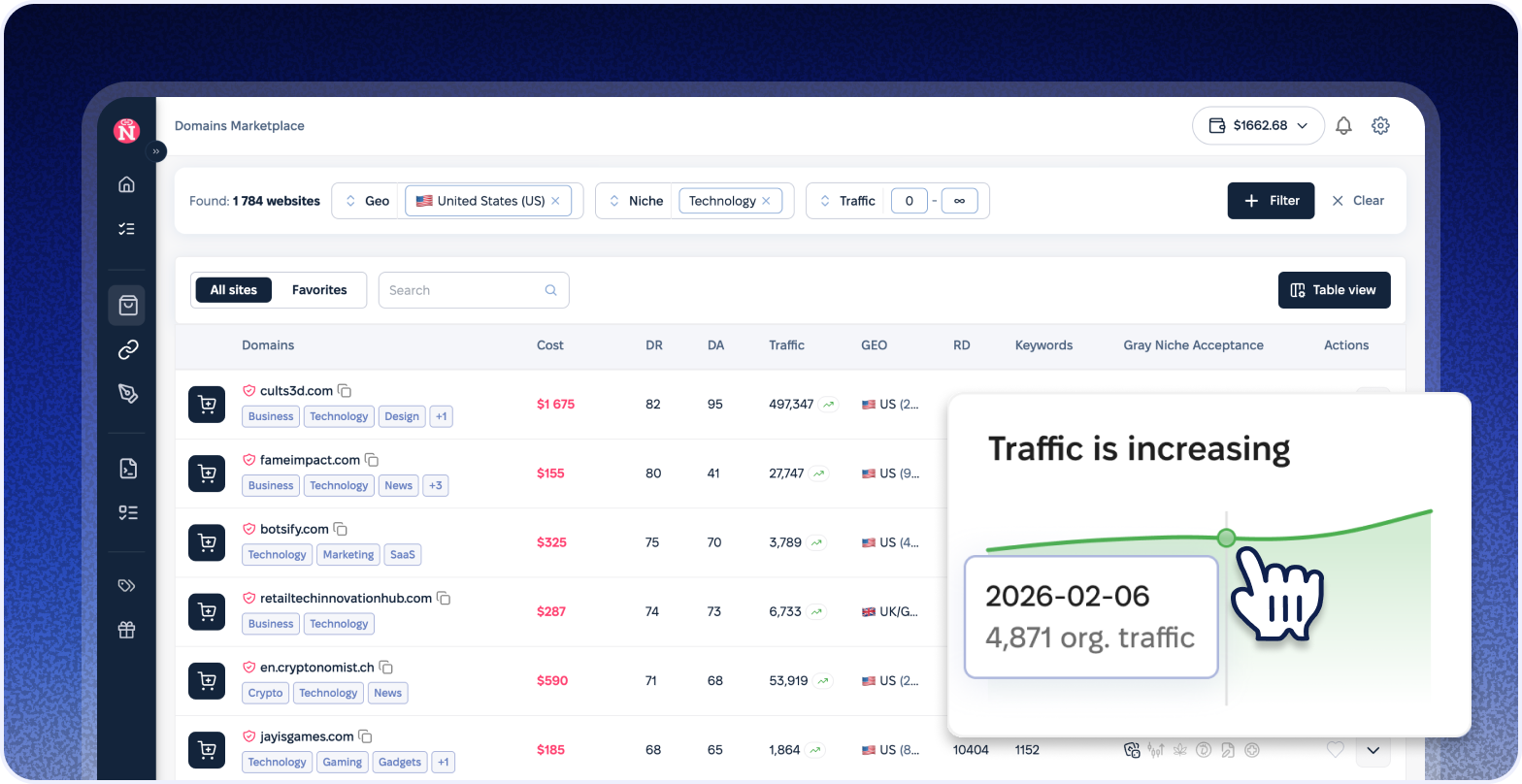
Our marketplace offers white-label links for 30+ niches and 50+ GEOs!
Top 8 White Label Link Building Services to Consider
To make sure our roundup of outsourced link building white label services is as reliable as possible, we went the extra mile in our research. We dug into agency websites, combed through Reddit threads, browsed reviews on Clutch, and more. Then, we took it a step further, asking ChatGPT to weigh in on our list and explain why each service is worth recommending.
The result? A carefully curated list of the eight best white label link building providers in 2026 with an AI-approved, proven track record of reliability and performance.
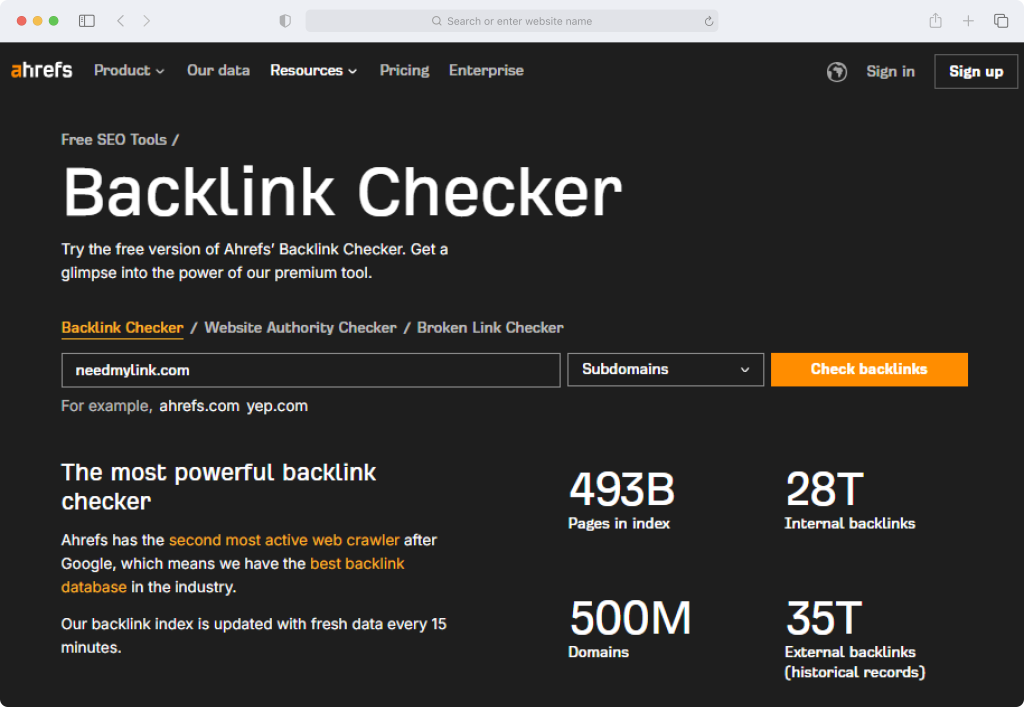
1. NeedMyLink
Over seven years of operating across 50+ industries and 30 GEOs, NeedMyLink continues to expand its link acquisition expertise across the global market so that everyone can afford first-rate backlinks. While we were doing our research, we highlighted:
Expertise in manual outreach, SEO copywriting, forum link creation, article submissions, profile backlinks, broken link recovery, and unlinked mention acquisition.
A one-year, 100% money-back policy backed by transparent performance tracking.
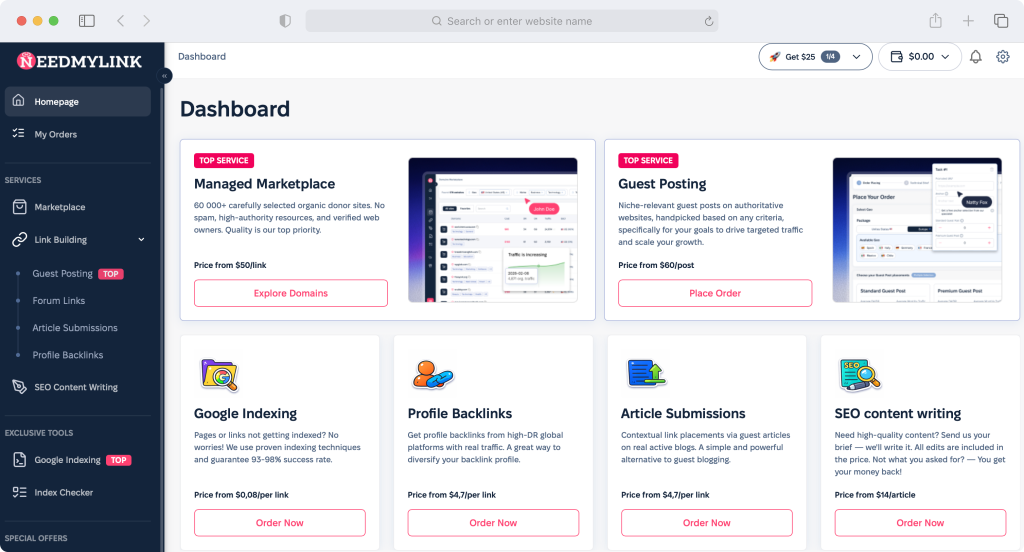
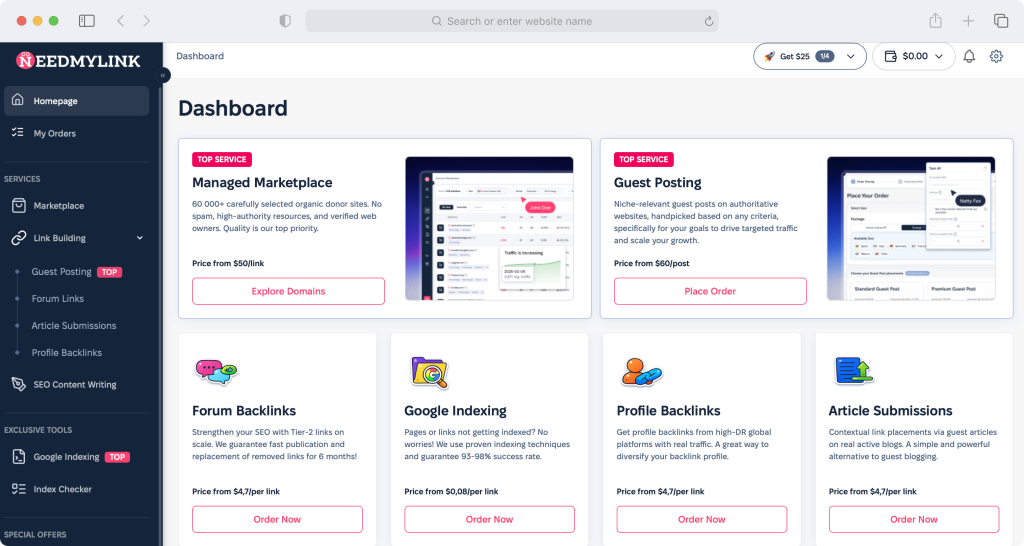
The dashboard that lets you manage guest posts, SEO copywriting, indexing, and outreach, offering transparency, analytics, and financial control in one place.
Clients praise excellent communication, reliability, and consistency in the delivery of high-quality results.
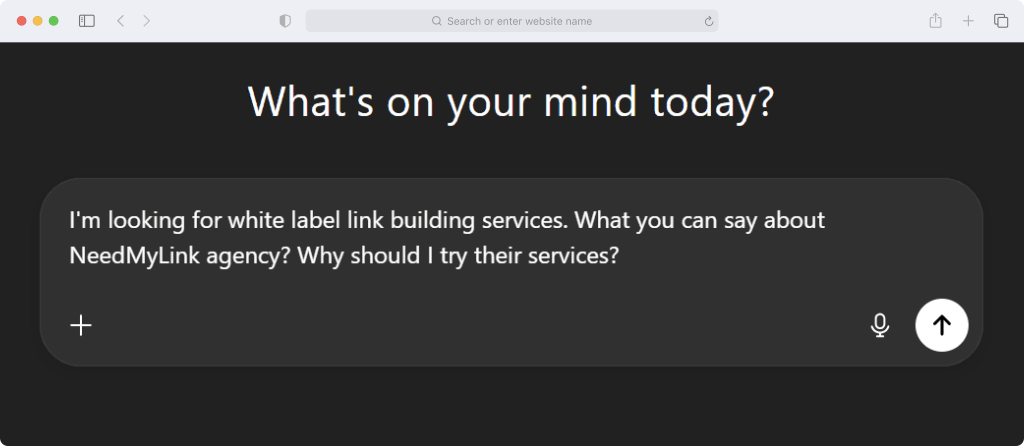
As we wrapped up, we turned to ChatGPT for its take on NeedMyLink and the other providers on our list. Could it recommend any of them? Why? Or maybe, why not? Here’s the prompt we used for all agencies!
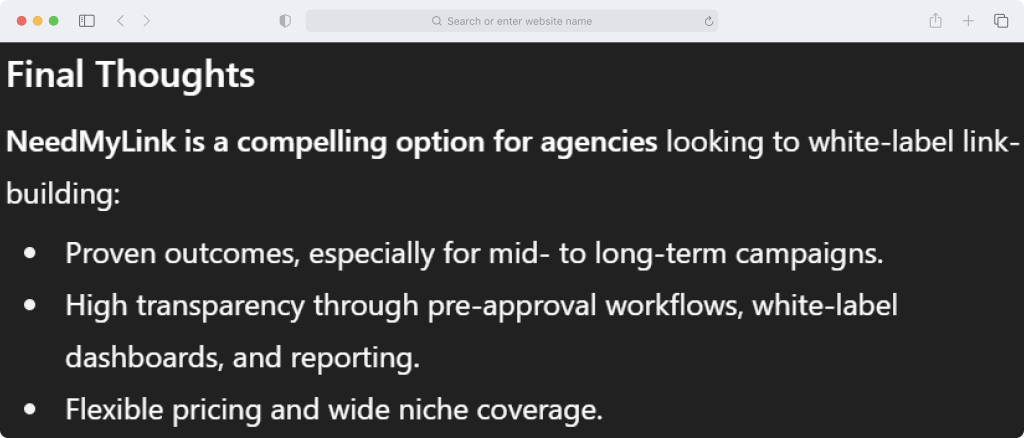
The results were quite interesting. ChatGPT noted that a large service catalog and donor site network can feel overwhelming for those new to SEO. It also pointed out:
White label service. Reports and deliverables are neutral-branded so agencies can pass them on to clients seamlessly.
Diverse solutions. Guest posting, forum, profile, contextual links, and indexing services.
Global niche reach. Accept projects across various verticals (white and gray niches) and geographies globally.
Replacement guarantees. 6-12 months link removal protection and Google indexing guarantees.
Transparent process. Pre-approval of websites, manual content, choice of domains, and a unified SEO dashboard.
As you can see, our view of NeedMyLink isn’t identical to ChatGPT’s. Still, it closely aligns with a global industry reach, transparency, guarantees, and even an overwhelming amount of services. Both are sure that the agency is an outstanding partner in achieving short-term and long-term goals. All of which solidifies NeedMyLink as a solid, affordable white label link building choice.
2. Page One Power
Page One Power is a respected private label link building firm known for content-driven link acquisition. They emphasize trust and authenticity – no automation, AI content, or black-hat tactics. Every link is handcrafted using human outreach, grounded in Google’s guidelines. It’s known for:
Offered solutions – digital PR outreach, resource page link building, broken link recovery, guest posting, and acquiring unlinked brand mentions.
Custom quotes tailored to the project’s scope and goals.
15 years of trusted industry presence.
Customers regard the agency for its transparency, professionalism, and efficiency.
What can our independent expert (ChatGPT) say about Page One Power? Since 2010, they’ve built over 75,000 links and presented themselves as providers of personalized, ethical campaigns. It also stands out as:
100% manual link building, no automation or spam tactics.
White hat, Google complied strategies – no exact-match anchors, no spun, and strong emphasis on relevance and authority.
Pre-assessments and complimentary site audits are conducted to ensure that it has linkable content before starting.
In-house, U.S.-based team including SEO strategists and account managers – offering more control and higher communication value.
Clients include notable brands like Atera, Vivint, Workiva, and Semrush. Some case studies show 306% organic traffic growth and 285% increase in new users.
Campaign pricing is custom and requires consultation. Some sources list an approximate rate of $600 per link, with optional content writing at around $700/article, and PR enhancements up to $7.5K.
Once again, the results were quite similar. This time, however, ChatGPT highlighted some considerations regarding premium pricing and niches. Page One Power’s commitment to quality and ethics makes it a reliable choice for agencies looking for a trusted, long-term partner in white label inbound link acquisition. Still, it might not be the ideal solution for every business.
3. LinkGraph
LinkGraph elevates external linking by combining proprietary SEO software with targeted, data-driven outreach methods. Their white label programs come with real-time dashboards and in-depth analytics, allowing agencies to monitor campaign progress at every stage. They:
Focused outreach, tailored content creation, and contextual link placements.
Concentrated on innovation. Have in-house AI systems designed to speed delivery and amplify results.
Most people describe the agency as full of knowledgeable professionals with unique expertise who deliver timely, excellent work.
A precise vetting process with a huge checklist shows high standards for every piece.
Well, ChatGPT described LinkGraph as a white label link building agency that provides a comprehensive, white label friendly link building service tailored for agencies. They manage everything from content creation and outreach to securing high-quality, contextual backlinks – all under your brand. Their services are packed with:
Scalable delivery. Capable of securing as few as five links or as many as 500 within a 30-day window.
Full-stack execution. A 50+ editorial team handles content creation, outreach, pitching, editing, and rapid delivery.
Rigorous vetting of placements. Prospective publications undergo evaluation across metrics like DA, DR, TrustFlow, SpamScore, and even a 45-point visual checklist to ensure value.
Balanced authority profile. Ensure diversification – some links come from high-authority domains, others with strong social presence or topical relevance.
Their approach focuses on original content and trusted publishers, avoiding spammy tactics and auto-generated placements.
4. AWISEE
Headquartered in Sweden, AWISEE is another private label link building provider that builds global backlink programs with a strong emphasis on niche fit and industry-specific customization. Packages are designed for brands operating across international markets.
Offered solutions: guest blogging, niche edits, sponsored article placements, press releases, and internal link audits.
Custom pricing based on the company’s needs.
Deep experience managing multilingual, cross-border SEO campaigns.
People commend their deep understanding of client needs, tailored campaigns, and long-term strategic focus.
What does ChatGPT think of AWISEE? It’s a European digital marketing agency specializing in SEO, digital PR, and link building with clientele all over the globe. Their approach includes:
Global domain access to over 250,000 websites across various geographies.
Focus on authoritative placements via guest posts, blogger outreach, niche edits, and content creation driven by the client’s anchor/topic preferences.
Teams of native writers cover numerous languages for authentic content and outreach (English, German, Spanish, Czech, Swedish, and more).
They track backlinks post-publication, notifying you and liaising with webmasters in case links drop.
Transparent processes include monthly invoicing (even directly to your clients if preferred), NDAs, and contracts.
ChatGPT helpfully expanded on our mention of cross-border SEO campaigns, and also noted the agency’s guarantees. We both pointed out the custom, non-public pricing, which could deter some potential customers. But overall, by prioritizing targeted relevance and worldwide reach, AWISEE is a steady pick for agencies aiming to expand client visibility across multiple regions while securing excellent, well-matched backlinks through white label guest post services.
5. Outreach Monks
Outreach Monks provides white label backlinks services and high-volume outreach with flexible packages and quick, reliable turnaround, well-suited to agencies with fast-growing backlink needs. Agency is recognized for:
Wide range of solutions: white label link acquisition, guest posting, link insertions, blogger outreach, and local citation building.
Rates starting at $599 per month.
Their approach is manual outreach paired with guest blogging, with strong attention to relevance and content quality.
Clients praise the agency for high standards, punctuality, transparency, and communication.
As for ChatGPT, it highlights that Outreach Monks is a U.S.-based agency specializing in working with agencies, SaaS businesses, and brands across verticals like eCommerce, finance, healthcare, gaming, cannabis, and more. Why does Chat recommend that you consider Outreach Monks?
Scalable, branded outreach, deliver prime link building under your brand, offer white label delivery with clear communication and tracking.
Manual, contextual link strategy – vetting of niche-relevant sites and a content-first mindset reduce risks associated with low-quality bulk placements.
Real client stories – including dramatic organic growth – suggest their work can translate to meaningful SEO performance.
Option for small-scale testing, packages start at $599/month, allowing you to test small before scaling up.
We both took note of Outreach Monks’ pricing, manual approach, and positive customer feedback. Their scalable, consistent delivery helps agencies grow link profiles efficiently while ensuring each placement is timely and aligned with client objectives.
6. LinkBuilder.io
For campaigns targeting high authority, LinkBuilder.io concentrates on backlinks from domains with a Domain Rating of 50 or higher, relying on targeted outreach to editorial websites. This specialization suits agencies serving premium clients who expect exceptional link worth. Doing our research, we noticed:
Agency services include relationship-based outreach, broken link replacement, guest post acquisition, and content marketing.
Rates start from $2,999 per month.
Desire for greatness: ongoing refinement of outreach tactics to win strong editorial backlinks.
Trusted by brands like Udemy, SoFi, TripAdvisor, and others. Reviews mention consistent SEO performance gains, responsiveness, transparency, and reliability.
What does ChatGPT say about LinkBuilder.io’s outsourced link building white label? UK agency with a strong reputation that works with well-known brands. Its core services and strategy:
They utilize 20+ white hat link building strategies, including guest posts, broken-link building, unlinked mention reclamation, and more.
Each client gets a custom plan driven by extensive outreach and relationship building rather than automation.
Quality vetting includes looking at domain authority, organic traffic, content standards, and niche relevancy for every target site.
Transparent, real-time reporting and dashboards so agencies can follow link deployment and campaign progress.
Here, we highlighted a broad range of first-rate services, trust from well-known brands, and premium pricing that may not fit every budget – but for those willing to invest, their standards are exceptional. With its focus on authority and continual refinement, LinkBuilder.io helps agencies launch SEO campaigns that stand out for both quality and impact.
7. Editorial.Link
Editorial.Link secures placements on respected, high-authority domains and favors quality over volume. That makes it a strategic choice for agencies that prioritize brand protection and reputation management. They offer:
PR-based link acquisition, HARO outreach, resource page inclusion, editorial backlink acquisition, and creation of linkable assets.
Prising from $1,750 per month.
Transparent workflow with link pre-approvals before work begins, and no upfront payment required.
ChatGPT describes Editorial.Link as a provider of exceptional, editorial links – placements secured through genuine outreach and relationships, not purchased or exchanged. It underlines:
Approval and quality control. Clients preview and approve each target placement before work begins.
Risk mitigation. Six-month replacement guarantee for lost links.
Trial link first. Editors may offer a free trial backlink before committing to a contract.
Pay-after-delivery. Many clients report receiving the link first, then paying, minimizing financial risk.
We and Chat agree. Editorial.Link maintains its strong reputation as a white label link building agency by offering trials, guarantees, and no upfront payments. For agencies seeking authoritative links while protecting their clients’ image, it delivers a dependable, quality-first approach.
8. White Label Crew
As the name suggests, White Label Crew helps agencies scale by delivering white label marketing across many services. Its link building program supplies excellent backlinks without the complexity of in-house management. It sets itself apart from other agencies:
By offering white label SEO, PPC, web design, social media, and content creation.
Rates starting at $1,000 per month.
By streamlined, well-organized link acquisition processes that make service delivery straightforward for agencies.
Our expert, in the face of ChatGPT, mentions that White Label Crew is a US based marketing agency founded in 2020 that offers:
Integrated marketing expertise. Beyond white label SEO link building, they handle multiple disciplines: SEO, PPC, web design, social media, and content writing.
Manual, diverse link tactics. They highlight strategies like Podcast Links and Q&A forum engagement, suggesting creative placement beyond traditional guest posts.
Rigorous standard control in placements and transparent reporting.
White Label Crew is a solid provider offering a wide range of digital marketing services. While both we and ChatGPT noted the limited number of independent reviews, the agency is relatively new to the niche. If you’re considering their services, keep in mind that their broad marketing expertise and streamlined backlinking workflow make them a strong choice for agencies looking to expand their offerings quickly and efficiently.
Maximizing Your ROI with Reseller Link Building Services
Investing in inbound link acquisition can be costly, so it pays to begin with approaches that produce the strongest return. Use the tactics below to get the most from your reseller link building partnerships.
Higher-Tier Packages Often Deliver Better Value Avoid picking the rock-bottom backlink package. In many situations, ordering a larger volume of placements reduces the average price – sometimes by roughly $1.25 per link. As an added benefit, this approach can lift client spend while you maintain a healthier margin.
Establish Clear Standards Early Before launch, spell out expectations for link value, delivery dates, and reporting details. Lock in measurable benchmarks upfront. Clear communication at kickoff lowers the chances of misunderstandings, keeps outcomes consistent, and keeps both sides aligned.
Track and Assess Core Performance Indicators Even without premium SEO subscriptions, you can monitor the most relevant metrics. Watch domain rating/authority, organic traffic trends, and ranking movement to see how your backlink plan influences visibility and conversions.
Maintain Transparent Client Communication Even when fulfillment sits with an external partner, keep clients updated with clear, timely reports. Explain the strategy behind each placement, highlight progress, and showcase results.
Applied consistently, outsource link building white label becomes a dependable, scalable growth engine – lifting search rankings, reinforcing your agency’s reputation, and strengthening profitability over time.
Finding Your Ideal White Label Link Building Partner
Backlinking has long been a reliable way to improve online visibility. With the digital arena changing quickly and budgets under pressure, many agencies struggle to keep an in-house team focused on links. The right white label partner removes that burden, letting you expand services while protecting your brand, and delivers measurable gains in rankings, traffic, and domain authority.
Options range from large providers with advanced tooling to boutiques offering tightly targeted outreach. Success comes down to rigorous vetting – review their track record, standards, and transparency before you commit. Done this way, outsourcing white label backlinking is both cost-efficient and a long-range strategy that strengthens your service lineup, raises client satisfaction, and supports durable growth.
Take the time to choose carefully – you can count on NeedMyLink to answer any questions along the way.
Link exchanges are a straightforward and effective strategy in SEO activity. The idea is simple: you link to another website, and they link back to you. This strategy transcends mere transactional exchanges, aiming instead to foster symbiotic relationships that enhance the value of each participating site. This method is rooted in the spirit of helping each other grow. It’s about finding content that adds value to your site and sharing it, knowing that good deeds often come back around. If you’re planning to exchange links, avoid direct swaps where page A links directly to page B and vice versa. Instead, focus on creating a network of genuine connections that enhance the content you offer to your readers.
What is a link exchange?
Link exchange is a tactical collaboration between two sites, each having as a primary objective to improve the other’s visibility on the web. This is the case because the sites are linked to each other, thus forming a mutual network whose mission is to serve the interests of these sites.
In such an arrangement, both the sites that are in the interchange of links arrive at a standpoint of agreement, which then allows them to share each site’s link with the other.
This agreement leads to a rise in each site’s reputation on the Internet, and their search engine rankings get higher. This is because most search engines usually view sites with a relatively larger number of quality links as the logical authority; they show up on the top list.
Link exchanges also represent an inexpensive method of acquiring deserving links, which can remarkably improve a site’s visibility and rating.
Nonetheless, it should be stated that not all link exchanges are equal to each other. The quality of the links that are being built is a core determinant of the effectiveness of this strategy. Link exchanges are closely monitored by large search engines like Google. They give more value to the link exchange in SEO working on genuine and higher-level links rather than just a trick to inflate the search engine rankings.
On the opposite side, sites that use the turnkey link-building method in the wrong way are not ranked by search engines. This is because of the reason why we must make certain that the links included in an agreement are of high caliber. Regardless of the process’ simplicity, the result of link exchanges solely depends on the quality of links used in the process. Consequently, it is critical to inspect the reliability of the links exchanged by websites, as the search engines and especially Google, have become very strict on the discovered manipulative practices.
Link exchange is a process of exchanging links between two websites
When two websites decide to link to each other, that’s an exchange backlink in action. It’s a simple concept with powerful outcomes. Let’s break it down:
Mutual agreement: Both sites agree to link to each other.
Purpose: The main goals are to enhance each site’s search engine ranking and to bring in more traffic.
Benefits:
Increases website visibility.
Builds authority in your niche.
Drives targeted traffic to your site.
It’s imperative, however, to approach link exchanges with caution. The value of a link exchange is directly influenced by the quality and relevance of the links involved. Prioritizing these factors is necessary to avoid penalties and maximize the SEO optimization benefits of your efforts. In this guide, we will give tips on using backlink exchange correctly.
Get a selection of domains for free
Contact us and we will prepare a free selection of domains for your niche and GEO within 24 hours!
Search Engine Optimization (SEO) and backlink exchange are the mainstay, the initial outreach can be through several platforms such as cold emails, Facebook groups and Slack channels. The primary purpose of this outreach is the establishment of contact and a mutual website link-sharing.
After the headway is made and a verbal agreement is reached to exchange links, the parties proceed to do the exchange in return for a backlink. This process may be set up in different ways and every choice comes with a specific set of terms and benefits that can help a website’s visibility and ranking.
2-Way Link Exchange: It is the direct link between two sites and it works both ways.
3-Way Link Exchange: The next one is also more complicated because it involves a third party who uses it as a tool for establishing a triangle of connections, bypassing the need for direct reciprocal linking.
Guest Post Swap: This technique relies on the strength of content marketing. Bloggers write posts for one another’s sites and, within these posts, link back to their sites as well.
Each reciprocal links method mentioned above has a singular goal: effectively promote the site by including relevant and appropriate links.
2-Way Link Exchange
In its simplest form, a 2-way link exchange is involved. The process is simple:
There is a link generated by Site A that points straight towards Site B. In return, Site B establishes a link that ends up pointing to Site A.
In this case, it is the simplicity of the method that makes it the prevalent option for many. Nevertheless, it has one prerogative – the confidence that binding agreements will be kept by both parties. It develops virtual contacts with other sites. The link swapping may be dangerous for your site if there are too many links or the exchange links are not relevant to your content. It is necessary to guarantee that the links which are exchanged are related to each other, and that the process doesn’t affect the quality of the user’s experience.
3-Way Link Exchange
One of the evasion methods the attackers use to avoid being noticed by the security teams is highly sophisticated. A step above the 2-way link exchange, the 3-way link exchange brings in an additional website, adding a layer of complexity to mask the direct link swapping:
Site A is the first one who utilizes the link exchange by connecting to Site B.
Site B goes directly to Site C without visiting Site A.
Site C then proceeds to go round in a circle by means of coming back to Site A.
The objective of this indirect way is to conceal the process of link exchanges from search engines so search engines can’t easily identify it as manipulative link building. Nonetheless, at least two highly reputable websites must be used for link building to be successful. It is attractive for sites that may wish to expand their backlink profile by exchanging links. At the same time, it is particularly relevant to sites that do not want to get a penalty from the search engine algorithms corresponding to the direct link swaps.
Guest Post Swap
Guest post swaps take the concept of link exchanges a step further by involving content collaboration:
Blogger A writes an article for Blogger B to be posted on their web page. A link to the original has been embedded in Blogger B‘s article to drive traffic back to Blogger A‘s site.
Blogger B will then do the same favor and write a post for Blogger A‘s website, adding a link that directs their visitor to their site.
It provides much more than the link quality. It also presents new content and introduces the sites to other audiences, growing their influence. It is regarded as among the safest and most engaging methods for engaging in mutual links. The guest post swap has value to the host and the guest sites as well as their readers, making it a win-win situation all around.
Why would someone want to exchange links?
What is a reciprocal link in SEO? In simple terms, why should anyone care about link exchange? The internet is powered by links. They are the traffic signs that tell visitors where to go next, thereby improving the trust factor and the status of the site. A deep link profile is an integral part of a successful SEO strategy. With the fact that the most visited website pages in the organic search results get the most click-throughs, being well-positioned in the SEO can lead to an increase in visibility, lead generation, and revenue for a given website. For highly competitive niches, link trades drive an immediate upturn of a site’s ranking in search results and, therefore, this trend is very persistent in SEO plans.
Benefits of link exchanges
Link exchanges have some solid benefits if done right. First, they can boost your site’s ranking on search engines. Think of each link as a vote of confidence. The more votes you have from reputable sites, the more search engines trust you, potentially bumping you up in search results. This leads to more people finding your site, which is the goal, right? Moreover, exchanging links with sites in related fields can introduce your content to a wider audience who already has an interest in your niche. But remember, quality beats quantity every time. A few good links from respected sites in your niche are worth much more than lots of links from random, low-quality sites.
Concerns and risks of link exchanges
While link exchange can be beneficial, it’s not without its risks. The biggest concern? Getting penalized by search engines. Google, for example, is on the lookout for any tricks that try to game the system. If they think you’re swapping links just to manipulate your ranking, they might push your site down in search results or even remove it altogether. This is why focusing on quality and relevance is so important. Avoid schemes that promise lots of links quickly. Also, be wary of exchanging links with sites that have nothing to do with your niche. It might seem like an easy way to get more backlinks, but if it doesn’t make sense for your audience, it could hurt more than help. Always aim for genuine connections that add value for your readers.
As you may know, search engine algorithms pay attention to many factors before updating the ranking positions. They analyze domains, content quality, user interaction, and many other things in detail. Backlinks have a special influence, so the goal of many SEO experts is to develop optimal tactics to build link mass.
However, some experts ignore the tiered link building strategy, which is a mistake in promotion. Apart from tier 1, there are also tier 2 links that can help increase the authority of your online platform and be helpful in search engine optimization. In this article, we want to share with you the features and secrets of second tier link building.
What is Tier 2 Link Building?
We suggest starting with the definition of the term «tier 2 links» to better understand this topic. These are backlinks that are intended for already existing tier 1 links. We agree this may sound a bit confusing, especially if you are new to SEO.
Imagine you have a quality backlink from a reputable source – this is called a first tier link building. Tier 2 link building involves building up less authoritative links that link to the first tier. This creates a whole chain of links, which ultimately strengthens Domain Rating (DR) and improves ranking positions. Links can pass their juice from one to the other, so tier 2 links are a great way to strengthen your promotion.
Advantages of Implementing Tiered Link Building
We know that many modern SEO specialists underestimate and ignore tier 2 link building, arguing that it is an unnecessary waste of financial resources and time. Nevertheless, this is a mistake because this strategy can bring you a lot of benefits with the right approach.
Transferring link juice. As it was mentioned above, indexed links transfer juice from one page to another. So your main page will definitely get a perk from placing a second level backlink.
More user interactions. Users click on links often, and this is a real fact. Especially if you publish good articles in guest posting, where following a link means for readers to delve more into the topic.
Obviously, such links cannot be as useful as first tier ones, as they are meant for other tasks. Actually, tiered link building is a good tactic if you want to strengthen your position and add link juice to the page you need.
Situations That Call for Tier 2 Link Building
It’s no secret that some links can be more effective than others, even though they are the same in terms of functionality. You should first know when it’s worthwhile to apply tier 2 link building tactics to your website. The purpose of these links is, more often than not, to help with SEO promotion without risking suspicion or penalties from Google.
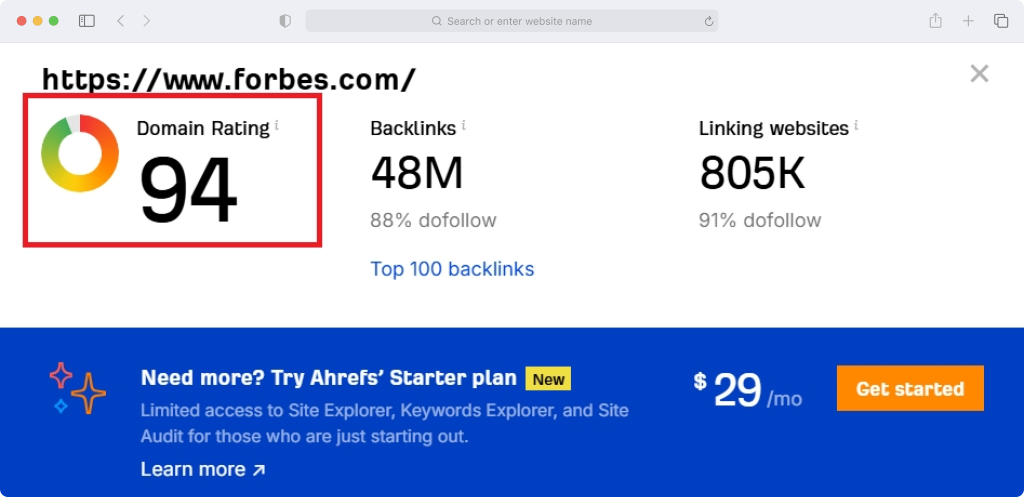
Certainly, the main requirement for implementing this strategy is to have existing quality tier one links. How do you recognize them? These are links that are placed on other authoritative platforms and lead to your page. For example, a link on the Forbes website blog may well be a primary link. The most important thing is to look at the donor’s authority score so that this score is within 80-90. Google primarily considers such links and takes them into account before ranking. In turn, tier 2 links pass juice to the donor and eventually bring you useful effects.
Uncovering Opportunities for Tier 2 Links
If you have already determined that your website needs the help of tier 2 link building, then you next have a few important aspects to consider for the right strategy. We have some practical tips for finding opportunities, which we will share below:
Make sure you have a sufficient number of first tier links. The minimum number of authoritative backlinks is 100 for starting tier 2 link building.
Focus on sites with an authority score in the range of 30-60 to get tier 2 links.
Don’t forget to analyze competitor profiles. You can use any of the popular tools, including Ahrefs and Serpstat.
What else do you need to know? Do not place second level backlinks that previously referred to your competitors. In this way, you will unknowingly help your competitors get better positions.
Backlinks with Solid Guarantees
Buy any type of link from the NeedMyLink marketplace and get up to a 12-month guarantee!
Before we look at the actual strategies for building tier 2 links, we want to tell you again their main differences with the first level. Tier 1 is always about authoritative donors (at least 80 DR) that link directly to your site. When we talk about tier 2, we mean that these links may not be expensive or authoritative.
Generally speaking, there are quite a few methods of getting tier 2 link building, including paid and free ones. The most popular ones are guest posting and networking. Let us tell you more about time and experience-proven strategies.
Guest Posting
Guest posting is probably one of the most popular methods of getting tier 2 links. Why is it so? In any niche, there are quite a few online platforms that don’t mind publishing an expert blog post with a link. Even if you’ve ever gotten links from these platforms, you’ll have no problem posting tier 2 backlinks because they lead to a different domain name.
The first thing you need to do in this tier 2 link building technique is to find a list of sites that match your topic and are involved in guest blogging. Next, you need to agree with the representative of the site about cooperation, prepare an expert article and add a backlink there with a natural anchor.
Exchange of Links
Another proven method we want to tell you about is the tier 2 links exchange. This is a really well-tested strategy because even according to Google’s rules, you can have multiple backlink exchanges. The most important thing is to make sure that you do not let the link exchange lead to different pages. This will help minimize all the risks of getting penalties.
If you use this method for tier 2 link building, you can significantly increase your traffic for pages with tier 1 backlinks. As a result, your website will also get a share of new visitors. However, exchanges should not be the main method of getting tier 2 backlinks.
Forums and Social Media
As we said, some tiered link building techniques don’t require you to make any investment. This applies to posting backlinks on forums and various social media sites, such as Reddit. However, they will not be able to factor in rankings because they are usually not indexed by search engine robots. Their purpose is to influence more traffic to a page that links back to the main site.
On the one hand, it may seem that posting backlinks on forums is a simple task that does not require a lot of time and knowledge. But this is not the case at all, as most of these platforms have restrictions and often ban spammers. Surely, you can only post links if they are relevant to the topic of discussion and useful to the participants.
Links from Social Bookmarks
Experts often use social bookmarking to get a small number of backlinks when working with tier 2 link building. One example of such a platform is Pinterest, where users can post photos and videos and add links.
The only disadvantage of social bookmarking, which is noted by almost all website owners, is the inability of search algorithms to index such links. They have a tag «nofollow», so they are not taken into account for authority indicators. In any case, this is a good and easy way to increase the number of users.
Directory links
If you need to get backlinks without focusing on the authority of the donor, you should look into directories. These are platforms on the Internet where information about different companies, places, websites, and more is collected. That’s why you can find the right directories that match your desired niche and leave a backlink.
Tier 2 links obtained from relevant directories help to increase the visibility of the resource. The most important thing is that this link should lead to a page with a tier one backlink. This way, users will be able to visit your site.
Press release
If you have decided to actively engage in tier 2 link building, your main goal is to make as many people as possible know about your tier 1 link page. How to do this? You can use all available methods on the Internet, including media publications. This is especially true if you are focusing on local SEO promotion.
Find local media platforms and tell them why they should publish a press release along with the necessary link. Perhaps the page presents shocking facts, statistics, and research or simply describes interesting topics well. If you can get tier 2 links from media press releases, it will have a good effect of boosting the authority of your site.
Finding Tier 2 Link Opportunities in Related Blogs
Sometimes you should see what quality blogs there are on the Internet that match the subject matter of your links. Choose a few sites and analyze them for quality content and lack of spam. Once you are sure that the donor fits your criteria for tier 2 links, you should contact the representative.
Talk about possible cooperation, and it can be of different types, both paid and free. Your task is to agree with the webmaster to place the necessary link that leads to the tier 1 page.
Challenges Associated with Tiered Link Building
As you might have realized by now, tiered link building is about increasing a whole chain of backlinks that are related to each other. They have one goal is to pass as much juice as possible to your main page and increase the site’s authority score. This may sound pretty simple. However, in practice, there are often common problems and complications.For example, SEO experts get frustrated with this tactic because they choose the wrong methods to get tier 2 links. Also, if you create links too quickly, the chances of getting penalized by Google increase significantly. Be careful and choose your donors thoroughly, making sure they are relevant.
Many academic websites encounter the odd challenge known as rising traffic. This requirement applies to both university Internet resources and instructional platforms. The most prized elements of promotion are quality link development and a basic comprehension of SEO. In today’s article, NeedMyLink will go over link-building for higher education audiences and other topics.
How Does Traffic Affect Academic Websites?
Most of the time, educational sites receive a huge number of editorial backlinks for free, regarded as genuine. Many post-secondary institutions and their websites were established years ago. Thus, many of their pages, particularly blog pages, are recognizable by numerous trustworthy domain names on the internet. Brands encompass colleges, universities, and the great majority of academic departments worldwide. They don’t supply links as readily as most other educational institutions.
According to Ahrefs statistics, 73.6% of domains have reciprocal links, which means that some of the sites they connect also refer back to them. Most top-ranked pages receive “followed” backlinks from new domains at a rate of 5%-14.5% monthly.
It is not always possible to get any backlinks, which is why so many businesses outsource to an efficient link-building service.
6 Pieces of Advice for Boosting Your EDU Online Source
Link building for educational websites has a rather narrow target audience in a global context. The traditional method of promotion through comments on the website does not work, so more universal methods should be used. The remark and link are doubtful to survive long enough to pass on any web page water and, like other comment spam links, will probably end up relegated to a “gray area” at best or the source removed at worst. To avoid such situations, NeedMyLink provides 6 cool techniques for higher education link building.
1. Graphic Images and Statistics
Educational platforms that offer development or entry-level courses cannot operate without infographics. From course popularity numbers to life hacks and memes on the blog, there is a goldmine that should not be missed. Why is a certain graphic material so desirable to the target audience? For several reasons:
popularity of the material
relevance
interactive interaction
trust in the source
simplified degree of perception
Most parents scan through hundreds of pages to find the information they need for their child’s university admission. Office staff must receive enhanced training by attending relevant online or offline courses. Students who wish to learn more about themselves will encounter numerous written materials on their way to many educational institutions.
Infographics can represent everything from course attendance to the number of people attending an institute event. Of course, not all materials should have them. For example, numerous photos from a volleyball tournament or family day and shots from a scientific meeting might be ideal. However, shots will appear unnecessary when changing a landing page or launching on a platform.
2. Guest Posting for Academic Sites
For SEO, both the quantity and quality of links are vital. Academic websites present exceptional possibilities for link building, supplying you with the know-how to pique their attention. After writing a useful and intriguing post, look for thematic donor sites to host the content. After accurately analyzing the audience and identifying a publication platform, you obtain a win-win situation: the resource gets an article, and you get an active link. The table below will show how to use guest posting correctly for link building for online education websites.
Spaces
Auditory
Educational web sources
Students, schoolchildren
University pages
Parents, students, university staff
Academic tutorials
Students, university staff, scientists, Sci-fi writers, copywriters
Educational platform
Parents, students, university staff, marketing field workers
The benefit of retrieving information from a.gov or.edu domain stems from the resource’s validity. However, such a resource is not appropriate for all target audiences. As a result, most schools that host numerous events incorporate practices into a web portal. Furthermore, since the event is just temporary, links from such a resource are typically short-lived. Google algorithms may also overlook them or disagree with local educational policies.
Our service simplifies the process by allowing you to swiftly find and acquire quality backlinks from trusted domains that match your SEO requirements. No need for prolonged outreach (just filter, pick, and get the best links fast).
Buying Educational Links Online
We have collected thousands of domains that are suitable for projects in the education niche!
Unique content is a magnet for link building for educational sites. When you create valuable, informative, or entertaining material, other sites link to you, confirming your expertise. There is no better way to boost traffic than quality content. This can be achieved in the following ways:
E-E-A-T Factors. E-E-A-T is an acronym created by Google which stands for Experience, Expertise, Authoritativeness, and Trustworthiness. Google gives preference to sites with expert and trustworthy content. That’s a common rule for SEO masters, but it is unknown to non-marketing audiences. Keywords and their places gain the majority’s priority.
“Eternal” content. Materials that remain relevant for a long time continue to attract traffic and links. For example, the rating of universities for admission or top events in your region. Do not forget to write the text from your own perspective with minimal use of third-party resources. This is extremely important for creating authenticity.
Connection with the audience. Storytelling forms in direct communication with the whole world. Your own experience will always be more important for the audience. That is why author’s expert courses are in such high demand.
Brand. People remember catchy names or pay attention to popular names. Content that truly offers something new and useful will clearly dominate its competitors.
What else? We should note media. Educational platforms easily enter into collaborations, while institutions do not always get such solutions. Therefore, institutions maintain TikTok or Instagram accounts to cover their activities better and attract audiences to their resources (website, page, etc.).
Regularly adding new content indicates to search engines that the site is current and relevant. Trends will also boost your website’s traffic. It is superior to develop and promote your unique attributes. For example, a clever phrase that corresponds to the brand name or a logo that will become a meme on social media.
4. Resource Pages for Edu Sector
Building links from resource pages is a worthwhile approach to boost a website’s visibility and related content. It entails developing acquaintances and seeking out webmasters who have produced websites with information pertaining to your industry, which often comes with links that have been compiled or contributed to further enhance their worth as resources. Here are three steps to create links from resource pages:
Identify relevant origins.
Explore them as well.
Suggest your own resources.
After you get a link from a resource block, you can monitor how it will affect your website. It will be an effective link if a donor website has been chosen correctly.
5. Discounts for Students Like a Sunshine for Educational Sites
What is at the forefront of all action? Desire and purposefulness. Like no other age group, students have high first and second indications. To attract and maintain this target demographic, consider offering:
Webinars
Seminars
Seasonal discounts
Promotions, and so on
When there is a price cut, partners often grant collaboration and freely add links to their websites. According to Statista data analytics, the online education market is predicted to have 1,121.0 million users by 2029, with user penetration at 15.9% in 2025.
Massive Open Online Courses (MOOC) have emerged as a prominent trend in the online education business. Major universities often offer these training programs and cover various topics.
6. Target Your Audience: Local Link Building
Local link building for online education websites is one of the primary actions to strengthen website rank, authority, and visibility for area-specific web resources. In this approach, leveraging community connections, creating hyper-targeted content, and developing collaboration ties enable educational institution websites to get high-quality backlinks that ensure long-term outcomes.
That way, the audience will also be restricted to local schools and niche educational websites. A scholarship that is targeted at local students can get you some genuine links from local schools alone and from other niche sites that your target viewers will visit.
Make sure your link-building assists in enhancing your local SEO roots. You should provide accurate information about your business or group, produce appealing and helpful content, and supply connections to relevant websites. Verify that your name, address, and phone number are consistent throughout any directories where you are listed. Local SEO optimization is the practice that boosts your site’s position in local search results while also enhancing the link-building process.
Face-To-Face Challenges in Educational Link Building
The education sector is crowded with colleges, e-learning platforms, and resource websites competing for attention. Competing for high-value keywords such as “online courses” or “best schools” is onerous. Focus on long-tail search phrases that are less competitive yet more specific. Create niche content customized to your target audience, and invest in article clustering to establish topical authority on essential topics.
Since current statistics reveal that an increasing number of users are consuming educational content through portable gadgets, non-mobile responsive websites are likely to lose visitors and rankings. Without mobile optimization, you won’t be able to achieve faster results. That’s why using tools like Ahrefs is a must-have option.
Many educational websites are inactive because of insufficient user engagement due to poor content that does not meet the user’s specific needs. Add widgets such as quizzes, calculators, or tours to your site to make the user more interactive. Use focus on storytelling to educate and/ or focus on success stories or cases that will be of interest to the audience.
How to Grow My Education Site with Link Building?
When creating educational material, remember the main goal is to pass on part of your experience to others while getting a profit. The relevance of the material and trendiness in SEO tools and content should not interfere with promotion mechanisms.
To achieve the best ranks, remember the majority of citations in various resources, particularly on local institute websites, platforms, and blogger profiles. NeedMyLink believes in the power of knowledge and the success of your promotion!
The dental industry is a profitable but highly competitive niche, especially at the local level. No matter where your clinic is located, you’re competing with many other dental websites for the same patients. According to BrightLocal research, most people still search for dental services online before choosing a clinic, which makes strong online visibility essential for growth.
Backlinks play a key role in dental SEO because they act as a clear signal to search engines that a website is trustworthy and relevant. Pages with stronger backlink profiles consistently perform better in competitive search results. This guide covers practical link building strategies for dentists that support sustainable rankings, help boost your online presence, and contribute to long-term SEO success.
How Does Google Rank Dentist Websites?
According to statistics, about 70% of people use the search bar to find the desired professionals, and dentists are no exception. When a potential client makes a query, Google tries to provide the most relevant results, and your website could be among them. However, to achieve this, you need to have an understanding of how Google ranks dental clinic websites.
Backlink profile. As mentioned above, backlinks from reputable sources show Google that your website deserves recommendations. The more links and referring domains, the better for you.
Loading speed. How fast your dental website pages load is also taken into account by Google’s algorithms. A page loading in 2-3 seconds is considered normal.
Behavioral factors. Search engine robots also analyze how customers use your site and how much time they spend on the pages. The Time on Page metric indicates which web pages are more in demand among patients and users.
Actually, search algorithms are updated regularly, getting improvements. This tells us that Google pays attention to a lot of factors when crawling the pages of your dental website.
Try Our Marketplace for Dental-Related Links
Our AI-powered marketplace offers a wide selection of domains in your niche, complete with a full range of guarantees!
Meaning of Link Building in Promoting Dental Clinics
Business owners use various methods of link building to stay competitive, and dentistry remains one of the most saturated niches. According to World Health Organization oral health statistics, many countries show a high density of practicing dentists per 10,000 people, which directly increases competition between clinics - both offline and online.
For dental websites, backlinks remain a proven way to improve SEO visibility. Search engines treat links as trust signals, similar to professional recommendations, which is why dental website link building continues to play a key role in strengthening a dental practice’s online presence. Quality links help pass link juice to important pages and support stable rankings over time.
Backlinks also affect real users. People search for dental services online, read patient reviews, and follow links from trusted resources such as online directories or local websites. When relevant sites link back to your website, interested users are more likely to visit and become patients.
Proven Dental Link Building Strategies
As you might have already realized, the website of any dental clinic needs the utilization of link building. However, most beginners don’t know where to start and what strategies to choose for promotion. The best link building practices for the dental field are considered to be:
Local directories.
High-quality content.
A presence in the local community.
Guest posting.
Event sponsorship.
Online consulting platforms.
These six techniques will allow you to powerfully strengthen your backlink profile and increase your SEO visibility. Let’s explore each method in detail below!
1. Take Advantage of Local Directories
If you don’t run a large dental network, local visibility becomes especially important. Dental directories help potential patients find nearby clinics, services, and dental professionals when they search online. For any local dental practice, this is a core part of local SEO and one of the simplest ways to earn relevant backlinks. To use this approach effectively:
Find reputable dental directories or local business listings in your area
Review the listing requirements and submission guidelines
Submit your dental practice and secure a link to your website
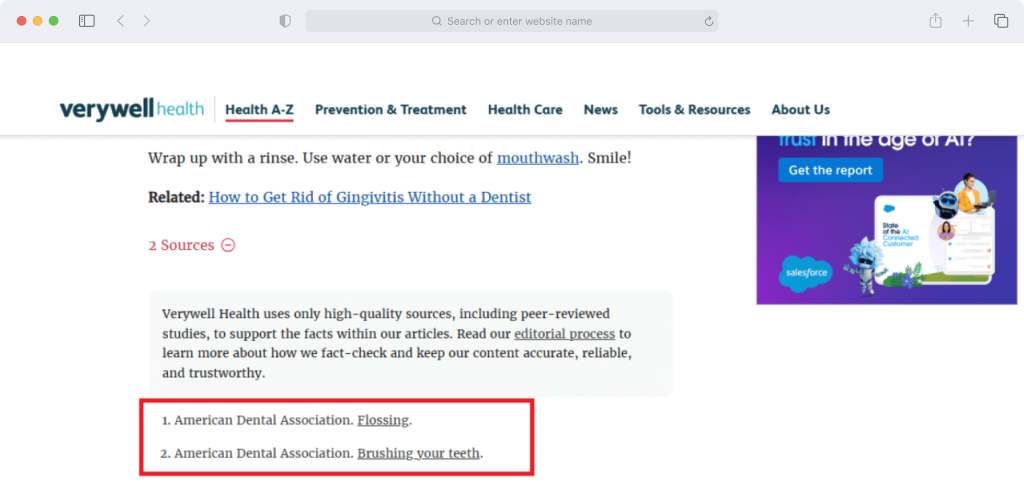
Some directories are free, while others charge a fee. If you analyze competitor profiles, you’ll notice that many dentists are already listed in the same directories. Including platforms like Google Business Profile and dental associations strengthens trust and supports dentistry SEO practices.
2. Provide Useful Content
People often search for answers related to dental care before choosing a clinic. Questions about tooth pain, oral hygiene, or treatment options generate consistent search demand, and websites that provide clear answers earn visibility and backlinks.
Effective dental content doesn’t have to be limited to blog posts. Clinics can publish visual guides, statistics, infographics, or expert explanations that reflect real experience in dental health. This type of content naturally attracts backlinks for dentists as other websites reference helpful resources and link to your site.
3. Be Active in the Local Community
A strong dental practice is visible not only online but also within the local community. Being active locally creates trust and opens natural link opportunities. Partnering with local businesses, dental professionals, or healthcare organizations often results in mentions and links to your dental website.
Community initiatives, educational sessions, or limited-time consultations promoted through social channels help boost your dental brand. These activities support strategic link building and strengthen relationships with local businesses that may link back to your site.
4. Write Guest Posts
The dental and medical space includes hundreds of blogs and educational platforms that publish expert content. Contributing to a dental blog allows clinics to share expertise while earning authoritative backlinks. Guest posting works because:
Dental professionals provide real-world expertise
Relevant websites have established audiences and trust
By publishing well-researched articles on dental health topics, clinics can secure contextual links that support general SEO and building high-quality backlinks without relying on aggressive tactics.
5. Sponsor Themed Events
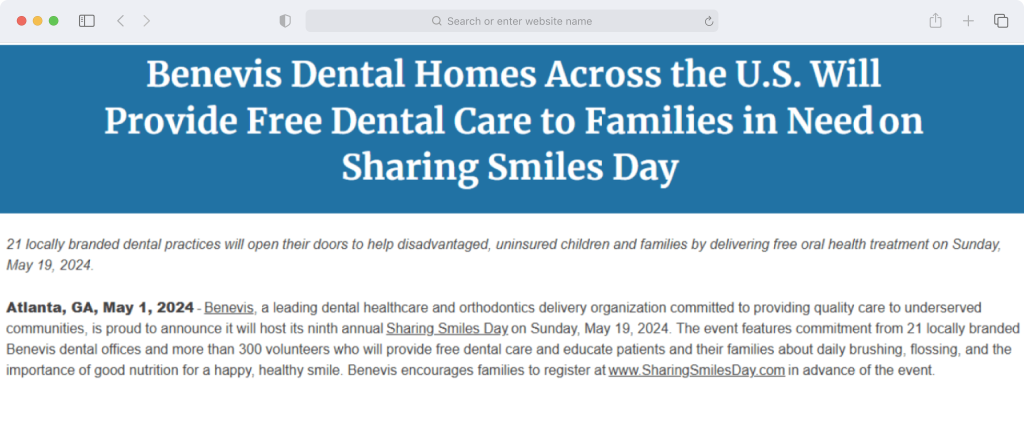
Many dental practices choose to sponsor local events such as health fairs, charity initiatives, or educational workshops. Event organizers and local media often feature sponsors on their websites, creating valuable links to your dental practice.
These mentions typically come from trusted local sources and align well with a comprehensive dental marketing strategy. In addition to backlinks, event sponsorship increases brand awareness and patient trust.
6. Register on Online Consultation Platforms
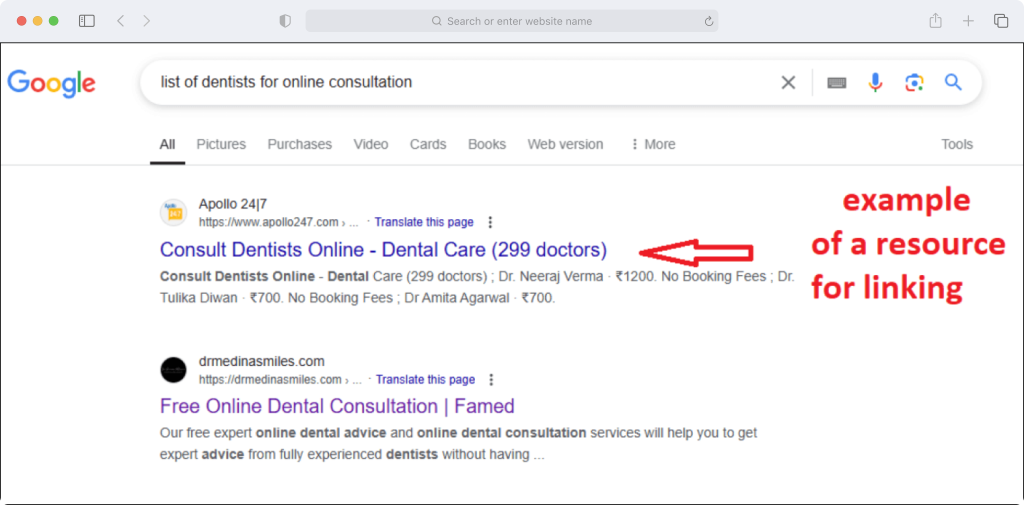
Although dental services are often local, online consultation platforms allow dentists to reach a broader audience. These platforms list dental professionals and usually include a link to your site as part of the profile.
Before registering, it’s important to review each platform’s authority, traffic, and relevance. When chosen carefully, these websites to link from can support dental SEO services and expand visibility beyond a single location.
Next, you need to register on such websites and indicate that you are a medical provider. Submit a request to get your site listed on them with the addition of a backlink. However, do not forget to check these platforms in aspects like organic traffic and authority.
Final Thoughts
Websites in the dental industry need effective link building strategies as it is a proven way to increase organic traffic metrics. Other results you can also expect are increased DR and better rankings. However, you must form the right strategy, choose the most effective techniques, and constantly monitor the results. Don’t forget to analyze the link profile of your dental competitors so that you can be ready to make adjustments to your link building campaign.
So, you’re exploring the world of link-building? Probably, you already know much about SEO, so links buying topic is the stage you’re at now. Well, it won’t be long before someone offers you the chance to buy backlinks. Trust me, as someone who’s been deep in the link building and off-page SEO, this is a crossroads many face daily. The immediate thought that pops up: “Should I invest in buying backlinks?”
When done right:
It can lead to more people visiting your site naturally.
Your website might pop up more often in search results.
Your overall ranking in search engines can improve.
But there’s a catch. Do it wrong, and you might just end up spending money without seeing the results you hoped for. Some SEO experts are a bit wary about buying backlinks. However, others feel it’s a smart move when done correctly. We’re the second type, by the way. In this article we’re going to learn how to:
Understand what buying backlinks really means.
Learn the right steps to buy backlinks.
Collaborate with website owners to get the links you pay for.
What Is Link Buying?
Alright, let’s keep it simple. Imagine you pay a website owner, and in return, they put your website link on their site. The hope? This new link will help get more people to your site and give you a better spot on Google’s list when someone searches for something you offer.
Sounds like a dream, right? But be careful. If you try to cheat the system with bad SEO tricks, this dream might not come true. On the other hand, if you play fair, like getting paid links from good websites by sharing quality stuff, there’s a good chance you’ll see some real benefits. So, the buying process is a common used option, where you pay for the digital gods.
Examples of bought backlinks
We like examples. We like case studies. So surely, while reading this article you will get as much numbers and real-life examples as we can share. Let’s start with the basics. We have a website, we want to buy backlinks for – Gadgetpickup (niche – gadgets selling). We make a huge researching campaign to find the niche relevant websites, where we negotiate to purchase a dofollow backlink. Here is the result: https://gossipfunda.com/whats-new-in-ios-16-pros-and-cons-of-the-latest-iphone-update/
We got amazing backlinks from a well-known niche relevant website. It has DR 39, organic traffic of 18K users/month. It gave a real boost for our targeted page SEO after all. Moreover, the content with the backlink itself started ranking, and it also gains some organic traffic, which is a big plus. Because we did it wisely – all our steps regarding the purchase were planned carefully.
If you have skills or understanding how to buy such backlinks – you can easily hack the system, and not worry about anything. It’s you time to shine!
Is It Worth It to Buy Backlinks?
There’s no one-size-fits-all answer. But consider this: If you never buy backlinks, you might miss out on some great opportunities from good, related websites. In some areas, like certain businesses, buying backlinks might be the only way to get noticed. In other words – how can you gain backlinks from new top domains each new month without purchasing strategy? It’s almost impossible.
Big companies which work in competitive niches like gambling, dating, essay, SaaS, development buy a lot of links. No. They buy way more links you can even imagine! But it’s key to remember: when you buy links, you need to do it right. Think of your audience as well. Any link you add should make sense and be useful both for the readers and Google.
Try our marketplace
A fully automated solution for buying backlinks: 20+ niches, over 50 GEOs, and rock-solid guarantees on backlinks!
When you’re looking to build links, there’s a big “no-no” that comes to mind: facing Google’s penalty for unnatural link behaviors. So, what does Google say about buying links? Let’s break it down:
Google isn’t keen on you buying backlinks. They prefer naturally earned links.
They’ve made it clear in their Webmaster Guidelines: buying or selling links falls under what they term a “link scheme.”
If you’re thinking of strictly playing by Google’s book, you might want to rethink buying links.
But here’s an observation: while Google warns against it, many still buy and sell links. Instead of harsh penalties, Google often just ignores the links they see as part of schemes.
Why SEO’s Buy Backlinks
Because it’s hard to use only “fair” rules. Especially, in high competitive niches. SEO-specialists think about the backlinks buying process in a way, like it’s a basic marketing move. You pay for “advertisement” to get profit. That’s it.
According to our internal poll among the NeedMyLink’s Linkedin profile subscribers, we have the key number now – 87% of SEOs are buying backlinks times by times. We created a poll and offered it for 100 of our followers. The people who work in different niches: starting from pet cate, ending with Brazilian betting reviews site. 87 of 100 are buying backlinks. If you are interested, you may read our betting case link building overview.
Yeah, that’s impressive. And the main reasons why do they do that are – easy, fast, outsourcing backlinks possibility.
Anyway, there is one more reason. Every next year it’s getting harder and more expensive to get backlinks naturally. Most website owners recognize the value of their links. When you try to get more backlinks, many ask for payment. But, really.. Imagine you’re the sites owner. Someone wants to contribute the guest post on your site. Even if 10 years ago you could agree to accept for free (as backlink exchange for the content), now – low chances you will do that. Probably you will ask for money instead. This change is mainly because links have become a valued commodity, and many see an opportunity to earn from it. Nothing bad. We understand the reality of SEO and earning methods.
Backlinks Pricing
Thinking of buying backlinks, you’re likely wondering about the price tag. It depends. There is a huge list of factors depending on the final backlinks pricing. Starting with the links type, ending with the seller’s business model. As an agency, we offer various types of backlinks opportunities, so we are going to share the pricing models for some of the most popular ones. Let’s mark them for: expensive, middle-cost, cheap.
Guest Posts and Niche Edits
The most exciting and expensive kind of backlinks by far. The price for each guest post or niche edit starts at $250. It can be $400, $600 and even more than $1 000. The price for the quality backlink of this type simply CAN NOT be lower than $100-200, because it seems to be some kind of bad link, which will not give you any impact (or gives not that much you could get with another one). Regarding the guest post it’s also important to remember, that you have to provide the content as well. Most people who buy guest posts – also purchase a content writing service as add-on. It makes plus $30-80 to the final cost.
Forums, Profile links, Articles Submissions
There are many types of cheaper links you can easily buy. The difference between them and expensive links that these links are also possible to get for free. If you have enough time and skills – you can try to register on forums, make a reputation among the audience and try to place the backlink, so no one will report you. To make it clear, almost 98% of experienced SEOs don’t do that by their own. It takes much time, and the results are less optimistic they could hope. SO, they simply order those kind of links from link building services and agencies.
Backlinks from forum discussions, communities’ topics, backlinks from forums
Profile backlinks – on social media, forums, blogs, sharing platforms.
Contextual Links – links from articles on free-posting blogs. Quite a popular service in 2023, because it totally worths its price (up to $10 per link in general).
In 2026, contextual links from free-posting blogs remain a budget-friendly option for link building, but their effectiveness depends on careful selection. While these links can still contribute to SEO, search engines have become more sophisticated in detecting low-quality placements. To maximize their value, it’s important to focus on blogs with real traffic, strong domain authority, and relevant content. When used strategically alongside other high-authority link-building methods, contextual links can still play a role in a well-rounded SEO campaign.
All these kind of links are cheap. Their price ranges from $5 to $15. They’re lower quality than guest posts for sure. But their main goal is not to directly make a huge impact on your website’s SEO, They do other stuff, like diversification, brand awareness etc. So, these links are cheap and affordable. Don’t overlook them.
Why Charge for Backlinks?
Website owners asking for money for link placements might raise eyebrows. But there’s logic behind it. Here’s why:
Website owners are now more aware of the power and value of the links on their site. As we said – the world is changing. Everyone wants to earn where he can.
Placing a link isn’t just a click; it’s about adding value to another business. It’s like an advertisement. And there is a low chance someone will promote you for free of charge.
There are cases where people who own the website and set the clear goal on how to monetize it with links selling earn $10 000 and more. Want more numbers? You have a cool website: high DR/DA (30+ at least), organic traffic of 20 000 monthly. And you’re open to accept guest posts. Paid ones. People start writing to you, they’re interested to buy this opportunity. Let’s imagine you set the price of $500 and strictly guidelines for the guest post. If you sell only 5 slots per month – you earn $2500. That’s it. People earn, now you get it.
The Risks of Buying Backlinks
Thinking of buying backlinks? Here’s the scoop: it’s not always smooth sailing. There are a couple of big concerns to keep in mind:
Is It Worth the Money? You may see the extra-cheap options like 1000 backlinks for $100 ($0,1 per link), which is quite adorable to check. But always, they don’t really help much either. Google’s pretty smart; it knows when to ignore links that don’t matter. Even though the cheaper backlink is – the lower impact you get. Simple math. Make a detailed strategy – what kind of links you need. Which purposes for. How much does it cost? How long does it take to get them? In the end, you get a full-size picture of the link building purchasing.
Getting on Google’s Bad Side: The big worry? A real person at Google checks out your site and finds something they don’t like. The outcome can be rough, from a huge drop in traffic to disappearing from Google altogether. But there’s a silver lining. These days, Google tends to just overlook links it thinks are spammy instead of punishing sites. So, this information is just for being mentioned here.
How to Buy Backlinks? Pros and Cons of Each Method
Alright, so you’ve decided to buy some backlinks now. Congratulations! But how do you go about it? Let’s look at some of the ways, and the pros and cons of each of the methods. We highlighted just some of the most popular ones.
1. Freelance Marketplaces
Lots of newbies start their journey on sites like Fiverr, Upwork, PeopleperHour, Weblancer. We probably just named the 90% of most popular digital freelance marketplaces, yeah. While you might find some good offers, there are many that just don’t deliver quality. Moreover, experienced SEO-specialists who know the difference – rarely use those platforms for links purchasing. Here are some things to watch out for:
Offers that promise tons of links for a few bucks. DO NOT every buy them (if the price per link is lower <$1 – skip it).
Claims that sound too good, like getting top rankings overnight. Really skillful SEOs and link builder don’t make such statements. Almost never.
Real talk: Building good backlinks takes effort. It involves planning, talking to the right websites, and creating great content. If a service is super cheap and promises the world, chances are, they’re cutting corners.
2. Guest Posting
We already talked much about guest posting, because it’s most likely the most common and popular paid link buying method. And yes, it’s profitable. It’s really good and we recommend it. You can do outreach on your own, or outsource it through link building services.
But, the main rule stays the same – be sure you know WHICH sites to ask for the paid guest posts. If you fail and place your content on the wrong site – you will not get any penalty, don’t worry. You will just waste your time and money, that’s it. The better site, the more relevant website you find – the more genuine results you may expect later.
3. Niche Edits / Link Insertion
This is a bit more hands-on. You talk to website owners who are open to selling links and ask them to link to your site. It’s kind of alternative for guest posting. Even more simple one, because if the site’s owner is open to negotiate regarding the niche edit option – it’s the easiest task you have. Here’s what you should know:
You pick the websites freely, there are many databases of sites accepting niche edits.
You can get links to your best pages from the site’s best pages (that’s really good part)
It’s a faster way to get backlinks.
And the best part? If done right, Google can’t really tell the difference between these links and organic ones. But, you have to be careful. If a site owner sells you a link, who else are they selling to? If they sell too many, Google might see them as a bad link source, which can hurt your rankings.
When going for niche edits or insertion of links, always pick quality websites. Look for ones with good content, clear topics, and some guest posts. Also, check out who’s behind the site and if they get steady traffic from Google. After all, it’s not just the link that matters; it’s where it’s coming from.
4. Forums and Profile Links
Participating in forums can offer two-fold benefits: networking with industry peers and the potential for backlinks. But, it’s vital to engage genuinely. Offer valuable insights, answer questions, and only share your link when it’s relevant and can add value to the discussion. Otherwise – you get reported by some well-known forum members for spam, and banned. The END. Regarding the profiles – they’re cheap, and do the same task as forums: diversification and increasing the referring domains number easily.
Forum links are the subjects for outsourcing. As we wrote above – 98% of SEOs who use forums as their additional link building method, just outsource it. By the way, our company started its journey with offering forum backlinks almost 4 years ago, and we’re still known as one of the best agencies to ever do this kind of link building.
5. Hiring a Link Building Agency
Hiring a link building agency to manage your backlinks is like entrusting someone with the keys to your online reputation. Instead of paying directly for links, you’re investing in their expertise to secure quality backlinks for your website. This approach is similar to hiring experts for other tasks, like content creation or web design. However, the effectiveness of this strategy hinges on the agency’s methods and expertness. You need to classify – the specific agency is the exact partner you need.
Domains Quality when Buying a Link
The site’s quality you’re getting a link from stands paramount. This isn’t just for purchased links; it’s a golden rule for all link-building efforts. For all the types. Here’s why:
Search Engine Judgments: Google and its peers assess sites. A link from a site they think weak may not give you the results you want. Google knows about weak sites much more than you think.
Reputation Matters: Think of links as endorsements. You’d want a thumbs up from a respected source, right? What are the key metrics of reputation of the website? – Domain Rating and Authority. Organic Traffic. Backlinks Profile.
Niche Relevance: If you get backlink from a site which is in the same niche as you – it’s amazing. Better aim for the niches sites. Even if you have a question: which site you want backlink from, niche relevant with low DR, or general one with high DR – take the first one. You gain your niche expertness in this way, which is also a ranking factor, named E-E-A-T.
If these boxes are ticked, it might be worth buying a link from there. If not, best to walk away.
Final Words
When looking for links, focus on the site’s metrics. Don’t forget to have a strategy. Use the methods you’re fully engaged with. If you’re eyeing an agency for link-building, ensure they balance both organic and paid methods with expertise. Remember, in the digital world, the links are fuel for your vehicle.
Many website owners dream about the visibility of their page in search engines. Blogger outreach may be considered an indispensable strategy that gives quality backlinks and, as a result, improves your site’s position in search engines with organic traffic. But starting and running blogger outreach campaigns is not easy at all. If you don’t have the proper strategy, there is a risk of getting unsuitable links that could hurt your search engine results in time.
Best link specialists note that it is essential to select a reliable blogger outreach service. Choosing a clever link strategy can bring you beneficial backlinks while a wrong decision may affect your website’s reputation and ranking negatively. This article is to provide you with link strategy comprehensive insights into:
The main considerations when selecting a blogger outreach agency include the following.
Some of the best blogger outreach services that can help in running a successful campaign.
The best practices to implement a successful blogger outreach campaign follow.
What Is Blogger Outreach?
Blogger outreach is a practice of contacting bloggers to get them to include your link on their page or site. It is a good way to approach authoritative websites of your niche, thus providing ample link-building opportunities. The process seems simple in theory:
Find blogs that post information targeted toward your business.
Establish a relationship with the blogger.
Ask the administrator of a blog to include your website link within his or her content.
Observe an increase in search engine rankings!
At a first glance, blogger outreach is as simple as having millions of sites to target and numerous tools that will simplify the task. Some software and tools automate sending emails personalized especially for bloggers saving time and effort.
Nevertheless, the practicality of blogger outreach is more complex. Without the right knowledge and strategy, your outreach can fail to get any response from bloggers; and miss opportunities for backlinks.
Check this out: a blogger outreach agency should be hired. These agencies are real experts in the formation of relationships. They often enjoy previous contacts with authoritative bloggers that ensure incredible success for outreach campaigns.
In 2026, blogger outreach has evolved into a more strategic and relationship-driven process due to Google’s heightened focus on authenticity and topical relevance. Outreach efforts that rely on mass email templates or low-quality blog networks are being ignored or penalized by search engines. Instead, successful campaigns focus on building long-term collaborations with trusted voices in specific niches. Personalized pitches, value-driven content, and genuine engagement are now essential for earning high-quality backlinks. As confirmed by the Digitally Unique survey, those who master meaningful blogger outreach are leading the way in sustainable, white-hat link building.
Try our automated marketplace for buying backlinks
Buy backlinks for your website with a one-year guarantee and full support from NeedMyLink!
The finding of appropriate blogger outreach services can revolutionize your site’s SEO strategy. We’ve listed the leading five services that do a great job in content outreach, and they are worth paying for.
1. NeedMyLink
At NeedMyLink, SEO Linkbuilding agency, we are specialists in crafting effective blogger outreach campaigns. With this in mind, our approach works for every client differently to increase the visibility of your website and its status. I couldn’t believe my eyes when I saw how much positive feedback we have received! So let’s get down to business. In terms of how we decide on targets, this is quite a painstaking and data-driven process. We know that not all sites are useful for your link-building activities.
Avoiding Spammy Sites. We avoid sites that put your SEO in danger, such as private blog networks (PBNs).
Checking Site Metrics. We search sites with good domain authority and up to 100, monthly Google visits.
Quality Over Quantity. We are interested in locating sites that have the sheer directory listings, and prove to be niche-relevant.
What Is Domain Authority?
DA is a mirror that can define the credibility of how influential a certain website could be in a given industry or niche.
Developed by Moz: DA is a metric provided by Moz, to simulate the strengths of positioning on search engine results pages.
A Range of 1-100: The DA score ranges from 1 to 100 where higher values imply an enhanced capability of scoring.
Assessing Site Quality: High DA sites are the most likely to help you obtain high-quality backlinks.
We Personalize Our Outreach Message
Our outreach department finds and contacts new platforms every day. Relationship management is at the core of our success.
Exploring Your Niche: We craft messages according to your sector and the blogger’s preferences.
Building Relationships: The messages that we design are purposed to ask for links and to build real relationships with other informants.
Versatility: We make changes to our strategy if there are guest posts or clickable content that you need us to utilize. It is about your personal requirements.
2. Outreach Monks
Outreach Monks is a distinguished grain in the field of blogger outreach and link building. Their approach is hands-on, ensuring each campaign aligns perfectly with their clients’ SEO goals.
Experience and Expertise: With a decade of experience, they excel in both link-building and content marketing.
Custom Campaigns: They create tailor-made campaigns, emphasizing open and continuous communication.
Holistic Strategy: Starting from understanding your SEO objectives, they do research and SEO technical audits, focus on content creation, and strategize link building.
Performance Evaluation: Their process concludes with a comprehensive review of the campaign’s effectiveness.
3. BuzzSumo
The feature that distinguishes BuzzSumo from the rest is its creative way of organizing link building and blogger outreach initiatives. They are about combining manual approaches to link-building and unrivaled insights into content performance.
Manual Link Building: They put an emphasis on the quality rather than the quantity of links, using manual link-building solutions.
Personal Connection: Their method comes down to creating human contact with each recipient, and developing the relationship-building process between clients.
Brand Emphasis: BuzzSumo capitalizes on the uniqueness that every client’s brand possesses to convince blog owners for hyperlinks placement.
Transparency: They vow to be transparent in the sources and methods of the link itself, making clients well confident.
4. FATJOE
FATJOE has established itself as a reliable provider of complete SEO and digital marketing services especially in terms that is involved with link building, and content creation for blogger outreach.
Versatile Services: Covering link building and press release writing among other digital marketing demands, they operate a portfolio of services.
Global Outreach: FATJOE has been serving more than 5,000 agencies across the globe since it began its operations in 2012.
Client-Focused: Based on their outstanding past performance concerning responsiveness to client queries, it is evident that they have committed themselves to excellent customer service.
OutreachPete
OutreachPete is another top contender in the blogger outreach arena. Known for their effective strategies and client-centered work, they have carved a niche in the market.
Client-Centric: They prioritize understanding the specific goals and requirements of each client.
Custom Strategies: Tailoring their approach to suit individual client needs, ensures maximized effectiveness.
Communication and Review: Emphasizing transparent communication, they keep clients informed throughout the campaign and conduct thorough reviews post-campaign.
The Problem with Blogger Outreach
Blogger outreach is a cost-effective and legitimate tool that you can employ in your SEO arsenal, provided there are resources to tackle the challenges of blogger outreach. Being aware of these challenges is a must-have for meaningful outreach.
Problem 1: Bloggers are inundated with backlink requests
Your outreach will compete with a flood of backlink requests directed to bloggers.
Overwhelmed Bloggers: Some blogs that are even smaller get hundreds of outreach emails each week.
Mass Outreach Emails: Many bloggers see requests as generic, and therefore most of the pleas do not get much attention.
Limited Attention: A typical blogger might just briefly scan the subject line of your email or ignore it altogether. However, many outreach e-mails end up in one’s trash without a second glance.
Problem 2: The price of links has appealed to spammers
However, amongst more earnest marketers who look to provide quality backlinks, there are also spammers.
Paid-Link Placement: Bloggers who engage in outreach when contacted would generally ask for payment to have their content linked.
Assessing Link Value: It is not easy to decide if it would be effective to pay for a link. Miscalculations may result in budgets vanishing into links that are ineffective.
Navigating Scams: The market is all over with link-building scams, PBNs (find out more what is PBN), and also the rest of other links that provide nothing valuable.
Other Mistakes in Blogger Outreach to Avoid
No Reciprocal Value: Bluntly demanding a backlink without anything of value in return is taboo. On the other hand, consider link exchange in return for a response.
Rehashed Ideas: Take for example, pitching ideas that have already been done by the blog is a sheer waste of time. Find new and contemporary topics to research.
Unprofessional Tone: Make sure, your outreach has a touch of professionalism yet easy reachability. Do not forget that you are involved in a business negotiation.
Long mails: Be brief and clear, present your proposition simply.
However, if there is no mention of you after that first email it’s clear to follow up with a polite note. Many people are overloaded both in mailboxes and personal lives. Be patient, don’t give up!
The comparisons of Blogger Outreach Service, Guest Posting and Niche Edits
Blogger Outreach (also known as Guest Posting)
Edits are important for effective Search Engine Optimization provided they have their specific merges. The main goal of blogger outreach services is the cooperate with opinion leaders in your area to attract the public’s attention and promote goods or services companies
Partnering with Bloggers: These services identify supercharged bloggers who can publish your posts and help get organic Instagram comments.
Guest Posting: One of the common approaches is guest blogging through which you create content for the other person’s website but still reach his or her followers.
Brand Visibility: This approach makes your brand more visible, sends numerous potential visitors to visit your site, and helps in increasing search engine rankings.
Tactic: Blogger outreach is about the entire approach of relation with bloggers, and guest articles are a certain technique from within this tactic.
Niche Edits
Niche edits are distinct from blogger outreach services in the following ways:
Link Insertion: Unlike backlinks, which refer to the creation of new content by your team or that has been bought from an agency, niche edits entail adding a link pointing toward your site in one of many thousands of pre-written articles already featured on bloggers’ sites.
Time-Efficient: This approach is even faster because it doesn’t require the creation of new content.
Perceptions: From this perspective, the approaches of niche edits are considered less organic or authentic compared to guest posting.
Which Works Best?
Quick SEO Benefits: Niche edits are suitable for fast SEO results due to the strength of linked articles, already registered in search engine indexes.
Long-Term Benefits: In the long run, guest posting through blogger outreach services enjoys benefits such as audience attention and brand building.
Content Creation: As opposed to guest blogging, which can be considered a process of generating new and utile content, the SEO results will not come as fast.
Strategic Alignment: Your decision should be in line with your objectives as well as available resources and the broader digital marketing strategies that you will implement.
Quality and Relevance: In the context of your link–building campaign, focus on the quality of sites and their relevance to the audience you communicate with.
All of these methods have their advantages, therefore when you decide on what approach to use take into consideration which will best suit your needs and strategy.
In 2026, all the link-building methods mentioned above continue to be effective and relevant when used correctly. Search engines still prioritize high-quality, authoritative links, making niche edits, guest posting, and content-driven strategies valuable tools for improving rankings. The key to success lies in adapting these techniques to current algorithm updates, maintaining natural link profiles, and ensuring relevance within your industry. By strategically implementing these approaches, businesses can achieve sustainable SEO growth and long-term online visibility.
At least once in your life, you’ve used Wikipedia to complete a school project or gone down the rabbit hole of your favorite topic – from ancient civilizations to conspiracy theories and niche hobbies. But have you ever wondered why Wikipedia always shows up at the top of search results?
The answer is simple: over the years, Wikipedia has become one of the most reputable and trusted websites in the world, with its traffic reaching 2.6B visits in June 2025. That’s why getting a backlink from Wikipedia is like striking gold.
These links aren’t just another line in your backlink profile. They’re powerful because they come from a neutral, high-authority source. They help boost your site’s trust, improve search engine visibility, and even drive high-quality referral traffic.
In this guide, we’ll answer key questions like: Are Wiki backlinks good for SEO? Can you get a backlink from Wikipedia? And how do you find Wikipedia’s dead links? We’ll walk you through the exact steps you need to take to earn a Wikipedia backlink the right way.
Defining Wikipedia Backlinks. What Makes Them So Valuable?
A Wikipedia backlink is a hyperlink from a Wikipedia article that points to an external website, usually included as a reference, citation, or additional resource. You’ll often spot them in the “References” section, but they can also appear inline to support specific facts or claims.
Here’s the technical part: all external links on Wikipedia are marked as nofollow. That means they don’t directly pass traditional SEO “link juice” like dofollow links do. But don’t let that fool you.
Wikipedia pages rank insanely well in search engines and often get cited by other high-authority websites. Here’s why marketers and SEO professionals chase Wikipedia backlinks:
Wikipedia.org has a domain rating (DR) of 96, making it one of the strongest domains on the Internet.
Links from Wikipedia signal that your content is trustworthy and valuable enough to be cited.
Wikipedia pages get millions of visits daily. A link there can drive qualified, niche-specific traffic to your site.
Pages linked from Wikipedia often get crawled and indexed faster by search engines.
Being cited on Wikipedia enhances your brand’s perception as a reliable source of information.
Four Steps to Getting Wikipedia Backlinks
So, how do you actually earn one of these valuable links? Unlike other backlink strategies, you can’t just pay for a placement or slide one into a guest post. With Wikipedia, it’s all about playing by the rules, being helpful, and thinking like an editor, not a marketer.
Below is a simple, four-step process that shows you how to earn Wikipedia backlinks ethically, strategically, and without getting your link removed five minutes later.
Buy Backlinks with a Guarantee
One marketplace. Over 60,000 domains. Purchase in just a few clicks. Try it now!
Sure, you can edit Wikipedia without an account, but if you’re serious about earning a backlink, creating one is the way to go. It’s free, it takes seconds, and it comes with a bunch of perks:
Your IP address stays private
You can create new pages and upload media
You gain more editing rights over time
Step 2. Find Dead or Broken Wikipedia Links
One of the smartest (and most ethical) ways to land a Wikipedia backlink is by fixing what’s broken, literally. Wikipedia has thousands of external links that are outdated, dead, or missing altogether. That’s your golden opportunity.
To find these broken links, use Google search operators like:
site:wikipedia.org “dead link”
site:wikipedia.org “citation needed”
For example, searching `site:wikipedia.org “dead link” plumber` brings up Wikipedia pages with the “plumber” keyword that include broken references. These are real-time backlink opportunities waiting to be fixed.
Want to dig even deeper? Tools like Broken Link Checker can help. Just enter wikipedia.org as the domain, then filter the results to show broken outbound links. You’ll get a full list of pages pointing to pages you can help improve.
Don’t just go after any link. The real value comes when you find articles related to your industry or target keywords.
Step 3. Create or Source Content for the Wikipedia Reference
Now that you’ve spotted where a link is missing or broken, it’s time to make sure you have the right content to back it up. Wikipedia isn’t just any website, it demands neutral, fact-based, and trustworthy sources:
Non-promotional and objective: your content should stick to facts and avoid any marketing language. Wikipedia editors are quick to spot anything that looks like an ad, and they’ll remove it.
Published on a reputable domain: links from brand-new blogs or personal sites often won’t cut. Ideally, your content should be on a well-established, trustworthy website that users and editors will recognize as credible.
Backed by solid references: make sure your article includes verifiable data, statistics, or quotes from respected sources.
If you don’t have existing content that fits, consider creating a dedicated article or blog post tailored for Wikipedia’s audience. Just remember to write it with their standards in mind. The goal is to provide value, clarity, and reliability.
Step 4. Insert Your Link into a Wikipedia Page
Alright, you’ve found the broken link, created solid content, and built a trustworthy account. Now it’s time for the most sensitive step: editing the Wikipedia article and adding your link.
Log in to your Wikipedia account.
Find the article with the dead or outdated link and click “Edit” then “Visual editing”.
Scroll to the exact spot where the broken or missing reference is located.
Carefully replace or add your link, making sure to use the proper citation format Wikipedia requires.
Save your changes.
Keep an eye on the page afterward, sometimes other editors might revert or comment on your edit. If your link is relevant, reliable, and properly formatted, it’s more likely to stick.
Things to Avoid in Wikipedia Article Edits
Wikipedia has some of the strictest quality guidelines on the internet, and for good reason. It’s built on trust, neutrality, and verifiable information. That means even well-intentioned edits can get removed if they don’t follow the rules. To keep your backlink safe, avoid these common mistakes:
Self-promotion: don’t try to advertise your business, product, or service. Wikipedia is not a place for marketing.
Using unreliable sources: stick to academic papers, trusted news outlets, government sites, or respected industry publications. Commercial blogs and content farms won’t fly.
Editing with bias: keep your tone factual and neutral. Wikipedia doesn’t care about your opinion, it wants cited, balanced information.
Copy-pasting content: never lift text directly from your website or any other source. Not only is it plagiarism, but it also looks spammy.
Getting a backlink from Wikipedia isn’t easy, and that’s exactly why it’s worth the effort. These links come from one of the most trusted sites on the web and can boost your site’s authority, visibility, and referral traffic.
By following those 4 steps, you can earn a spot on Wikipedia the right way. Just remember to follow the rules, avoid promotional tactics, and think like an editor, not a marketer. Take your time, focus on quality, and contribute something useful; that’s the real path to landing a lasting Wikipedia backlink. And if there are any questions left or you feel like you need any professional help with link building, don’t be shy and contact NeedMyLink.
The advent of Web 2.0 backlinks really brought about a sea of change, turning cyberspace into interactive platforms for user-generated content and social networking, with increased user engagement.
Let’s discuss what is web 2.0 in SEO and what are the possible results (both good and bad) of using. Optimizing Web 2.0 links can greatly increase your website’s domain authority and backlink profile. This brings a dramatic improvement in the search engine results, wherein the website moves up through the rankings.
Just think of the difference that exists between a website that falls into the background and one that is influential and user-attention-capturing. Web 2.0 links hold the key to unlocking this potential! But is it really so productive, or is it a trap? Let’s look closer.
What are Web 2.0 Backlinks?
Essentially, Web 2.0 backlinks are links within websites or platforms that facilitate the creation of free content. You can think of it as a type of virtual bridge between your website and most of the popular Web 2.0 destinations, like WordPress.com or Blogger. These links serve as very strong recommendations about your content to the search engines, telling them, “Hey, this site’s really cool and deserves more rankings.”
Want to see what Web 2.0 backlinks and how they look like? Well, wonder no more! See the website in the image below using a free WordPress website hosting service. Behold the cleaning service destination location in Web 2.0 space, true website or blog, if you will. The only difference is that another entity, a different platform, is very nicely hosting your website.
Features of Web 2.0 Sites
Now that you understand what Web 2.0 backlinks are, here are the defining criteria of Web 2.0 sites:
High Activity: Web 2.0 thrives through user-generated content and contribution. This continuous flow of user contributions ensures a dynamic online environment full of activity.
Increased Shareability: The high level of activity among users easily feeds the shareability of content on the platform. Engaging content travels far and wide; it attracts more eyeballs to your website.
Positive User Experience: Web 2.0 is all about user-centricity. Webmasters do emphasize very strongly the creation of a positive user experience and avoid any jarring notes that might project or reduce user engagement.
In the next section, we will continue to examine how to execute Web 2.0 sites for link building, including effective optimization strategies and how much weight these links carry when it comes to SEO.
Looking for link-building opportunities?
Try our AI-powered backlinks marketplace. Over 60,000 domains and a full package of guarantees included!
Web 2.0 links are a bit of social currency for the Digital Realm, providing strong vote-of-confidence signals that tell search engines your website is pertinent and authoritative. By cleverly embedding links to your website within only high-quality Web 2.0 platforms, you’re telling search engines, “Hey, this is a useful and informative site – check it out!” This will highly increase the rank of your website in SERPs, increasing the visibility and attracting more organic traffic.
Think of it like this: the more high-quality backlinks you get from prestigious Web 2.0 sites, the stronger your website’s online reputation becomes. Search engines then become highly likely to show trust in and reward websites devoid of thin backlink profiles. The thing goes like this: much like gaining respect in a group or community – the more people vouching for you, the greater your clout.
Effective Ways to Optimize Web 2.0 Links for Better SEO
Strategic planning and execution mean much in optimizing Web 2.0 links for SEO purposes. Start by identifying popular Web 2.0 platforms relevant to your niche area of expertise, and go ahead to creating comprehensive profiles that can be updated throughout time while providing valuable content on a regular basis.
Create high-quality content. Do not post any irrelevant content, and it is important that the content should be unique and provide some sort of value to the readers. Search engines will rank this content higher if the content is of better quality and more engaging to the readers. Don’t forget to put keywords related to your topics and anchor texts that will help strengthen relevancy naturally throughout content, which becomes more trustable among users who expect such things.
Advantages of Web 2.0 Link Building
The benefits of your SEO strategy are so many, and these include the following:
More Visibility: Through the use of Web 2.0 platforms, the number of people visiting your website goes up as well as its visibility.
Better Brand Awareness: Steady participation in Web 2.0 sites assists in establishing brand identity among your potential customers who develop trust towards you.
Low Price: There is freedom to access most Web 2.0 platforms which means that building backlinks can be made possible even on limited budgets.
Fast Results: The development and publication of Web 2.0 links may be quickly done, thus ensuring that search engine rankings improve at a faster rate.
What else? We should also highlight a variety of backlinks. As such, web 2.0 backlinks can provide good SEO because they create diversity in your backlink profile.
Difficulties Faced with Web 2.0 Link Building
While Web 2.0 link building offers many advantages, it also comes with certain challenges:
Variable authority: Different websites in the category of Web 2.0 do not have the same level of authority. In some places, their domain authority is lower limiting backlinks’ efficiency.
Potential spamming: When it comes to SEO, bad or low-quality methods will end up doing more harm than good, whereas focusing on quality and relevance is important for sustainability.
Limits on outgoing links: Some Web 2.0 sites restrict outbound connections thus reducing the effectiveness of your link building activities.
Risk of over-optimization: Optimizing content and links too much can lead to penalties from search engines therefore, it is necessary to focus on a more balanced and natural way of doing things.
Consistency needed: Consistent effort and frequent updates of your content as well as engagement strategies, are essential for success in link building Web 2.0.
Time-consuming: High-quality content development and constant presence on many platforms demand much time.
These problems show why a strategic approach needs to be taken toward Web 2.0 link building that caters to both its positive sides while avoiding any potential pitfalls.
How to Build Web 2.0 Backlinks?
Building effective Web 2.0 backlinks requires a strategic approach. Let’s break down the process into main steps.
Find Relevant Platforms: Identify high-authority Web 2.0 sites that are suitable to your niche.
Create Accounts: Open accounts and fill in your full professional profiles.
Publish Valuable Content: Put up valuable, interesting content consistently with backlinks to the main site.
Be Exclusive: If only you post some plagiarism one time, search engines never forgive you. Moreover, the audience can catch you on this “cover” and lose its trust.
Engage with the Community. We mean engaging with others by commenting on their ideas and participating in discussions. And regular posting enables one to continue building a solid backlink profile.
Mandatory Pages
Creating essential pages on your Web 2.0 sites is about credibility and user experience. These pages typically include:
About Us This is the page that offers insight into who you are, thus building trust and openness with your customers concerning your website or business.
Contact Information Make sure to include clear and accessible contact details for follow-up communication and engagement.
Privacy Policy A stipulation of how user data is collected and used, demonstrating compliance with privacy regulations.
Terms of Service It is the definition regarding the rules and regulations one must follow to be able to use your website legally and for protection and clarity.
Fill with Premium Content (Similar to a Real Website)
Once the mandatory pages have been put in place; you can now begin to populate your Web 2.0 profile with high-quality content. Imagine your Web 2.0 platform as a teeny-weeny version of your main website. Ensure that you develop informative, involving, and applicable material.
Just like on your primary website, do not forget to produce content, similar in terms of quality and depth. This calls for thorough research, the use of clear and concise language as well as incorporation of relevant visual materials. One way to entice people into visiting your main site is by providing them with premium content on the Web 2.0 platforms. Remember also to be consistent with regular updates of fresh content onto your Web 2.0 profiles so as to ensure user engagement and improve search engine ranking too.
Web 2.0 White Hat or Black Hat?
Regarding Web 2.0 link building, a practitioner can find that the possibility of success is paved with ethical considerations. Primarily, there are two ways to go about this: the white hat and the black hat methods.
White hat methods are those that work within the search engines’ specified guidelines, geared toward producing relevant, quality content that will organically attract backlinks. These include informative blog posts, joining online communities, and building relationships within your industry.
On the other hand, black-hat techniques are ways of tricking search engines through various deceptions. Common black-hat techniques include keyword stuffing, buying links, and link farming. Such methods will bring very good results instantly but have strong risks involved with them. All the time, search engines are improving their algorithms to track and punish websites using black-hat SEO. Penalties may be anything from a temporal drop in rankings to total removal from search results. Before using Web 2.0 link building service, you should better analyze all information about this method and its possible effects.
Web 2.0 deserves to be considered Gray hat SEO. To avoid penalties, maintain natural behavior. Do not use bots for answering comments. Act like an obvious website owner, and publish periodically, but not all at the same time! Imagine if you see a blog with stories during a long period from someone’s real life, but all the posts were published on the same day… will you believe the author? Nor Google does. ?
Best Tips For Realizing Web 2.0 Link Building Strategies
Successfully implementing Web 2.0 link building strategies requires a thoughtful and well-planned approach. Here are some top tips to help you achieve the best results:
Quality Content Creation: Develop high-quality, engaging, and original content that provides real value to the target audience. This helps attract natural backlinks and increase user engagement.
Active Engagement: Engage as an active member within the Web 2.0 community by leaving comments on other users’ posts, joining discussions, and sharing worthwhile insights. This aids in building relationships and increasing your visibility.
Branding Consistency: Maintain consistency in brand identity throughout all sites on Web 2.0. This will also involve the same logo, color theme, and brand message to create an online branded presence.
Keyword Optimization: Conduct thorough keyword research and incorporate relevant keywords naturally into your content. This improves your search engine visibility and attracts targeted traffic.
By following these tips, you can effectively leverage Web 2.0 link building to enhance your SEO efforts and build a strong, reputable online presence. It is essential to concentrate on the quality of links which are obtained and the quality of the communities in which the site is being accepted instead of the quantity. Quality over quantity.
Link building often feels like a pay-to-play game. You open a pricing page, see tools like Ahrefs or Semrush starting at hundreds per month, and quickly wonder whether link acquisition is even worth it when you’re just getting started. Especially in 2025, when average SEO retainers range from $1,000 to $5,000 per month, and dedicated link building campaigns can easily push that higher.
Here’s the good news: you don’t need expensive link building software to begin building real link equity. Many of the most popular link building tools offer free versions that cover the fundamentals: link prospecting, competitor link analysis, broken link identification, and even internal link building.
And link building still matters. Data consistently shows that top-ranking pages earn significantly more backlinks than their competitors, not because of link farms or shortcuts, but because they attract links from relevant sites that link naturally. The right link building tool helps you find those websites that link, spot broken link opportunities, and identify potential link partners without burning your budget.
In this guide, we’ll break down the best free link building tools available today, which ones actually help with link placement, relationship building, and content-driven links, and how to combine free and paid tools later for a more complete link building system.
Types of Link Building Tools You’ll Need
But before diving into the list, knowing what tools you’ll need for a smooth and effective link building process is helpful. Generally, they fall into two key categories:
Research & Monitoring Tools
These help you find backlink opportunities and keep track of your link profile. Whether you’re analyzing competitors, discovering who’s linking to similar content, or monitoring your site’s backlinks, these tools give you the data to build smarter, not harder.
Use them to:
Identify relevant websites for outreach
Analyze competitors’ backlink strategies
Monitor broken or new backlinks to your site
Track link building progress over time
Outreach Tools
Once you know who you want backlinks from, these tools help you reach out. Outreach tools simplify finding contact info, sending personalized emails, and keeping your communications organized, especially when managing multiple prospects.
Use them to:
Find verified email addresses
Automate and personalize your outreach
Track open rates, replies, and follow-ups
Stay organized during large-scale campaigns
Buy Backlinks with a Guarantee
Take advantage of our automated marketplace, which features over 60,000 domains!
The right link building strategies rely on using a few essential link building tools that cover the key aspects of link building (from research and analysis to outreach and tracking). Below is a practical list of tools you can mix and match to build links efficiently, even if you’re starting with a free toolkit.
1. NeedMyLink Anchor Text Generator
NeedMyLink Anchor Text Generator is a completely free, in-house link-building tool developed by our team to help you plan clean, natural anchor text distributions. It allows you to upload target URLs, add keywords, and control anchor type percentages (exact, partial, brand, naked, LSI, mixed).
You can plan link building efforts over a chosen time period, set total link volume, and export a ready-to-use plan in CSV or TSV format. This specialized tool is ideal for anyone who wants full control over anchor strategy without risking over-optimization.
2. Ahrefs
Ahrefs is one of the most powerful backlink analysis tools on the market, and even its free version delivers valuable backlink data. With the free Backlink Checker, you can view the top backlinks pointing to any domain, analyze referring domains, and spot new or lost links.
It’s especially useful for competitor research, link intersect ideas, and identifying link building opportunities worth pursuing. Free usage is limited in volume, but it’s enough to analyze link quality and understand what drives the best backlinks in your niche.
3. Moz Link Explorer
Moz Link Explorer is a well-known analysis tool for evaluating link quality and domain authority. The free plan gives you up to 10 queries per month to check backlink data, top linking domains, spam score, and basic link metrics.
It’s useful for quickly judging whether a link to your site is worth pursuing and for comparing backlink profiles across competitors. MozBar makes it easier to analyze links directly in search results and on live pages.
4. Semrush
Semrush offers a limited free account that includes access to several backlink analysis tools. You can analyze link profiles, review anchor text distribution, track new links, and explore competitor backlink strategies.
Tools like Semrush are especially useful for understanding how competitors build links at scale and where their strongest links come from. Free usage comes with daily or monthly limits, but it’s enough for strategic backlink analysis and planning outreach.
5. Screaming Frog SEO Spider
Screaming Frog is a technical SEO staple and a powerful tool for link analysis at the site level. The free version lets you crawl up to 500 URLs to identify broken links, redirects, and internal linking issues. It’s particularly useful for fixing internal link building problems and uncovering broken link opportunities on your own site. While it doesn’t provide external backlink data, it plays a key role in perfect link building from a technical standpoint.
6. SEO Browser Extension
This free browser extension displays essential SEO data directly on any page you visit. It shows metadata, heading structure, internal and external links, and basic link metrics in one place. Ideal for quick audits, analyzing competitor content, or checking whether a page is a good link placement candidate. There are no strict usage limits, making it a handy everyday tool for link builders.
7. Hunter.io
Hunter.io is one of the most popular tools for link building outreach and contact discovery. It helps you find verified email addresses associated with a domain, making it easier to connect with potential link partners.
Free accounts allow a limited number of searches and verifications per month, which is usually enough for small outreach campaigns. Tools like Hunter.io are essential for relationship building and turning link opportunities into real backlinks.
8. Snov.io
Snov.io is a platform similar to Hunter.io, offering email discovery, verification, and outreach automation. Its free plan includes limited monthly credits for finding and verifying contacts, along with access to a Chrome extension. It’s useful for managing link building outreach and follow-ups without relying on spreadsheets. This makes it a practical management tool for consistent link building efforts.
9. HARO (Help a Reporter Out)
HARO connects journalists with sources and is a proven link building channel for earning high-authority backlinks. By responding to journalist requests, you can secure links from major publications without traditional outreach. The free plan allows you to receive daily email digests and submit pitches. It’s especially effective for building trust, brand authority, and content-driven links.
10. Source of Sources (SOS)
Source of Sources works similarly to HARO, matching journalists with expert sources. Journalists post requests, and businesses can reply with insights or commentary in exchange for a citation or backlink. It’s a simple but powerful link-building tool for earning natural links from reputable sites. Free access is enough to participate and monitor new opportunities.
11. Google Disavow Tool
The Google Disavow Tool is designed to help manage toxic backlinks that may harm your backlink profile. It allows you to tell Google to ignore specific links you can’t remove manually. This tool should only be used when dealing with persistent low-quality or spammy links. It’s not part of active link building, but it’s an important safety mechanism in long-term link management.
12. Ubersuggest
Ubersuggest is a freemium SEO tool offering backlink data, keyword tracking, and site audits. It’s useful for beginners who want an easy way to analyze links and find link building opportunities. Free searches are limited per day, but the tool still provides actionable backlink insights. It’s a good entry-level alternative to more complex platforms.
13. SE Ranking
SE Ranking is an all-in-one SEO platform with backlink analysis, rank tracking, and website audits. It provides detailed backlink data, anchor text analysis, and competitor comparisons. The free trial allows you to test most features before committing. It’s well suited for small teams looking for balanced link building and SEO management tools.
How to Get the Most Out of Free Tools?
Free tools can take you pretty far if you know how to use them smartly. Here’s how to get the most out of your link-building setup:
Stay Organized with Google Sheets
Tracking backlinks, outreach status, or guest post ideas? Don’t keep it all in your head. Google Sheets is your best friend. Create simple columns like URL, Contact, Status, Date Sent, Response, and update them regularly.
Watch Your Sending Limits
Using Hunter, Snov.io, or other tools for outreach? Free plans usually cap your emails. Don’t spam – send fewer but more personalized emails. Focus on building relationships, not blasting out templates.
Mix & Match Tools
No single tool does it all. Combine Google Alerts + Ahrefs + Hunter or Google Trends + Semrush + HARO to cover different parts of your strategy — from spotting opportunities to making the right pitch. The magic happens when tools work together.
When to Upgrade (and What to Invest in First)
If you’re starting to hit the limits of free plans, or wasting time switching between tools – it’s time to invest. Start by upgrading tools that:
Save you time (like outreach automation)
Give you more accurate data (like backlink audits or keyword tracking)
Support scaling your efforts (like multi-user access or campaign management)
Link building doesn’t have to start with a massive budget, it just needs a smart approach and the right mix of tools. Whether you’re discovering content gaps with Google Trends, studying competitors with Ahrefs, or pitching journalists through HARO, free tools can take you further than you think. With a bit of creativity, you can build a solid backlink strategy without paying a cent.
Choose the Most Convenient Way to Collaborate
All-In-One Platform
Lorem ipsum dolor sit amet, consectetur adipiscing elit, sed do eiusmod tempor incididunt ut labore et dolore magna.