


If you run a website, you already perform deep linking for SEO, even if you have never used the phrase. Each time you steer a reader from one post to a related tutorial or escort a shopper straight to a product detail screen, you create what the industry calls SEO deep linking.
So, what is deep linking in SEO? In plain terms, it is the practice of escorting both human visitors and search engine crawlers beyond the front page to a specific location inside your domain. The destination might be a how-to article, a category hub, a product listing, or a tailored landing page. When executed skillfully, SEO and deep linking work in tandem to position the exact resource a visitor is hunting for – no extra clicks, no backtracking.
The pages that follow outline the core concepts, payoffs, and practical moves you need to sharpen your deep-linking approach for 2025, all in one streamlined guide.
🤔 What Is Deep Linking in SEO?
To define deep linking formally, it involves inserting hyperlinks that deliver both people and bots to an internal page rather than the root domain. Those URLs can point to blog articles, product listings, category hubs, landing pages – any material tucked beneath the top layer of your site.
Technically, a deep link is just a standard HTML hyperlink that includes the full path to an internal resource (e.g., https://example.com/category/product-x). When crawlers follow that path, they fetch and evaluate the specific page, updating the index accordingly. When a human clicks it, they skip unnecessary steps and arrive exactly where they intended.
Deep links come in two main forms (internal and external), and each one supports visibility, authority, and user experience in its own way.
💥 Internal Deep Links
Internal deep links connect pages inside your own domain. Mention a prior blog post in a new article and link straight to it? That is an internal deep link.
💭 Why they help:
- They steer visitors through related content smoothly, improving on-site navigation.
- They expose additional URLs for crawlers to explore and index, broadening your search footprint.
- They pass authority (“link juice”) from popular pages to less-visited ones, which may boost rankings over time.
- They lengthen sessions and can lower bounce rate, two favorable engagement signals.
A practical example: our guide on niche-edit links can send readers to a more comprehensive article on overall link building strategies, keeping them engaged while distributing link equity across your site.
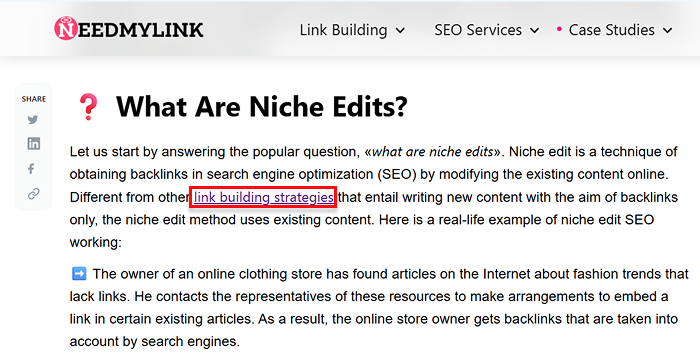
🔎 External Deep Links
External deep links (deep backlinks) arrive from another domain and land on a subpage.
💬 Why they help:
- They transfer credibility and trust from the referring site to your content.
- They can meaningfully improve the ranking power of the linked page.
- They deliver targeted referral traffic, especially to high-value spots such as landing pages or product listings.
Case in point: a recent New York Times story linked directly to the Science website, sending a wave of curious readers their way.
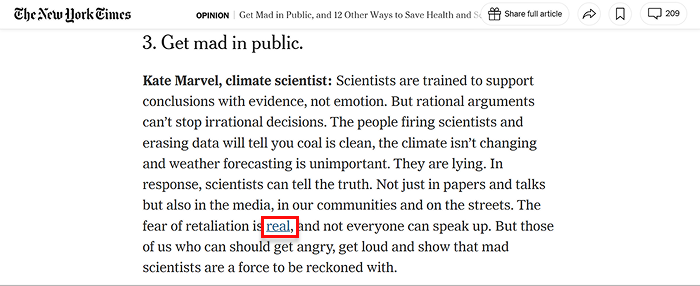
A balanced mix of both lies at the heart of any strong deep linking strategy. Internal links build a clear path through your content, while external links broaden reach and reputation. Together, SEO deep linking helps lift rankings, improves UX, and positions your site for growth well beyond 2025.
🤔 Deep Linking vs. Surface Linking
Ever catch yourself asking, “Why can’t I just drop a link to my homepage and call it a day?” You can – that’s called surface linking. But before you lean too hard on that habit, it helps to see how it stacks up against deep linking.
Surface links aim at your top-level pages – home, broad category hubs, or other obvious entry points. They’re easy to collect and great for pure brand exposure, but they rarely pass along much topical relevance to search engines.
Deep links skip the lobby and walk visitors (and crawlers) straight to very specific content – a blog post, a product variant, a niche landing page, and so on.
| Feature | Surface Linking | Deep Linking |
| Target | Homepage or top-level pages | Precise internal URLs |
| User Intent | General site exploration | Direct access to the sought-after info |
| SEO Payoff | Authority piles up on a few pages | Authority spreads throughout the site |
| User Journey | Extra clicks needed | Lands on the exact answer right away |
| Typical Use | Brand awareness, press mentions | Promoting specialized or revenue-focused pages |
😉 Why lean on deep links for SEO?
- Broader crawl coverage. Search bots discover more of your content when links tunnel past the front page.
- Better equity distribution. Page-specific votes of confidence give hidden sections a lift instead of letting everything pool at the top.
- Happier visitors. People arrive exactly where the referring page promised—no scavenger hunt required.
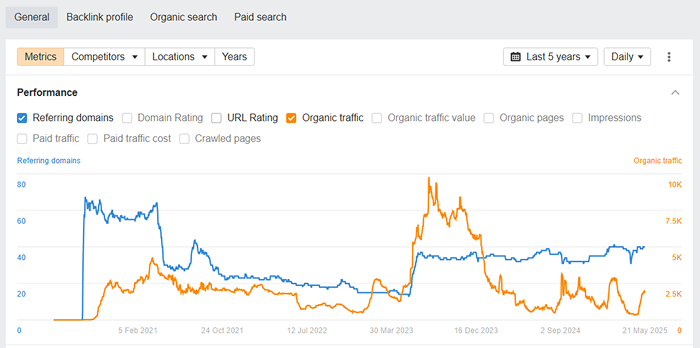
Need proof? Neil Patel’s now-classic article that nabbed 3,000-plus backlinks still shows a tight connection between referring domains and traffic spikes.
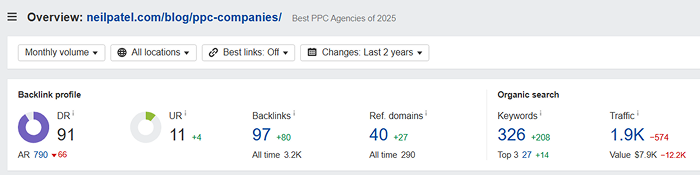
Over the past five years, the article’s organic traffic showed a strong initial correlation with the number of referring domains, with traffic rising significantly during periods of backlink growth. However, despite a stable backlink profile in recent years, organic traffic has declined and become more volatile, indicating that backlinks alone are no longer driving performance. This shift suggests that content freshness, keyword competition, and search algorithm updates have become more influential factors. So, to maintain and grow organic traffic, even Neil Patel and his team need to keep up with SEO optimization and regular content updates.
And for brands without Neil’s name recognition? External deep links can feel about as rare as a winning lottery ticket. Backlinko found that 94 percent of all web content earns zero backlinks, while Semrush reports that more than half of pages with no backlinks never reach Google’s first page. That bleak math explains why entire agencies focus on link acquisition without outside endorsements, and top-shelf content often sits in the shadows.
👋 How Does Deep Linking Work?
👍 Technical Aspects
Deep linking isn’t only about clever content placement; it relies on solid tech groundwork. Search engines can’t follow a link to page-three-of-your-guide if your site structure doesn’t let them. Here’s a quick tour of the machinery that makes deep links tick, minus the jargon overload.
1. Human-Friendly, Bot-Friendly URLs
A tidy URL tells people and crawlers what’s waiting on the other side before they click.
Why it matters:
- Clean URLs are more likely to be clicked and shared.
- Descriptive keywords in URLs help with indexing and rankings.
- Avoids confusion and improves trust.
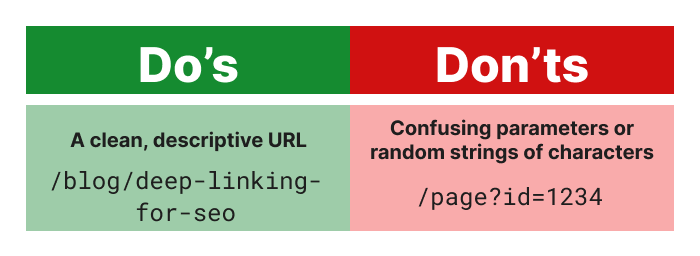
Pro tip: Short, hyphen-separated phrases earn more clicks, more shares, and a bit more search love than a string of numbers. Think of it as labeling the pantry jars so no one mistakes salt for sugar.
2. Anchor Text That Actually Says Something
The words you turn into a link (your anchor text) are clues. When they match the topic of the destination page, search engines connect the dots faster, and visitors know why they’re leaving the current page.
Why it matters:
- Enhances accessibility and usability
- Strengthens keyword associations for the target page
- Improves SEO relevance and rankings
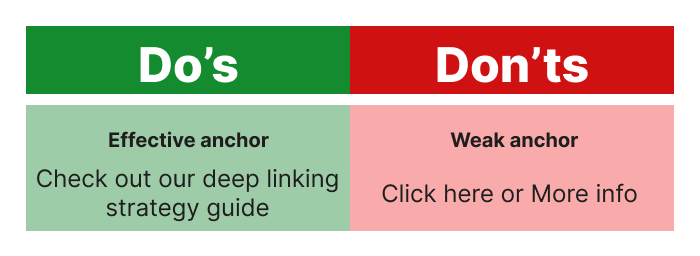
Keep it natural; stuffing the same keyword everywhere waves a red flag at Google.
3. An XML Sitemap That Digs Deep
Even with flawless internal links, list every key URL in your XML sitemap. It acts as a VIP pass for pages that are new, low-traffic, or hidden several clicks down. Skipping this step risks letting great content live in search engine limbo
Why it matters:
- Ensures deep pages aren’t missed during indexing
- Helps search engines understand your site hierarchy
- Especially important for new, low-traffic, or orphaned pages
👌 Search Engine Crawling
Search engines rely on automated bots to map and understand your site. Those bots travel from page to page by following hyperlinks, including the SEO deep linking connections that lead past the homepage to detailed resources.
Crawling usually starts with familiar URLs – your root domain or addresses already stored in the index. From there, each discovered hyperlink becomes a new route.
🔴 Internal deep links take bots to sections buried several layers down, revealing content that navigation menus might hide.
🔴 External deep links let crawlers arrive from another domain and still land on that same section, even if your internal links are sparse.
While moving through these paths, the crawler records anchor text and nearby copy to judge relevance. That context shapes decisions about:
- which queries the target page could satisfy,
- which keywords to store as ranking signals,
- whether the page deserves a place in the index.
Google also assigns every site a crawl budget – the approximate number of URLs it will request during a visit. A tidy internal network filled with deep links helps be sure priority pages are reached early and often. Omit those links, and valuable information buried in subfolders or missing from the sitemap might stay invisible.
For best results, send every deep link to a page that loads fast, answers a clear intent, and can be reached from more than one route. That structure raises the likelihood the crawler will index and later rank the page.
📱 Mobile Deep Linking
Mobile deep linking doesn’t push your pages higher in classic SERPs by itself, yet it elevates engagement signals: time on page, repeat visits, and in-app purchases that modern algorithms track closely. By letting your website and mobile app share links, SEO and deep linking reinforce one another on every screen.
Why it matters
- Maintains a fluid transition between browser and app, giving visitors a consistent journey.
- Keeps users active by sending them straight to the most relevant in-app view.
- Increases session depth, engagement, and conversion rates inside the app.
- Unlocks richer analytics for in-app behavior, guiding future UX and content tweaks.
Two standards you need to know
| Platform | Standard | How it behaves |
| iOS | Universal Links | Ordinary HTTPS URLs that, when the app is present, open the exact screen inside the app; if not, they fall back to the matching web page. |
| Android | App Links | Work the same way: your Android app claims selected URLs, so tapping a covered address launches the associated view in the app rather than the browser. |
These technologies show how deep linking works across devices. Fold them into your broader deep linking strategy, and visitors on desktop, mobile web, or native apps will always land on the same piece of content, strengthening deep linking for SEO signals while providing a consistent experience.
⚠ Why Does Deep Linking Matter for SEO in 2025?
✅ E-E-A-T Sets the Bar
Google’s 2025 algorithm gives top placement to pages that show Experience, Expertise, Authoritativeness, and Trustworthiness (E-E-A-T). Thoughtful SEO deep linking helps satisfy all four pillars.
👨💻 Experience
Deep linking helps showcase real-world usage and insights by connecting users to detailed pages like case studies, tutorials, user-generated content, or hands-on reviews. When you link to pages that demonstrate how something works or what it’s like in action, you’re proving you’ve been there, done that.
🕵 Expertise
Deep linking reinforces your subject matter expertise by directing users and crawlers to specialized, in-depth resources within your site. For example, a general article about SEO basics that links to a more advanced guide on deep linking strategy shows depth and range.
👨🎓 Authoritativeness
External deep links from reputable sources signal that your internal content is authoritative. If a trusted publication or industry site links not just to your homepage, but to a niche resource or research page, it amplifies the authority of that specific page and, by extension, your entire site.
👨💼 Trustworthiness
Trust is built on transparency and ease of access. Deep linking contributes to a more transparent, user-friendly structure by making it easier for users to find what they’re looking for. Linking directly to privacy policies, support articles, credentials, or research sources also helps users (and Google) trust the content you provide.
✋ Smarter Link Equity Distribution
Link equity (often called “link juice”) still matters in 2025. By piping internal links beyond the homepage, deep linking for SEO spreads authority to pages that deserve visibility. The payoff:
- Hidden gems start ranking for target queries instead of languishing in limbo.
- Googlebot discovers more URLs within its crawl budget, so a larger share of your content enters the index.
- You avoid orphaned pages that carry zero internal votes, preserving the overall strength of your site.
Remember, every hyperlink is a vote. Placing that vote on deeper resources invites search engines to evaluate and reward a broader slice of your work.
☝ Better Indexing and Crawl Coverage
Search engines like Google rely on bots to discover new pages by tracing every hyperlink they see. Solid SEO deep linking gives those bots an efficient map of your site structure.
1. Clearer Crawl Paths
By linking directly to subpages (blog posts, product listings, help articles), you guide crawlers to information that may sit several folders away from the homepage. Pages with no internal links can remain invisible to Google.
2. Faster, More Complete Indexing
A link from a high-traffic or high-authority page signals that the destination matters. Well-connected pages often enter Google’s index sooner and with stronger ranking potential.
3. Context-rich Anchor Text
Descriptive anchors explain what the target page covers. This helps search engines match that page to the right queries, strengthening relevance for associated keywords.
4. Fewer Orphaned Pages
Orphaned pages are pages that have no internal links pointing to them. They’re often overlooked by crawlers, no matter how valuable the content is. Deep linking ensures these pages are part of your website’s link graph, keeping them connected and discoverable.
👍 Elevates User Experience
Deep linking is more than a technical shortcut for crawlers; it actively shapes how real people explore your content – an area that Google now tracks closely. By dropping visitors onto the exact article, product, or help screen they want, deep linking for SEO removes extra clicks and keeps attention right where it belongs.
✔ Faster Routes to the Right Information
Whether someone needs a troubleshooting guide or a particular piece, a well-placed deep link whisks them to that page immediately, so they never have to hunt through menus or loop back to the homepage.
✔ Better Engagement Signals
When users find what they came for on the first try, they tend to stick around, view additional pages, and interact with calls-to-action, all of which lowers bounce rate and lengthens dwell time.
✔ Clear, Logical Paths
Thoughtful in-text links can walk a newcomer from a beginner overview to an advanced deep linking strategy tutorial in natural steps, creating a built-in lesson plan.
✔ Mobile Convenience
The same principle applies on small screens: Universal Links and Android App Links can drop a user straight into the matching view inside your app (or a responsive page), reducing loading friction and boosting retention.
✔ Smoother Conversions
Because deep links bypass intermediate pages, visitors reach high-intent destinations (checkout forms, pricing tables, sign-up screens) faster, which often translates into higher completion rates.


❝ Deep Linking Tactics for 2025 ❞
➡ Build Out Content Hubs
One of the most reliable ways to scale SEO deep linking is to organize related pieces into structured content hubs, sometimes called topic clusters. Each hub uses a “pillar-and-satellites” model:
- Satellite pages: narrow, in-depth posts that dig into subtopics and point back to the pillar (and to each other where it makes sense).
- Pillar page: a broad explainer that introduces the subject and links to every supporting article.
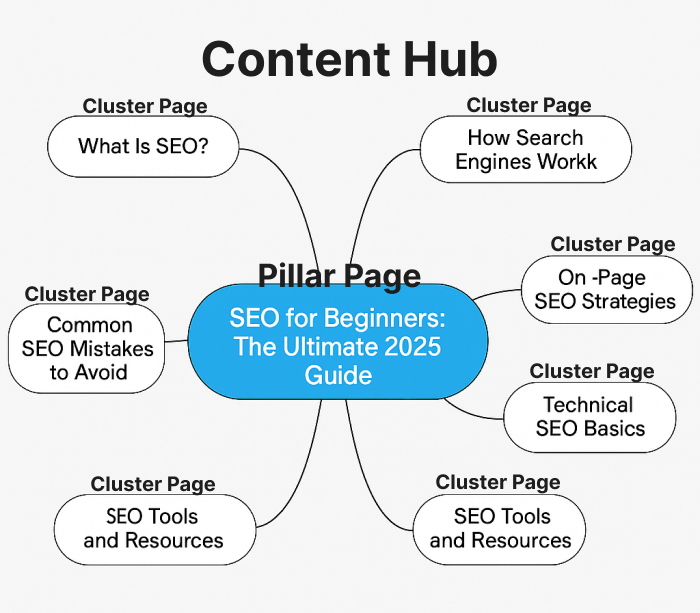
This interlinked mesh lets crawlers reach every layer of your site without retracing steps, showcases topical depth that meets E-E-A-T expectations, and guides readers smoothly from overview to detail. Keep the hub current by refreshing satellite posts with new data, adding fresh links from the pillar, and cross-connecting satellites that share context.
✴ Internal Linking Ideas
✍ Linking from High-Authority Pages
Every domain houses a few “power pages” – URLs that hoard traffic and backlinks. Funnel some of that equity by adding SEO deep linking from these heavy-hitters to newer or less visible assets. Start by spotting the posts and product pages with the most inbound links, then weave descriptive anchor text that explains why the destination matters. Point those anchors at cornerstone guides, fresh launches, or seasonal offers so authority flows where it’s most needed.
🚀 Contextual Linking
Context also counts. Instead of dropping links into sidebars or footers, tuck them right into sentences that naturally expand on the topic at hand. A handful of well-placed links per article is plenty; oversaturating the copy can distract readers and muddle relevance. When you blend power-page links with smart in-text references, you build an internal lattice that lets both visitors and crawlers glide through your most valuable content.
🔗 External Linking Moves
A robust internal network shines brighter when authoritative sites point to it. Two evergreen tactics continue to deliver:
📨 Guest Articles
Contribute pieces to industry blogs whose readership and domain strength align with your niche. Work a natural link to a deep resource – think a how-to guide, feature explainer, or case study rather than defaulting to your homepage. Editors are far more likely to approve context-rich references that serve the story.
👨💻 Digital PR
Blend traditional outreach with social-first campaigns centered on link-worthy assets such as original data, timely commentary, or striking visuals. Pitch the narrative, not just the URL, and aim for outlets that match your subject matter, even if their audience is smaller; a tight contextual fit can move the needle more than a broad mention. Platforms like HARO, X (formerly Twitter), and LinkedIn remain reliable channels for connecting with journalists and creators who can amplify your work.
Together, these efforts pass authority exactly where you want it – lifting hidden gems, strengthening your overall deep linking strategy, and fueling organic growth well into 2025.
📉 Monitoring and Maintenance
Treating links as “one-and-done” assets lets their value fade. Regular care keeps your SEO deep linking gains alive and protects the hard-won authority you built earlier in your deep linking strategy.
Routine Link Audits
Broken or outdated paths frustrate visitors and dampen search performance. Schedule a quarterly crawl to:
- Fix or redirect 404s – replace dead links at once.
- Update changed URLs – if you alter slugs or folder names, refresh every reference.
- Surface orphaned pages – add links so no valuable content sits in isolation.
For ongoing checks, keep three utilities in rotation. Screaming Frog SEO Spider crawls your site and uncovers broken or overly thin internal links. Ahrefs Site Audit presents a clear dashboard that highlights deep-link issues across large domains. Finally, Google Search Console alerts you to crawl errors, indexing gaps, and link misfires straight from Google’s own data.
Analytics & Performance Tracking
Use data to confirm how your deep links work in practice and tune them over time.
- Google Analytics – chart user paths, bounce rate, and time on page for every deep-linked destination.
- Ahrefs or Semrush – watch backlinks to individual URLs and see how those links lift keyword rankings.
As patterns emerge, adjust anchor text, add or retire links, and refine outreach targets. This ongoing loop answers the evergreen question “How do I find deep links for SEO?” by showing which links already drive results and where new ones will matter most.
🤔 Frequent Slip-Ups and Simple Fixes
Stuffing a page with dozens of internal links thins out authority, clutters the design, and leaves readers uncertain about where to click. Settle on a handful of high-value links – three to five is usually enough. Rotate your anchor text so it reads naturally, and avoid keyword stuffing.
☝ Off-Topic Linking
Sending users to pages that barely relate to the current discussion feels like bait-and-switch. Ensure every link truly adds depth to the conversation. A brief quarterly review of older posts helps you spot URLs that no longer fit and lets you replace or remove them.
☝Off-Topic Linking
Sending people to pages only loosely related to the discussion feels like a bait-and-switch. Make sure every link genuinely extends the conversation. A quick quarterly review of older posts helps you spot links that no longer fit.
☝Forgetting Mobile Visitors
A deep link that works on desktop but dead-ends in a phone browser hurts conversions. Configure Universal Links for iOS and App Links for Android so taps open the correct screen in your app when installed, or gracefully fall back to the mobile web page. Test across several devices and browsers to confirm success.
☝Flying Blind on Data
Without metrics, you can’t tell which deep links drive results or which ones are broken.
Set up event tracking in Google Analytics for internal link clicks, use Ahrefs or Semrush to monitor backlink health, and perform monthly link audits to catch errors and new optimization opportunities.
🏁 Final Thoughts
Deep links shoulder much of the heavy lifting on a modern site: guiding crawlers to buried content, spreading authority beyond the homepage, and dropping users precisely where they want to be. Whether you’re focused on better rankings, higher engagement, or stronger conversions, deep linking delivers compounding rewards by stitching your entire site together with structure, relevance, and trustworthy pathways.
As Google keeps emphasizing quality, real-world experience, and accessibility, a well-maintained deep-linking framework will keep your content visible and competitive well into 2025. Don’t let it slide. The team at NeedMyLink can audit your structure, refine anchor text, and highlight pages that deserve more attention, so every click counts.


