


Domain Authority (DA) is a 1–100 metric that estimates how likely your site is to appear on Google. Watching the number helps you measure progress, benchmark against rivals, and uncover reliable backlink opportunities. For anyone in digital marketing, keeping an eye on DA simply makes sense.
Plenty of platforms promise to calculate the score – some free, some paid – but not every option deserves your attention. To make the choice easier, this guide explains what DA is, why it matters, presents nine top domain authority checkers, and shows you practical ways to improve the number.
🤔 Defining Domain Authority
Domain Authority (DA) is a metric that predicts how likely a website is to rank on search engines. It reflects the overall SEO strength of a domain based on external signals. Higher DA suggests greater visibility potential.
Created by Moz, DA gauges how strong and trustworthy an entire website appears to search engines. Scores run from 1 to 100; higher numbers signal a better chance of ranking well on Google.
DA offers a quick snapshot of overall SEO health. The calculation considers how many sites link to you, how authoritative those sites are, and how balanced your link profile looks.
Remember, DA is not an official Google ranking factor. Even so, sites with higher scores usually claim more search visibility. Having a yardstick is better than flying blind.
✋ The Importance of Checking Domain Authority
DA is a predictive metric that helps you understand how your site might perform in search rankings. It’s based on link metrics and site authority. This score is widely used by marketers to assess progress. Why even bother checking DA? Good question. Here are five reasons to start:
- Spot SEO gains. A rising score shows your site is becoming stronger and more trusted.
- Qualify link prospects. Before requesting a backlink, check whether the target site has real authority rather than being a link farm.
- Benchmark competitors. See at a glance where you stand compared with others in your field.
- Set priorities. DA gives a wide-angle view of performance, helping you decide where to invest effort.
- Stay realistic. A low score simply means there’s room to grow.
Checking your Domain Authority isn’t about chasing a vanity number; it’s about staying informed, making data-driven decisions, and building a credible site ready to rank higher.
☝ Top 9 Tools for Checking Domain Authority
You know why DA matters, so the next move is learning how to check domain authority for free or with paid platforms that add extra insight. Many services promise answers, yet they differ in depth, cost, and ease of use. The nine domain authority checkers below let you track progress, gauge competitors, and uncover new backlink openings. Scan each description to see which one helps you check domain authority most efficiently.
1. Ahrefs
Ahrefs labels its metric Domain Rating (DR), yet the 0–100 scale mirrors DA in practice. Even the no-cost lookup shows your DR, referring domains, and the strongest backlink you’ve earned.
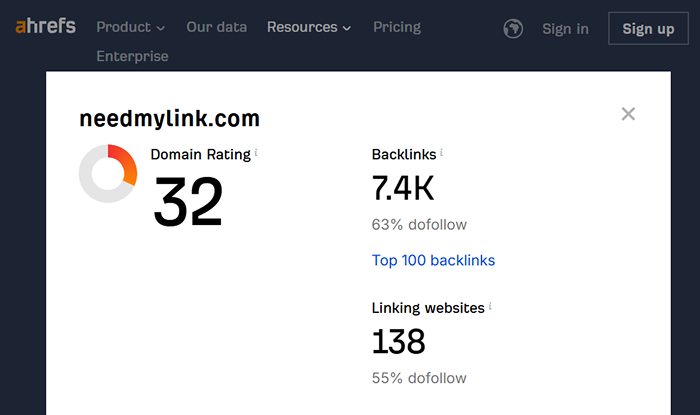
Upgrade and you unlock historical link growth, anchor-text breakdowns, do-follow vs. no-follow splits, and a competitive gap chart that highlights sites linking to rivals but not to you. The interface stays clean even when you’re juggling dozens of projects, so agencies appreciate Ahrefs as a daily control panel for link-building campaigns.
2. Majestic
Instead of a single score, Majestic assigns every domain two complementary numbers: Trust Flow (quality) and Citation Flow (quantity). A healthy site usually keeps Trust Flow close to or higher than Citation Flow; a lopsided profile can flag spammy links.
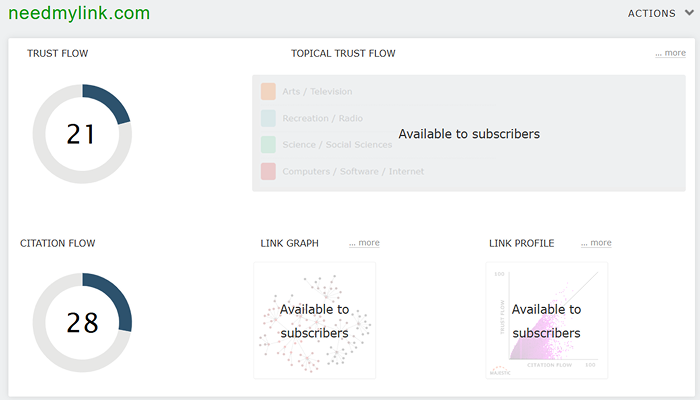
Majestic’s Link Graph then maps how each referring site connects to others, helping you spot private-blog networks or unexploited outreach clusters in seconds. For link auditors who care less about keywords and more about graph theory, Majestic feels tailor-made.
3. Moz
Because Moz created Domain Authority, its Link Explorer is the reference standard. Enter any domain and you’ll see DA, Spam Score, linking domains, top pages, and even a link-intersect view showing who links to competitors but not to you.
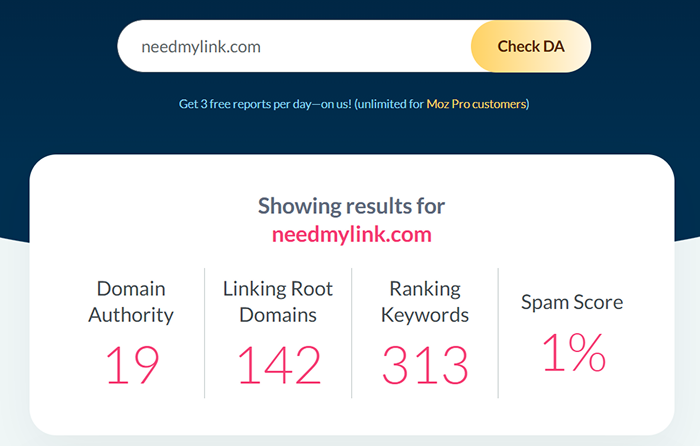
The starter tier offers ten free queries a month, enough to keep an eye on your own site plus a few rivals, while Moz Pro removes caps and adds rank tracking, keyword research, and on-page graders under one roof.
4. Serpstat
Serpstat is a full-on SEO toolkit. They have a website DA checker, but you also get information on keyword tracking, backlink analysis, competitor research, and even SERP position monitoring.
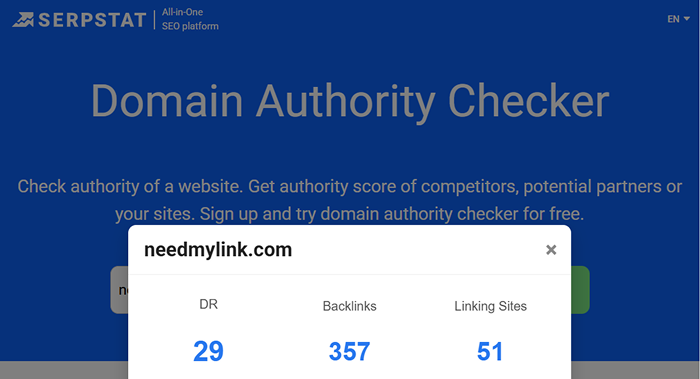
It’s a great pick if you’re looking to manage everything SEO-related from a single platform. Whether you’re doing audits, building links, or tracking rankings, Serpstat keeps things organized and easy to use.
5. Website SEO Checker
If you just need a quick Domain Authority check, Website SEO Checker gets the job done. It’s a free tool that gives you the basics: DA, PA, and a few other on-page SEO details.
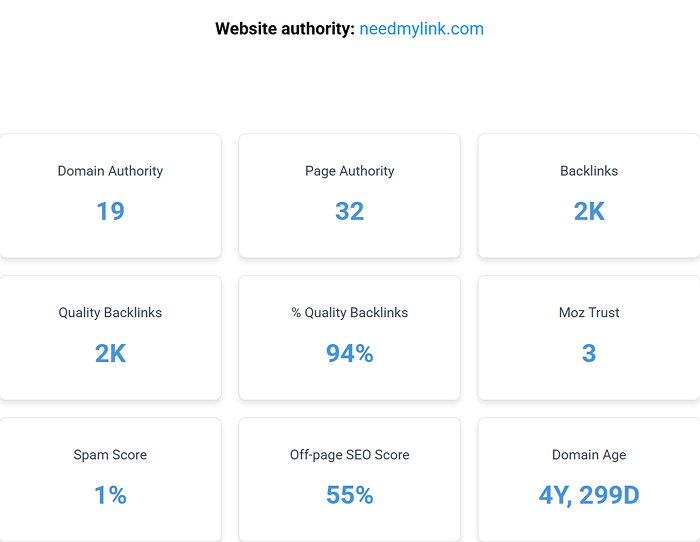
Nothing fancy, but super handy when you want fast insights without opening up a full SEO platform. It’s a great go-to for quick audits or when you’re checking multiple sites and need the essentials at a glance.
6. SmallSEOTools
SmallSEOTools is one of those super handy sites you keep bookmarked. It’s free, beginner-friendly, and fast – perfect for when you just need a quick DA or PA check.
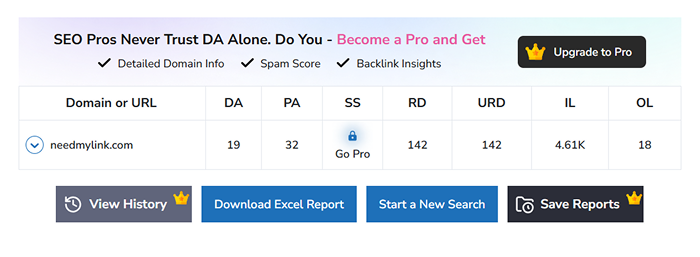
You’ll get instant access to basic SEO metrics, and while it doesn’t go as deep as the premium plan, it’s great for quick checks or if you’re just starting to dip your toes into SEO.
7. Backlinko
Backlinko is best known for its top-tier SEO guides and surveys, but it also offers a small collection of free SEO tools, including a basic DA checker tool.
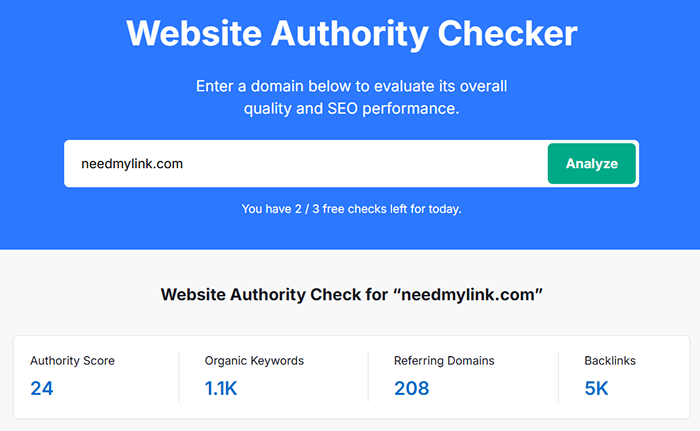
It’s not the most detailed tool out there, but it’s clean, simple, and does its job when. If you’re already a fan of Backlinko’s content (and who isn’t?), this tool is a nice little bonus to have in your SEO toolbox.
8. Editorial.Link
Editorial.Link is another free, easy-to-use tool that collects not only Moz’s but also Ahrefs’ data.
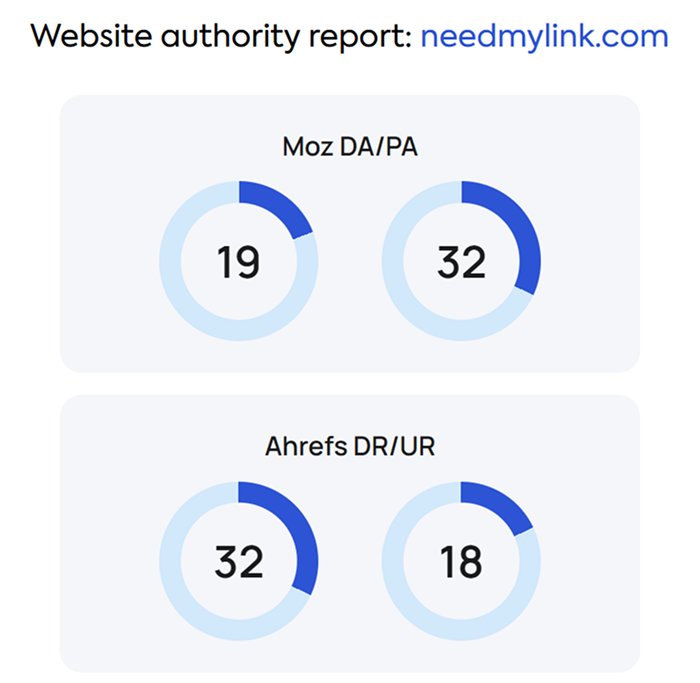
It’s especially useful for link builders and marketers who want to quickly qualify link prospects without logging into both platforms.
9. DA PA Checker
Just like the name says, DA PA Checker is all about fast, straightforward checks for Domain Authority and Page Authority. It’s free and perfect when you need to bulk check multiple URLs (especially handy during link-building outreach).
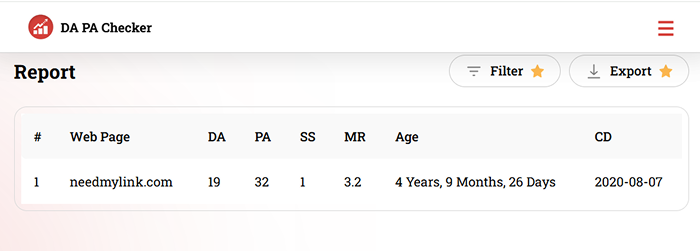
A solid go-to if you’re managing a lot of prospects and want to stay efficient.
📈 Optimizing for Higher Domain Authority
Domain Authority is a benchmark metric that forecasts a website’s ranking ability. It relies heavily on backlinks and the trustworthiness of referring domains. Improving DA can significantly enhance organic visibility.
Knowing your DA is one thing. Improving it? That’s where the real work (and results) happen.
Boosting your Domain Authority doesn’t happen overnight. In fact, it takes an average of 6-12 months to increase DA by 10 points for actively optimized sites. But with the right strategy and consistent effort, it does pay off.
Whether you’re aiming to climb the SERPs, build trust with Google, or attract better backlinks, it all starts with building a solid foundation. Here are some proven ways to start growing your DA.
🔗 Internal and External Linking
To boost your DA, start with your links.
Smart internal linking helps spread authority across your site, guiding both users and search engines to your most important pages. Tools like Screaming Frog can help you audit your internal links and spot opportunities to improve structure.
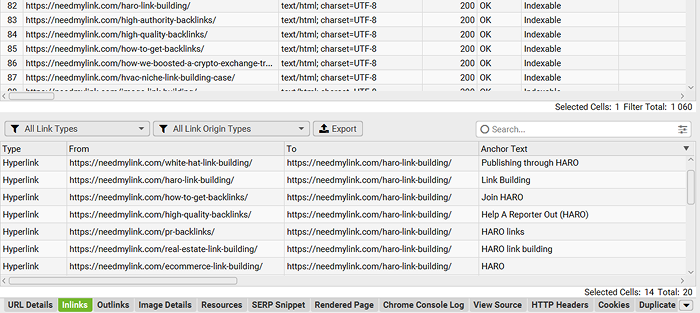
High-quality external backlinks are one of the biggest signals of trust and relevance to search engines. The more there are credible sites that link to you, the stronger your Domain Authority gets.
📝 Keyword Optimization
Using the right keywords in the right places helps your content show up in search results. The more visible your pages are, the more traffic and engagement you generate — and that often leads to more backlinks.
Over time, this engagement strengthens your Domain Authority and overall organic performance. Tools like Ahrefs help expand and refine your semantic core, analyze what’s already ranking, and uncover new keyword opportunities. At the same time, you can quickly generate relevant keyword ideas and variations with our keyword suggestion tool, which helps structure content around real search demand.
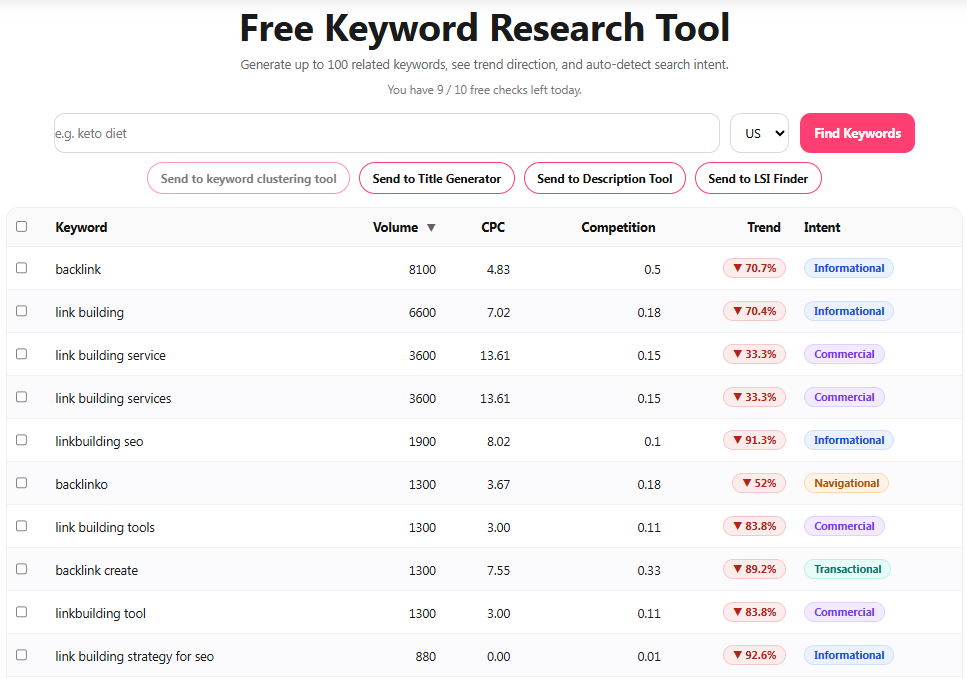
So don’t skip keyword research. Make sure your titles, headers, and body content speak your audience’s language and match what they’re actually searching for.
📄 Create Interesting Content
If you want to earn backlinks naturally, start with great content. The kind that’s helpful, original, and interesting to read.
When your content brings value, people are more likely to reference it, and that’s one of the most organic ways to grow your Domain Authority. As an example, we try to create content that we’d want to read ourselves, and that our audience’s find genuinely useful too.
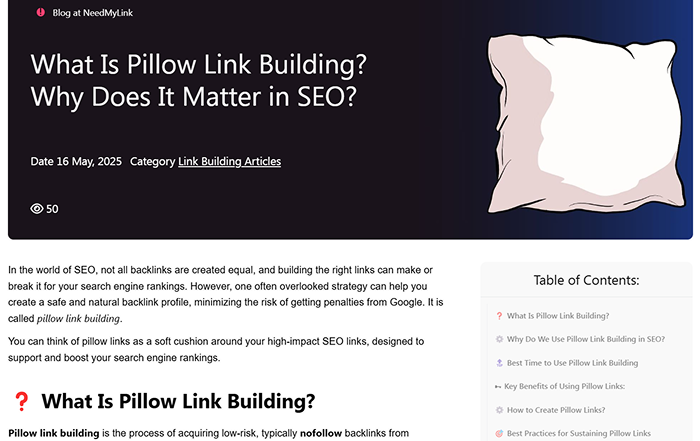
It’s not just about ranking. It’s about being worth linking to. When your content truly resonates with readers, answers their questions, or solves their problems, it naturally becomes a trusted resource. So, the goal is to create content that stands out in your niche and earns backlinks because it’s genuinely helpful and authoritative, not just because it’s trying to cheat the system.
📊 Technical SEO
Good content needs a solid foundation, that’s where technical SEO comes in.
Things like page speed, mobile-friendliness, clean URL structures, and schema markup all help search engines crawl your site more effectively. Plus, they make your site better for users, and user-friendliness is one of the main Google ranking factors.
When your site runs smoothly, it ranks better and earns more trust, which boosts your DA over time.
At the end of the day, Domain Authority is a reflection of how trustworthy and competitive your site is. And knowing how to check and improve it is key to long-term SEO success. Whether you’re a beginner doing quick audits or a seasoned marketer building complex link building campaigns, the tools we’ve listed can help you stay on track and make smarter decisions.
But here’s the thing: checking metrics is only the first step. Growing them takes time, strategy, and consistency, especially when it comes to building high-quality backlinks. The good news? You don’t have to do it all on your own. At NeedMyLink, we help brands grow through quality link building, smart SEO strategies, and tailored outreach. If you’re ready to improve your rankings and build a stronger backlink profile,get in touch with our team. We’ll help you build links that bring results.


