


Long-tail keywords are extended, highly intentional search phrases with relatively modest demand compared with generic seed terms. Ranking for a single-word query like “skirt” would be fantastic, yet the top ten positions are already locked down by Amazon, Wikipedia, and other authority giants. Niche websites can carve out space more effectively by targeting queries that mirror a visitor’s specific intent. Using these extended keyword phrases will attract new, well-qualified traffic, increase conversion rate, and expand overall visibility.
Unfortunately, long-tail phrases can sound awkward when dropped into copy. Marketers routinely worry: “Am I over-using them? Would anyone actually type that exact string? How can I integrate long-tail keywords into blog posts and articles in a natural way?” You can answer those questions once you grasp what a given query really says about the searcher and how Google parses the request. This guide clarifies long tail keywords’ definition, explains the business upside, shows where to uncover them, and illustrates how to use them fluidly in your content.
❓What Makes a Keyword “Long Tail”?
What is long tail keyword in SEO? Don’t let the name fool you, the element that matters most is not the word count but the precision of the request and the size of the audience typing it. Everything hinges on search volume (SV). For instance, the phrase “what are long tail keywords” averages roughly 1,100 monthly searches, whereas “how to find long tail keywords for seo” pulls only about 50. Both of the strings are quite long, yet one is far more competitive.
Did we just stuff both of those phrases into the last sentence to fudge rankings? Perhaps. But they also illustrate our point, don’t they?
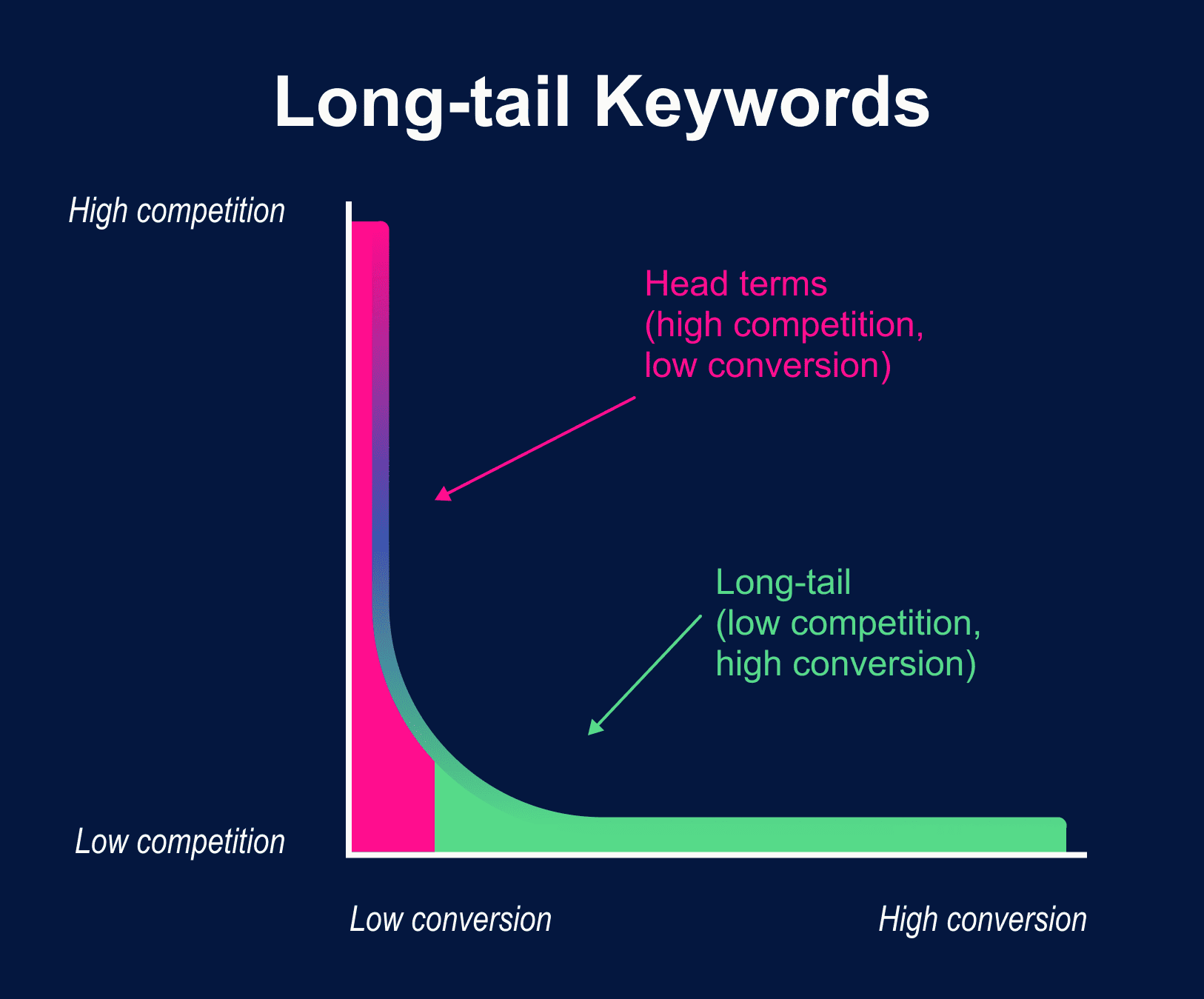
When you swap broad terms for precise queries, you find people who already know what they want and are close to purchasing. That makes long-tail keywords a prime source of sales-ready traffic for companies focused on qualified leads.
💎 The Value of Long-Tail Keywords
Wide, single-term searches might draw a crowd to your page, but you aren’t actually searching for the constant trickle of eyeballs who are just looking around. You want people with their credit cards out. Here are the four ways long tail keywords can shorten your sales cycle:
- Target traffic. Those terms speak directly to searchers with a specific interest, so the clicks you get are going to be more likely to explore, subscribe, or buy.
- Increase conversion rates. Someone typing “best 4K photo editing monitor for under $500” already knows what they want and is almost ready to purchase.
- SEO advantage. Keeping blockbuster head terms from a new domain is tricky; approachable, lower-traffic terms give you an honest avenue to page one without needing bunches of backlinks.
- Content opportunities. Long tail keywords reveal detailed questions and problems of your targeted audience. By bridging the gaps with answers, you become a trusted expert in your industry.
Those questions may be less loud in terms of search volume, but they’re being typed in by people actively searching for you. A handful of willing-to-buy visitors can outperform a stadium full of window shoppers.
🔍 Selecting Strong Long-Tail Keywords
Not every phrase will work out, though. Some may look great on paper, but do not lead to worthwhile traffic and conversions. Sort out each prospect for your keyword list by the following:
- Search volume. Expect modest numbers, but ensure steady interest, so that the traffic you get is worthwhile.
- Keyword difficulty. Check what is currently ranking at the top. If they are either from the giants or masterfully optimized, examine more closely the less competitive terms.
- User intent. Check whether the search query signifies research, comparison, or buying, and deliver content of the appropriate nature.
- Relevance to your business or content. A low-difficulty term is a poor fit if it doesn’t match your product, service, or niche; misaligned visitors bounce immediately.
The most successful extended keyword phrases achieve an equilibrium of demand, opportunity, clarity, and brand fit. You need to focus on converting traffic instead of simply increasing page views.
🗂️ Keyword Categories and Search Intent
As explained before, keywords serve different purposes. To use them successfully, it is useful to identify the intent of each search query. This helps you create content answering what people want.
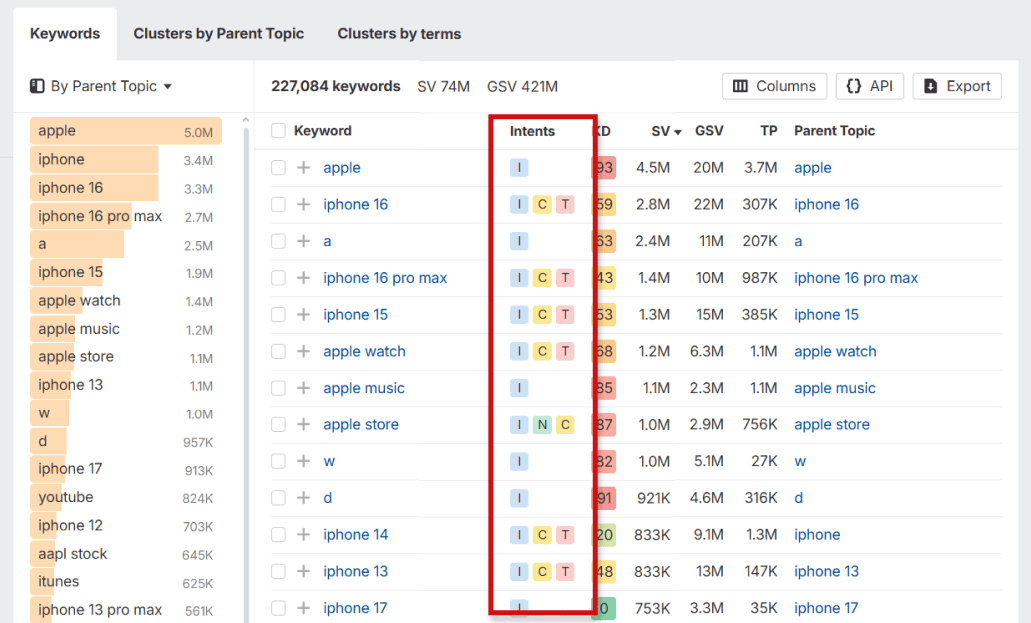
How to identify the underlying intent of search queries? Thankfully, along with an abundance of technical information, Ahrefs also helps by labeling each keyword with an “intent” tag that represents a step in the user journey. The four steps are:
| Category | Intent | Example |
| Informational | The visitor needs an answer or a tutorial | how to fix a leaking kitchen faucet |
| Commercial | The user is weighing options | best budget smartphones under $300 |
| Transactional | The visitor is ready to act: buy, sign up, download, or contact. | buy noise-cancelling headphones online |
| Navigational | The user wants a specific site or page | Spotify pricing plans page |
These intentions behind each long tail keyword are the secrets to knowing those intentions, and they lead you to bring correct visitors: people who will likely engage, subscribe, or purchase. Align your content with those types of purpose, and you meet users exactly where they are in their journey, and that is highly effective SEO.
📘 Practical Methods to Uncover High-Value Long-Tail Keywords
How to find long tail keywords? There are many ways – manual and automatic. The right long tail keyword research workflow hinges on your budget and bandwidth, but the tactics below surface search phrases that real users enter – no guesswork required. From free methods like Google Autocomplete to commercial SEO software, each one has its advantages. Some of the most effective ways to find good, specific search queries that actual users search for are as follows:
🔤 Google Autocomplete for Instant Insight
One of the simplest and most accessible ways to locate long tail keywords is Google Autocomplete. Google’s engine bases these predictions on billions of queries, so phrases with modifiers like near me, under $50, or 2025 update often signal commercial or time-sensitive intent. Such suggestions offer insights into specific information like locations, price ranges, user intent, or product specifications. It helps to bring to the fore relevant and up-to-date extended keyword phrases.

Open an Incognito window (or log out) and start searching for a generic topic. Incognito mode strips out personalized history, giving you a neutral set of suggestions. The suggestions are real searches that are derived from billions of queries, generally containing location, price, or feature suggestions. Because suggestions are customized to individual history and geography, surfing privately keeps the list dull.
💬 Answer the Public as a Research Tool
Answer the Public is a freemium tool that scrapes Google’s autosuggest API and organizes results into visual wheels – questions, prepositions, comparisons, and more – for you to find long tail keywords for your niche. The graphical clusters indicate trends, seasonal peaks, and phrasing already used by your audience.
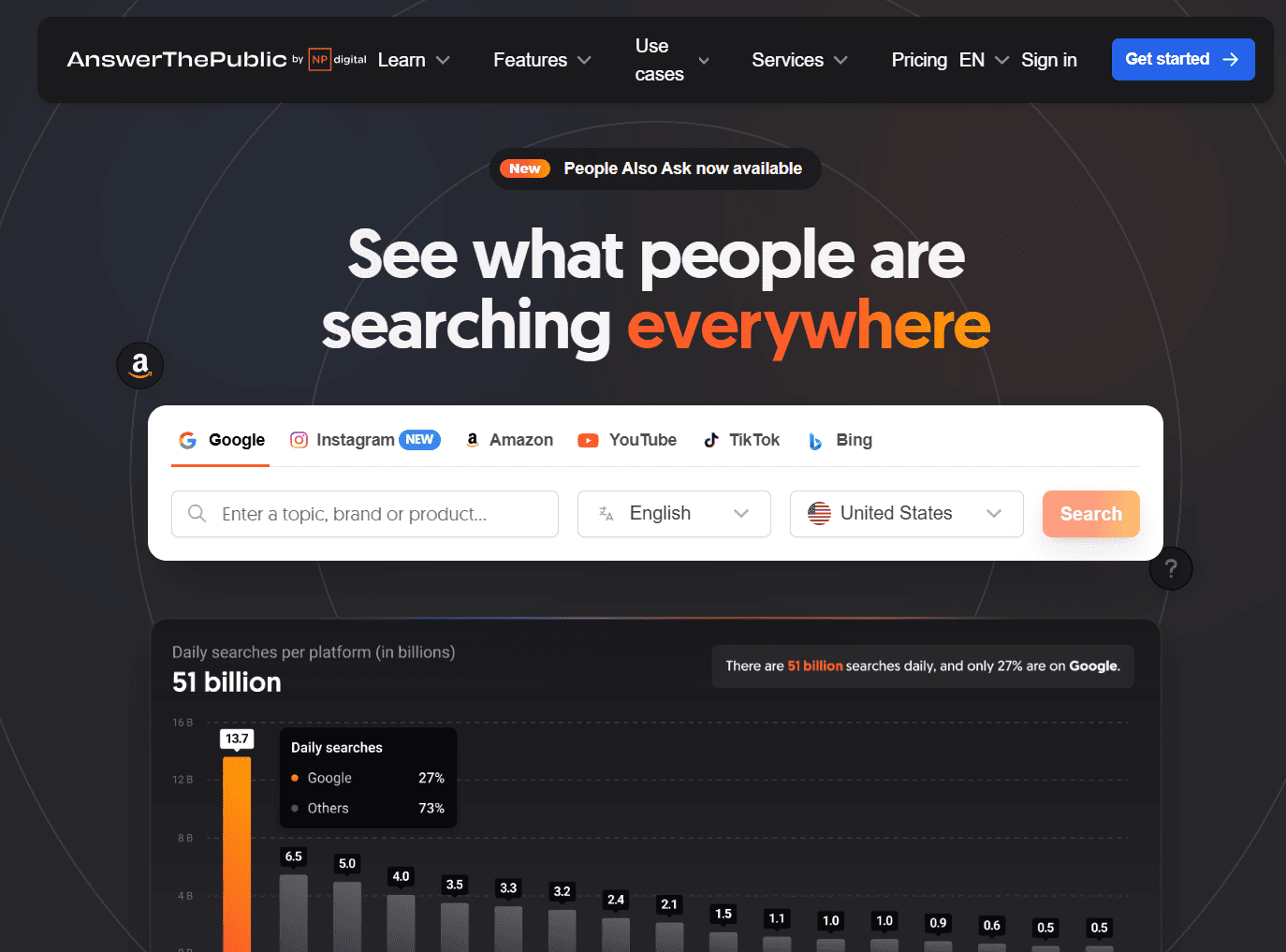
This tool understands the way individuals think, what they care about, and how they frame their problems. You can group by intent buckets (how, why, vs, cost) so you can match each query with the right content format – tutorial, comparison chart, pricing guide, etc. Prioritize green or yellow volume dots in the tool’s interface; they blend adequate searches with manageable competition. Since it speaks the language of searchers, the tool is perfect to write articles, FAQ pages, and video scripts that are natural-sounding and purpose-driven.
⚖️ Keyword Gap Audits to Find Missed Opportunities
A keyword gap audit analyzes your site against competitors and points out words that they rank for but you don’t. These gaps will have high-intent long tail keywords that already have traffic going to somebody else in your niche. Writing with them enables you to create targeted content, filling those gaps and drawing new relevant traffic. Platforms like Ahrefs, Semrush, or Moz compare your domain against rivals and flag keywords they rank for that you don’t. All you need is to plug in 3–5 competitors with similar domain authority. Better focus on peers rather than industry giants.
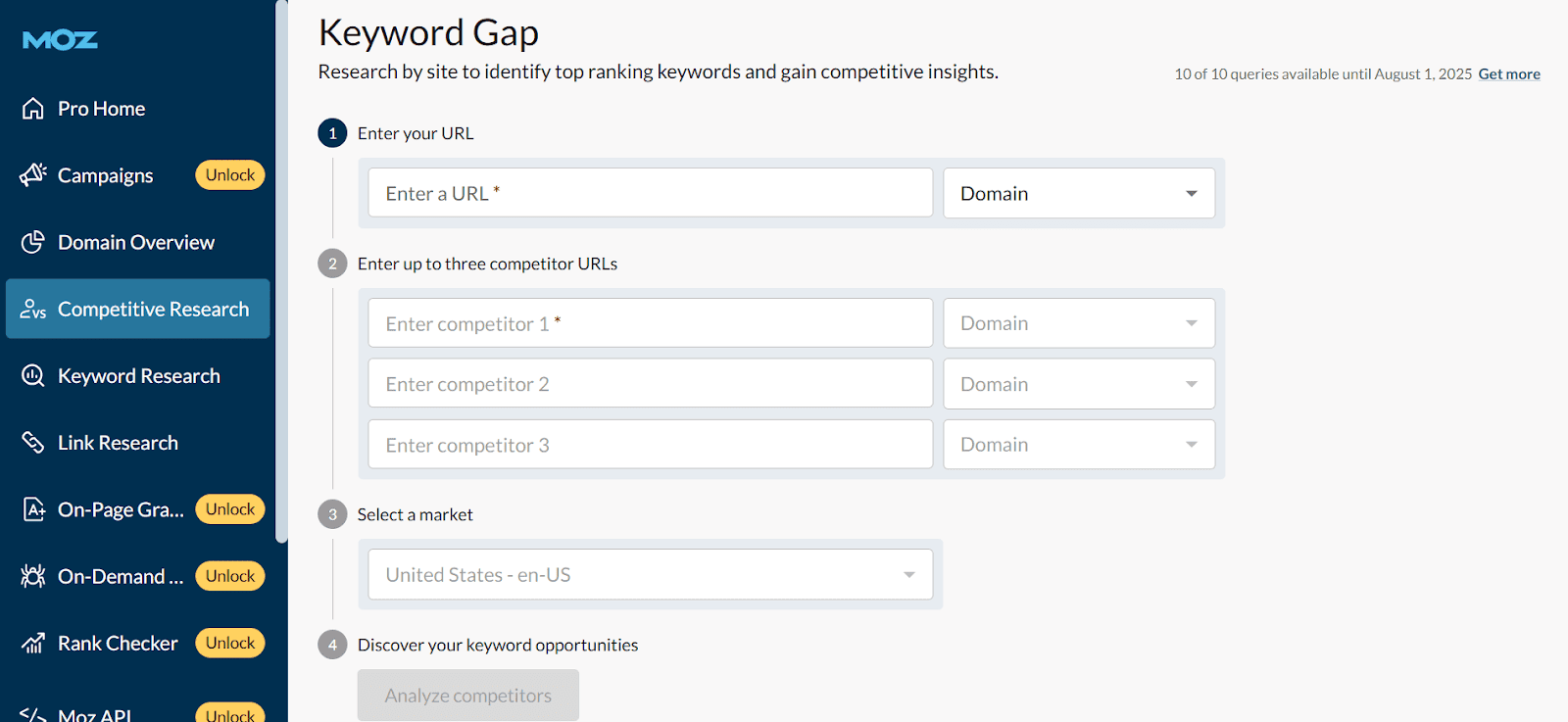
You can filter for KD less than 30 and word count more than 3 to surface attainable long tails. Align them with the funnel stage. High-intent phrases such as “best CRM for legal startups” are prime for product pages, while broader informational gaps feed top-of-funnel guides. By publishing content around these uncovered terms, you siphon qualified traffic already proven to convert on competing sites, closing the performance delta without guesswork.
🧩 Tap Purpose-Built SEO Platforms for Fast, Data-Rich Discovery
SEO tools offer data-driven insights that will take your long-tail keyword strategy to the next level. Paid suites compress hours of research into minutes by pairing vast keyword indexes with real-time metrics. Truly, the best way to find long tail keywords with low competition, relevant queries, track search trends, and give you a clearer picture of what your target audience is looking to discover. The majority of these tools do much more than offer simple keyword suggestions. They also surface intent signals and competitor overlap so you can judge viability before drafting copy.
| Tool | Stand-Out Capabilities | Ideal User | Extra Value |
| Ubersuggest | Snapshot stats (SV, KD, CPC) plus content ideas pulled from top-ranking pages | Beginners and lean teams | Offers “content type” breakdown (listicle, video, how-to) for each keyword |
| Ahrefs – Keyword Explorer | 16 B-plus keyword index, filters for intent, clicks, and traffic potential | SEOs who need granular analysis | Seamless pivot to Content Gap and backlink audits |
| Semrush – Keyword Magic Tool | Auto-groups terms into questions, modifiers, and related queries | Marketers crafting comparison or “best” content | Integrates paid metrics and campaign tracking in one dashboard |
| Google Keyword Planner | First-party Google data with historic trend charts | Advertisers planning hybrid paid/organic campaigns | Excellent for commercial phrases with CPC benchmarks |
Use these platforms to locate phrases in the “sweet spot”: highly relevant, moderate difficulty, and enough volume to justify a page. So you can pick words that are midway between relevance and a reachable ranking limit.
💡 Use Forums for Finding an Authentic Voice
Public forums, we all know them: Reddit, Quora, and other niche boards. They can reveal the unfiltered language your audience uses. Because posts appear in real time, they are likely to expose brand-new questions and ultra-specific complaints that haven’t been seen yet on mainstream SEO sites.
Search by subreddit or thread title for your broad topic plus modifiers like 2025, for freelancers, or DIY. Collect full questions exactly as typed; these often become zero-competition long tails. Create content that answers in the same vernacular, then link back in a helpful, non-promotional reply to seed authority and traffic. As a result, your pages that resonate with readers’ vocabulary and intent outrank generic keyword-stuffed posts.


📊 Expand with Google Search Console Insights
Google Search Console exposes the exact terms that bring visitors to your website, including many long-tail variants you never even targeted. Sort the Performance report by impressions, filter positions 11–30, and export queries with more than three words. Those are long tails your site almost ranks for. A on-page tune-up: insert the phrase in the opener, tighten the title tag, add a one-sentence answer near the top, and request re-indexing. This can bump those results into the top ten and capture ready-made demand. If a query shows solid impressions but weak clicks, A/B test a punchier title or embed FAQ schema to secure higher SERP. These small on-page tweaks here often lift mid-page results into the top ten, capturing traffic you already earned but never claimed.
❓ Harvest Ideas from “People Also Ask” Panels
Whenever Google includes a People Also Ask (PAA) panel, it shows the next questions real users research following the initial question, which is one way of finding long tail keywords. Enlarge each question to observe the answer clip, and jot down any recurring angles or subtopics.
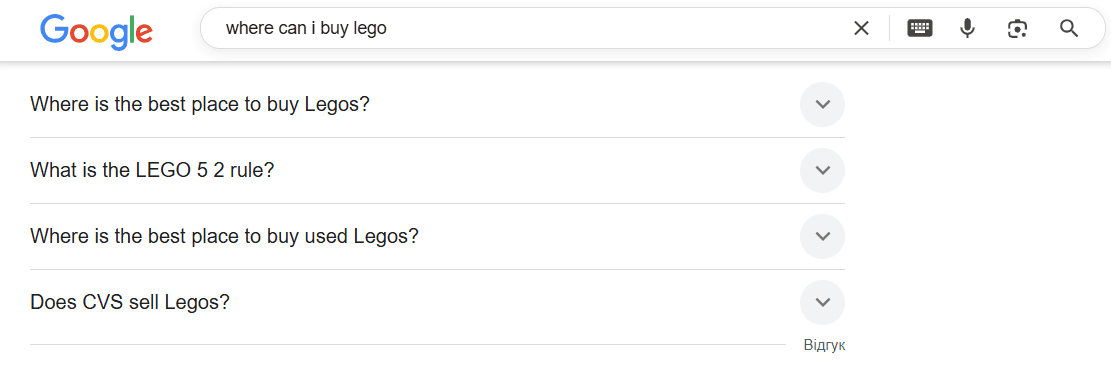
Use these questions to write targeted sections of an article, expand topical depth, write a stand-alone FAQ that can be optimized to take featured snippets, write an internal-link hub where each PAA question is its own post, connected by a pillar page. Treat each of the boxes as a teaser for the next thing your readers want, and search engines are waiting to reward.
📈 Spot Momentum Shifts with Google Trends
Google Trends adds a timeline to your analysis, showing the next big thing. That extra context is pivotal for long tail keywords, which tend to react to seasons or headlines. A term with low volume this day, say, “DIY Halloween costume for toddlers,” might spike every October. Look in the regional filter to see where that peak is most pronounced and craft your post or promotion accordingly. When you observe steady elevation, create or refresh content in advance so you’re visible when demand is highest.
✨ Read SERP Features for Hidden Clues
Today’s results pages feature AI Overviews, featured snippets, video rows, image packs, and more. Each feature will give a clue about the shape and wording that most satisfies a searcher’s query. If a target topic triggers a video carousel, add a short demo clip. When you notice a featured snippet, understand how it is structured and compose a straightforward, pithy answer that can replace it. By conforming to the structures Google already favors, you naturally move up with connected long-tail phrases and match intent in optimal opportunity form.
🔁 Scavenge the “Searches Related to…” Section
Scroll down to the end of the results page, and you’ll find eight additional related searches closely tied to your original keyword. These are Google’s recommendations based on knowledge of search patterns and can discover niche angles you missed, such as regional spells or comparison terms.
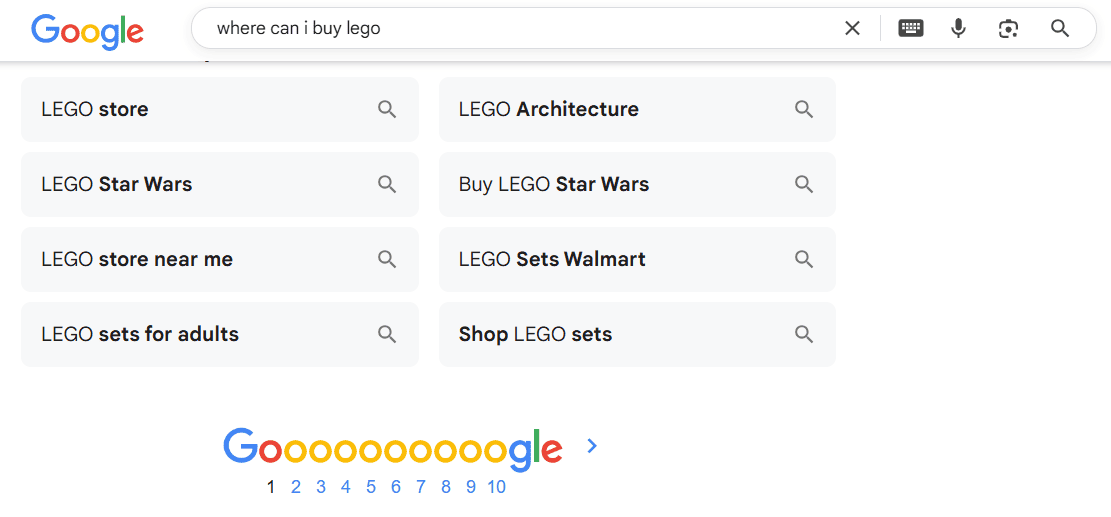
Collect the variants suitable for your users, incorporate them into sub-headings or independent articles, and you’ll reach more without straying from intent-based searches.
🎯Applying Long-Tail Keywords for Measurable Gains
Finding untapped long-tail keywords is straightforward. Weaving them into pages so that Google and visitors both appreciate them is the real craft. Use the workflow below to turn low-volume queries into visible, revenue-driving positions. Below is the best long-tail keyword tutorial to obtain genuine results.
♻️ 1. Revitalize Existing Assets
Instead of creating completely new content from scratch, go through old blog posts or landing pages and fortify them with the addition of long tail keywords. Look for articles that’re performing relatively well, perhaps ranking on page 2 or page 3 for a related keyword. In Google Search Console, open Performance, Search results, filter for positions 11–30, and export queries that contain two or more words.
By recognizing and inserting those phrases organically within your content, headers, subheaders, meta tags, or image alt tags, you have a high possibility of ranking up and attracting more quality traffic.
Also, take the opportunity to update stale information, examples, or images to improve user experience and SEO. The result? Pages already trusted by Google gain exact-match relevance and often move from page 2 to page 1 without new backlinks.
✍️ 2. Build New Content Around Long-Tail Phrases
Low-volume keywords are brought to life when they’re used as the foundation for new, targeted content. These queries usually signal a defined need. Someone is looking for an answer, a product, or a solution. That makes them a natural fit for dedicated guides, FAQ blocks, or product walkthroughs.
To illustrate, say your long tail keywords SEO is “how to waterproof suede boots at home.” That’s not a broad question; it’s very specific and deserves its own solo stand-alone how-to post or video. Because the post matches intent precisely, it can earn Featured Snippets or “People Also Ask” spots, siphoning traffic from higher-authority domains.
Structure the content to respond to the question or serve the purpose directly and in simple language. Use subheadings, bullet points, and images as necessary to enhance readability and engagement.
🧠 3. Match Every Querie to Search Intent
We’ve already talked about this. Using long-tail keywords effectively starts with understanding why someone is searching for them. Every query implies a goal – finding information, comparing options, or completing a purchase. Your content must directly align with that intent to be useful and rank well.
By matching copy to intent, you lengthen dwell time, trim bounce rate, and send stronger relevance signals. Those metrics Google uses to validate ranking promotions.
🏷️ 4. Optimize Meta Elements for Better Click-Through
Searchers never see meta tags on the page itself, yet these fields dictate how your snippet looks in Google results and whether users tap through. Work your target phrase in naturally here:
- Title tag. Lead with the long-tail query, stay under 60 characters, and add a clear benefit (e.g., “Waterproof Suede Boots at Home. Step-by-Step Guide”).
- Meta description. Expand on the promise in ≈155 characters and repeat the phrase once.
- Headings (H1 – H6). Keep hierarchy tight so crawlers grasp the topical flow instantly.
- Image alt text. Describe the picture in plain English, weaving in the keyword to aid both accessibility and image search.
Well-crafted meta elements tell Google what the page covers before it parses the body, improving relevance signals and earning more clicks from crowded SERPs.
📍 5. Merge Long-Tail Queries with Local Signals
Combining specific search queries with local search queries can give your visibility a considerable boost in geographically targeted searches. Long-tail + geo modifiers (e.g., “emergency HVAC repair in Plano”) capture searchers ready to call or visit. To surface for these searches:
| Step | SEO Action | Result |
| Title + H1 + intro | Insert city or neighborhood and core long-tail phrase within the first 100 words. | Relevance boost for map and “near me” results. |
| Structured data | Add LocalBusiness JSON-LD with address, geo, and identical keyword phrasing. | Clear geographic context for crawlers. |
| Consistent citations | Mirror the wording in Google Business Profile, industry directories, and social bios. | Reinforces NAP accuracy and keyword relevance. |
| Review prompts | Ask customers to mention the specific service and location (“fast HVAC repair in Plano”). | Review text often surfaces in the local pack, enhancing click-through. |
A tightly aligned phrase across on-page copy, schema, and citations increases eligibility for the three-pack, Maps, and voice queries, especially on mobile.
🧩 6. Build Topic Clusters Around a Pillar Page
Long tail keywords are best used when creating topic clusters. It’s an SEO technique that strengthens site architecture, relevance, and authority. You start with a pillar page – a comprehensive, broad-level guide on a general subject. Then create support pages targeting related long-tail terms. They excel when organized into a clear cluster:
- Pillar content. A 360° overview (e.g., “Complete Guide to Footwear Care”) to target a broad, mid-volume head term; length 3,000 + words.
- Cluster pages. Each tackles one long-tail keyword (“DIY suede-protector recipe”). Use the long-tail in URL, H1, and the first paragraph.
- Link architecture. Two-way links: pillar to cluster and vice versa; lateral links between sibling pages. Keep anchor text descriptive (“homemade suede protector”).
This structure boosts crawl efficiency, signals topical depth, and lets you rank for dozens of related low-competition queries without bloating content. Track impressions and clicks in Search Console; even a 10-spot jump on a 90-search query often returns meaningful revenue.
❓ 7. Convert Question-Form Queries into FAQ Sections
Frequently Asked Questions (FAQ) blocks give you a friction-free way to surface question-based long-tails – exactly the phrases most likely to generate Featured Snippets.. Many long-tail queries are in question form, like ones in our article about E-E-A-T content.
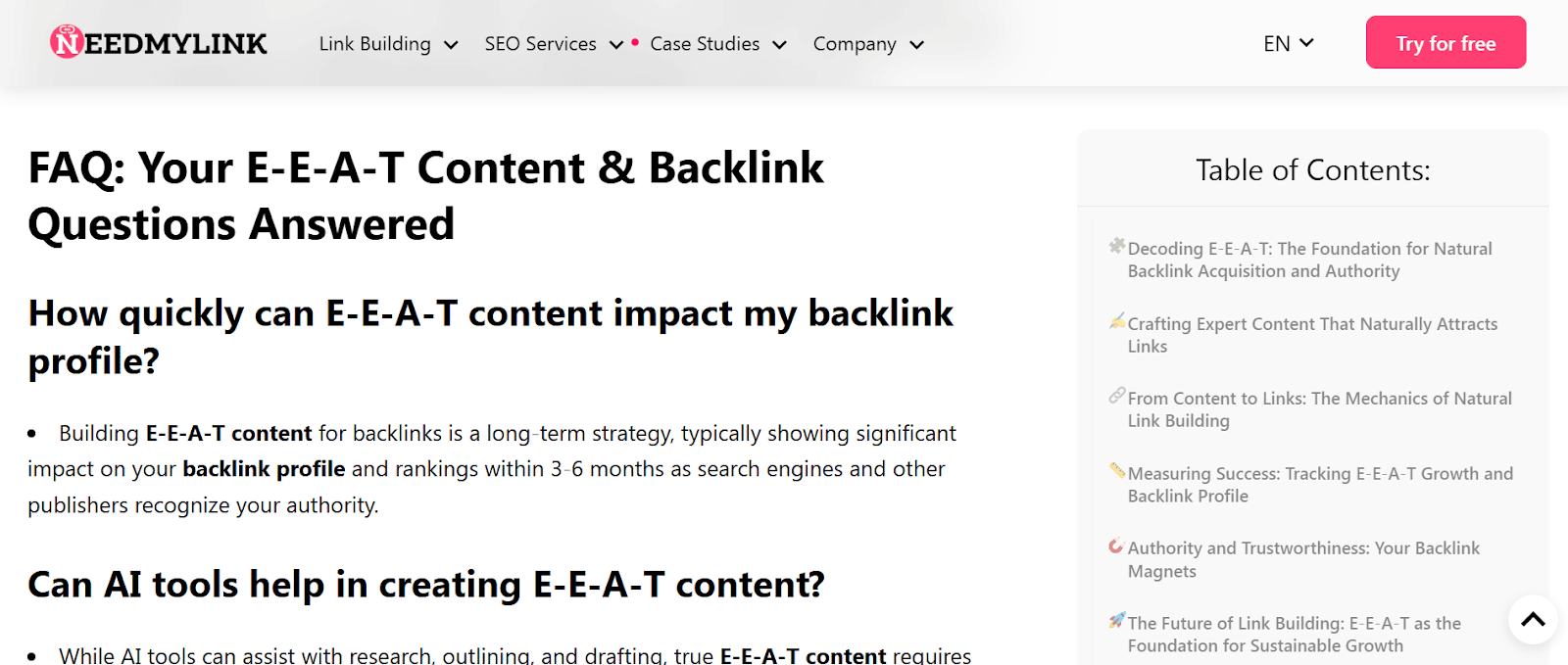
Drop a compact FAQ (3–6 questions) to any guide, landing page, or product sheet. One-to-two sentence answers are enough to satisfy both readers and crawlers. Use the exact query as an H3 and answer in one or two crisp sentences. Marking up each Q&A with FAQPage JSON-LD helps Google qualify the content for rich results, expanding your pixel footprint in SERPs and lifting click-through. This setup increases Featured-Snippet eligibility, enlarges SERP real estate, and improves user satisfaction metrics – signals Google rewards.
📚 8. Choose Content Formats Built for Long-Tail Depth
Certain content types naturally fit lengthy, intent-rich phrases that broader posts gloss over. Why is that? Long-tail queries are typically more specific questions, comparisons, or niche passions that require more in-depth answers. Those are the most optimal forms for long-tail SEO: tutorials & how-to content, comparison posts, product reviews, and case studies.
These formats let you answer the precise intent behind each long-tail phrase, demonstrate expertise, and secure rankings that generic articles miss, all while reinforcing authority and conversion pathways.
Remember our question from the introduction part? This one: “How can I integrate long-tail keywords into blog posts and articles in a natural way?” When we were doing our research, it turned out to be a real search query. Never thought that a keyword like that exists and can go on and on forever. But don’t you think it was naturally and nicely incorporated into this detailed guide? We ourselves use all the tips and tricks we write about.
🧾 Main Takeaways
Long-tail keywords turn search traffic into genuine opportunities. They reach readers who have already narrowed their choices and are ready to act. By focusing on these precise phrases, you stop competing with giants on broad queries and start meeting real prospects exactly where their questions live.
To make them work, keep the workflow straightforward: discover phrases that mirror user intent, build or refresh content around those questions, and weave each phrase into titles, headings, snippets, and visuals so it reads like a natural part of the conversation. Revisit past pieces, add fresh data or examples, and connect supporting articles with smart internal links to strengthen topical depth.And if you feel overwhelmed doing this on your own, you can always contact NeedMyLink for help. We’ll monitor new long tail keyword variations, track seasonal spikes, and adjust on-page elements when rankings creep near the top for you. A steady cadence of small updates will compound into reliable gains in qualified visits and revenue.


