


You’ve probably come across a resource page, even if you never used that term. From an influencer’s hand-picked “favorites” to a thesis bibliography, these curated lists pull together dependable references so readers don’t have to scour the web themselves. Because each item typically points to well-recognized domains, search engines view the collection as trustworthy. With targeted outreach, your site can appear on those lists too.
Among today’s white-hat tactics, resource page link building stands out for its long-term payoff and transparent approach. Before we explore the steps on how to do a resource page links, let’s look at what turns an ordinary list into an outstanding one – are the resource links complete your SEO visibility strategy, along with strengthening audience confidence?
🔎 What Is a Resource Page?
In SEO terms, a resource page is a carefully organized set of links, tools, or articles focused on one topic or persona. Users value it as a one-stop source for high-quality, time-saving material.
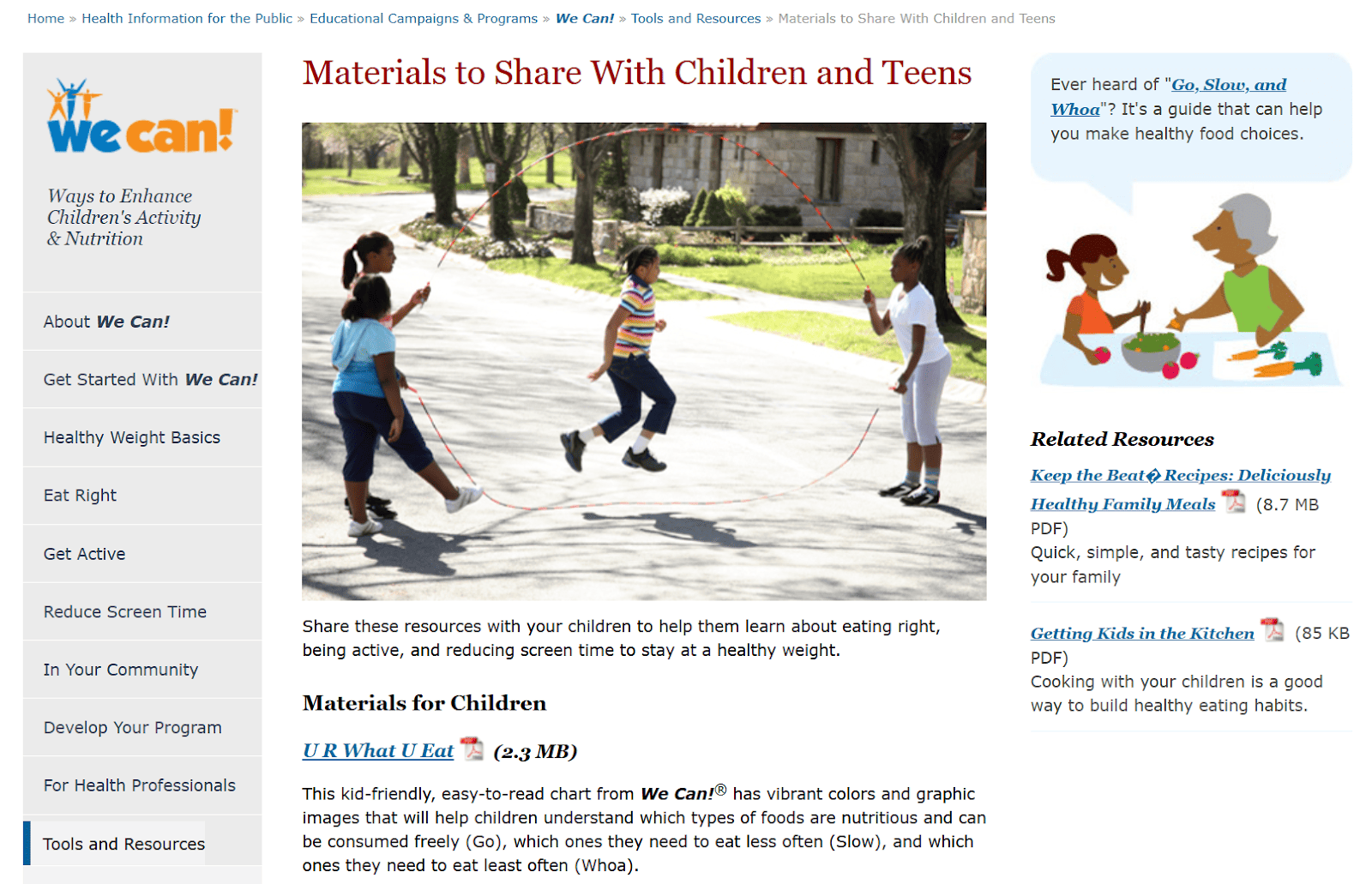
Google values it because the page passes authority through outbound links to relevant, reputable destinations. And while backlinks to your own site are important, who you link to also matters when it comes to your site’s overall authority. So if you are ever looking for how to make a resource page, remember to consider the quality and credibility of the websites.
🔗 Defining Resource Page Link Building
Resource pages link building is the process of earning a spot for your article, tool, or dataset on an established hub that already ranks or draws steady traffic in your field. Industry surveys show roughly one in three SEO professionals consider these links the most impactful element in their campaigns.
The partnership benefits both parties. You gain a reputable backlink that can boost organic visibility and referral traffic, while the curator refreshes their list with timely, audience-focused material at zero cost or effort.
Example: imagine you’ve published a data-driven SaaS onboarding checklist or released original e-commerce conversion benchmarks. Many SaaS or CRO resource hubs keep “best guides” compilations. A brief, well-targeted pitch that highlights the piece’s factual rigor and audience match is often enough for an editor to add your resources link during the next update.
🚀 Why Does This Link Building Method Deliver Results?
Have you ever heard of E-E-A-T? And no, it doesn’t have to do anything with food. It’s a core framework used in Google’s Search Quality Evaluator Guidelines. E-E-A-T stands for Experience, Expertise, Authoritativeness, and Trustworthiness. Exact qualities that radiate from resources links.
- Experience. Resource pages often link to content created by people with firsthand knowledge or industry background. Whether it’s a step-by-step guide or a case study, this kind of content demonstrates lived experience and practical insights.
- Expertise. The content featured on quality resource pages tends to come from subject matter experts. Google recognizes this and rewards links that point to content showing depth of knowledge.
- Authoritativeness. Resource pages are usually hosted by reputable websites – government bodies, universities, established blogs, or industry organizations. A backlink from these pages signals to Google that your content is trusted by authoritative sources.
- Trustworthiness. Because resource pages are curated with users in mind, they’re typically reviewed and updated to include only credible and safe links. If your content makes it onto one, it’s a strong indicator that it’s considered reliable and accurate.
Compared to low-effort tactics like blog comment links or mass-submitted directories, links from resource pages are far more valuable. They carry the weight because of the page’s authority, the relevance, and the usefulness of the context.


🛠️ How to Build Resource Page Links: Step by Step
It might all sound a little too good to be true, and you wouldn’t be wrong to think that. So, how to do a resource page link building? Like any other aspect of SEO, it requires strategy, effort, and consistency.
To make it work, you need to follow a structured process. The four main steps to earning backlinks through this method are: searching for opportunities, organizing them, reviewing or creating the right content, and executing effective outreach.
1️⃣ Search for the Best-Matching Resource Pages
Begin by tracking down resource hubs in your vertical that cover the same subject, enjoy solid domain authority, and add new entries regularly. Pages that meet all three criteria are crawled more often and pass stronger equity to outbound links.
1.1 How to Use Google for Finding Link Opportunities?
Google’s search modifiers still surface the largest trove of resource link building prospects. Using advanced search operators, you are able to rapidly bring up top-notch opportunities that are niche-specific.
Google proves to be the best means of searching for most of the resource pages. All you have to do is use an advanced search operator: keyword inurl:resources.htm. This query gets Google to bring up pages that have the word “resources” in their URL, something that resource or reference pages all have. These searches cut down on your results to pages that are built to link out to helpful content.
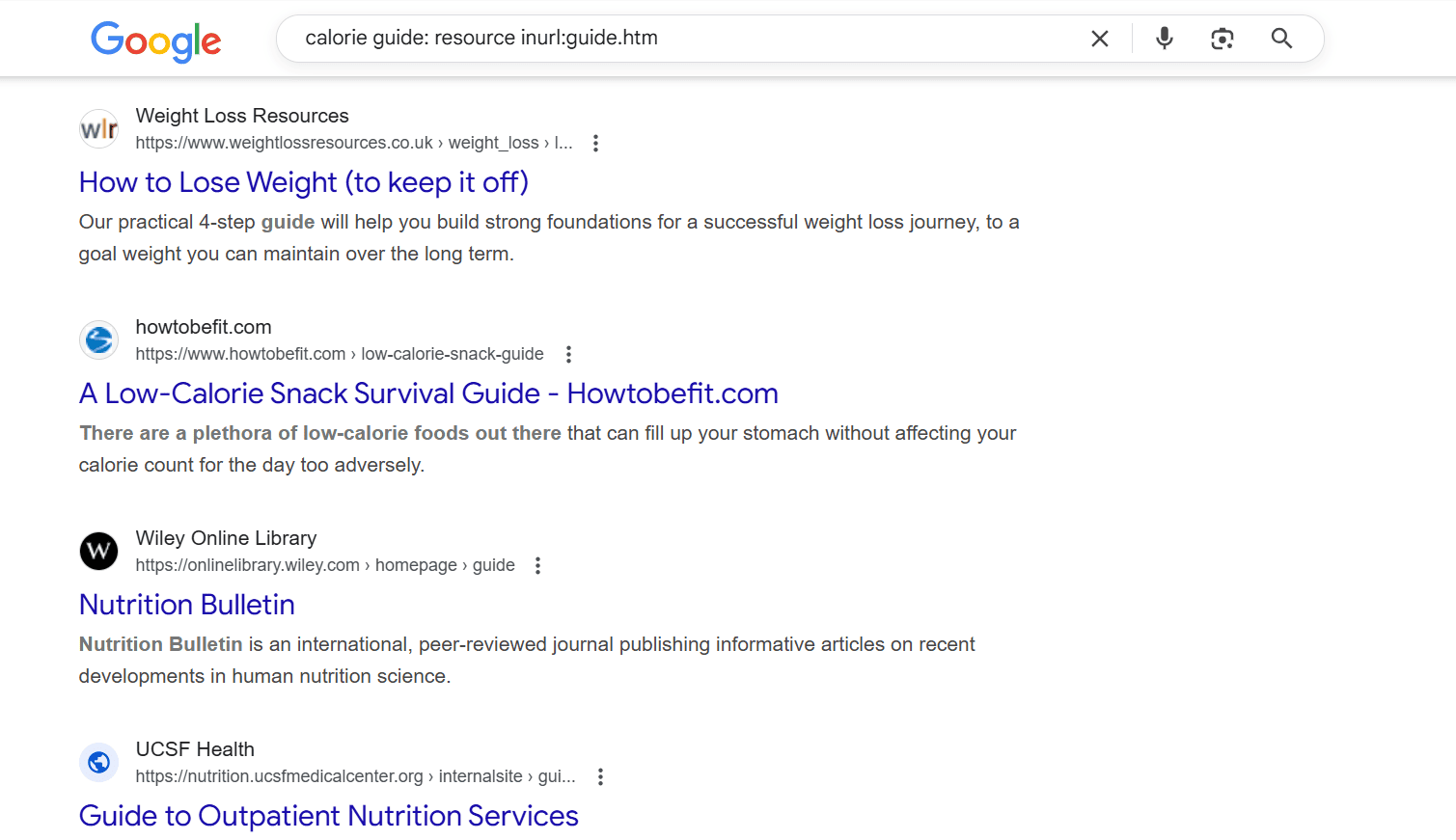
In a test search for calorie guide: resource inurl:guide.htm, we found out this query returns nutrition directories that already link to dietary studies and calculators. Open each candidate and log pages that maintain external-link lists. Experiment with various variations of your keyword and operators like intitle:resources, inurl:links, or “useful links” to broaden your search and locate more potential link placements.
1.2 How to Reverse Engineer Competitor Links?
Drop a leading competitor into Ahrefs, Semrush, or Moz. Using these tools allows you to see exactly where they are getting backlinks from. To make the process faster, filter referring pages whose URLs or titles contain resources, links, or tools.
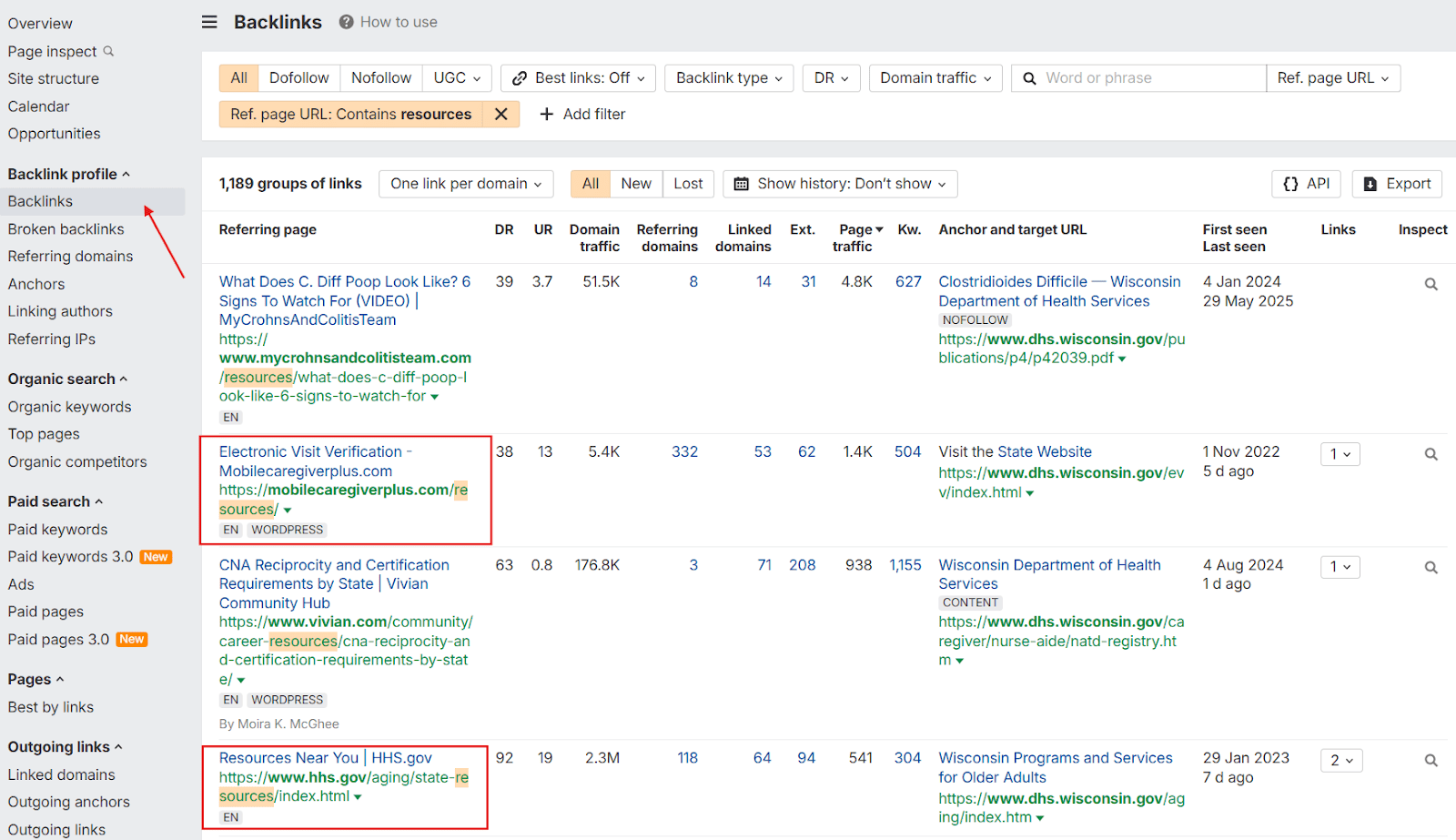
Because the curator has already endorsed a related piece, pitching a fresher or more comprehensive asset positions you as a natural follow-up choice. It often comes with a stronger success rate than blind outreach.
1.3 How to Spot Broken Links?
Web pages constantly alter – resources links age, URLs vanish, and 404s appear. So, most pages end up having broken links after a while. Broken links are not just bad for user experience but for SEO too, so site owners must fix them. That’s where you can step in with a broken link building campaign. Use tools like NeedMyLibk Broken Link Checker to identify resource pages with any outbound links that have a 404 or link to dead content.
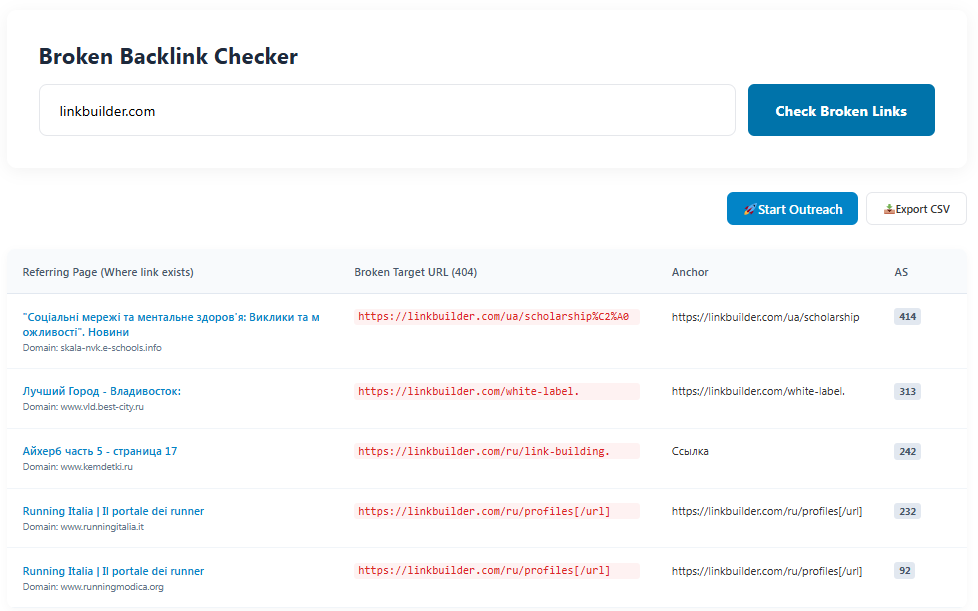
This is an effective approach because you’re helping them improve their page by fixing a broken link and maintaining the integrity of their resource page. When you reach out to them, be polite and nice. Send the webmaster a concise note with the broken URL and its anchor text, offering your replacement.
2️⃣ Catalog the Resource Pages You Discovered
After you’ve gathered a roster of potential pages, sort and score them before sending any outreach. A simple spreadsheet works: list the URL, Domain Rating, and estimated traffic. While you scan the numbers, you’ll see websites that could hurt your rankings; drop them. Then conduct a quick manual check:
- Does the site feel credible?
- Is the information current?
- Would a backlink here suit your brand and audience?
Quality outweighs volume. One link from a solid resource page is worth more than ten from questionable ones when you’re doing resource page link building.
3️⃣ Match Your Asset to the Resource Page
A webmaster skims every suggestion in seconds, so your material has to feel as though it already belongs on the page. There are a few things to tighten the fit and cut rejection rates in your resource link building campaign:
- Audit what’s already there. Open each outbound link and note its publication date, format, and unique angle. Record anything outdated, duplicated, or broken; those gaps point to openings your piece can fill.
- Spot missing angles. Compare your notes with the research. Look for topics the list barely mentions – new regulations, regional statistics, mobile-first tips, fresh case studies. Filling an obvious void is the fastest way to earn a placement.
- Tailor or create the asset. Update an existing post or draft a slim spin-off that tackles the gap head-on. Refresh statistics to the current year, add step-by-step instructions, and embed something shareable (template, calculator, checklist) that boosts utility for readers.
- Mirror the prevailing format. If most links point to 2,000-word how-tos, send a guide, not a slideshow. If the page favors short cheat sheets, condense your content to match. Consistency preserves the page’s user experience and makes approval easier.
By auditing first, customizing second, and packaging everything the curator needs, you present a turnkey improvement to the page – the piece, they can publish instantly.
4️⃣ Reach Out to the Website Owner
This is where many resource pages link building efforts fall short – generic emails rarely get responses. To succeed, you need to craft personalized, concise, and benefit-driven outreach messages that clearly show why your content is valuable to their audience.
While this process requires time and effort, you can streamline it using AI tools to help draft emails or outreach platforms to verify contacts, send messages, and track campaign progress. Just make sure you:
- Use the recipient’s name.
- Mention a specific element of the resource page.
- Keep it short and polite.
- Emphasize how your content benefits their audience.
Most importantly, avoid sounding spammy, pushy, or overly demanding. You’re trying to build long-lasting relationships. And respectful communication goes a long way in increasing your chances of success.
⚠️ Problems and Tips for Resource Page Outreach
Even the best strategies can encounter challenges. Here are some common mistakes that could cost you valuable, high-quality backlinks – and how to avoid them:
📧 1. Always Email the Decision-Maker
“Info@” and “contact@” addresses drown in the hundreds of cold pitches. Sidestep that black hole by hunting down the individual who owns content or SEO outcomes – often a managing editor, content strategist, or marketing lead.
Begin with the site’s About or Team page; if names aren’t listed, run the domain through Hunter.io. Or you can always cross-check candidates on LinkedIn or X to confirm their job titles. Once you have the right person, tailor your note: greet them by name, reference a recent post or update, and briefly explain why your asset would serve their readers. A custom approach to your resource page link building shows respect for their time and boosts your reply rate.
✅ 2. Make Sure Pages Fit Your Content
Relevance anchors credible resource link building. Even stellar material will be passed over if it clashes with a resource page’s focus or audience intent. Before you hit send, ask yourself:
- Does the asset answer the same core question the page targets?
- Will visitors gain new, actionable insight from your link?
- If you were a reader, would the addition feel natural?
Pretend you’ve written a comprehensive guide on gardening tips. Dropping it on a mental-health resource hub stretches the connection too far – despite gardening’s proven connection to emotional well-being benefits. Conversely, submitting that guide to a horticulture or sustainable-living list makes immediate sense and elevates your odds of receiving a “yes.” In resource pages link building, vetting relevance up front preserves your credibility and helps you land high-authority backlinks that will make the difference for your authority.
📄 3. Follow Contact Instructions
Many resource pages include specific contact guidelines for content suggestions, link submissions, or general inquiries. These instructions may seem minor, but they’re often there to help website owners manage the volume of emails they receive, and ignoring them can cost you the opportunity altogether.
Some sites will ask you to use a particular subject line, submit your suggestion through a dedicated contact form, or include certain details in your pitch (such as the title of your content, your website URL, or a short description). Others may explicitly state what types of content they accept or don’t.
Failing to follow these guidelines sends the wrong message. In many cases, emails that don’t follow instructions are automatically filtered out or deleted without a second glance. So if they ask for a specific subject line, use it exactly as written. These small details can be the difference between being ignored and getting a reply.
💻 4. Your Website Must Be Ready to Impress
No matter how strong your resource page link building campaign or how valuable your content is, it won’t matter if your website doesn’t meet basic quality standards. Site owners will almost always visit your page before deciding whether to link to it, and if what they see looks unprofessional, outdated, or untrustworthy, your chances of earning a backlink drop significantly.
Your website is your digital business card. It needs to create a strong first impression within seconds. Make sure:
- Your page is well-designed and fast.
- The content is formatted clearly.
- There are no intrusive popups or broken elements.
Ignoring these elements frustrates users and signals to search engines that your content may be more about self-promotion than value. Treat every resource pages link building outreach as a partnership request: you’re asking someone to associate their brand with yours. Make sure your site is worth linking to.
🧠 Final Thoughts
Done right, resource page link building can deliver long-term SEO benefits, drive targeted traffic, and elevate your brand’s credibility. But like any high-reward approach, it demands more than a few emails. It calls for research, personalization, and a strong commitment to quality.
Remember, success is measured by how many meaningful connections you build. Focus on providing value at every step: creating exceptional content, crafting thoughtful pitches, and respecting each site’s standards. That’s how you turn a single resource page mention into a powerful signal of authority. And NeedMyLink is here and ready to support you with every step of your SEO journey.


