


Safe link building entails using white hat link building techniques to avoid Google penalties. Such steps will be loved by Google and following them ensures a good reputation from the SEO’s algorithms. Ensuring safety plays the most important role one way or the other, because no one wants to spend budget on writing an article, spend time on analyzing and eventually be penalized by google for not following google’s usage guidelines.
Nonetheless, classifying White Hat backlinks may sometimes prove difficult given that they don’t always complement Google’s choices. Though it happens with good intentions, white hat backlinks are not always easy to make. But at the same moment, where there’s complexity, there’s results, right?
This article is going to consider some of the best white hat link building techniques. These strategies are based upon obtaining high-quality links from credible sites and blogs. But first, we need to figure out what it is about the sites that makes them completely trustworthy with Google.
➡️ Use of White Hat Link Building Techniques
Also known as white hat link building, it involves setting up backlinks in complete conformity with google guidelines. This is the best way in link-building which lowers the possibility of Google penalty as this may affect one’s rankings on search engines. And search engine ranking, in turn, plays a key role in how much Google trusts you.
White-hat linkbuilding continues to evolve and in 2025, it is still one of the most effective and safe methods of website promotion within SEO.
⚖️ White Hat Link Building: Balancing Quality Content and Outreach Strategies
The precise definition of white hat links are controversial. According to Google, content should develop its own following naturally, which will lead to link building. The use of “naturally” suggests that intentionally promoting content for link acquisition may be against this recommendation.
But as with all such methods – it’s all very controversial. On the one hand, Google does not recommend using outreach linkbuilding, crowd marketing type methods of website promotion. But on the other hand, Google encourages your site if it is mentioned by authoritative sources. And how to make authoritative sources mention you? Make quality and useful content, which will be aimed primarily at the reader (and don’t forget about SEO).


These are natural ways to earn links by sticking to these guidelines. Others though would say that outreach is an important part of link building. And those people are right too, but we’ll talk about that in another article.
Links that emanate from editorial judgment are seen as white hat by us. It must support a legitimate purpose that is not based on compensation.
✒️ Here are practical examples:
🔹 A website owner, who finds and likes your content, will put a link into his website organically.
🔹 The site owner accepts your promoted content outreach and considers it useful for his/her audience and provides your link.
🔹 You write a guest post that a website finds interesting enough to publish on its pages, directed towards their audience.
🔹 For every case, the purpose of the link is to enrich the website’s reader in most cases, not necessarily because a particular party initiated a link placement for the site owner.
❓ Do it Yourself or Delegate to White Hat Link Building Company?
Deciding whether to tackle white hat link building on your own or to entrust it to a team of experienced professionals isn’t a straightforward choice, but I have some insights to share. Since relevance and thematics play a main role in white hat link building, this becomes a primary criterion when outsourcing the task. For instance, SEO Link Building agencies like NeedMyLink can consistently provide relevant blog lists for link building campaigns, which saves significant time and accelerates the process. These companies often offer placement guarantees, ensuring that your links remain intact over time without being removed or altered.
In short, delegating such tasks to specialized agencies can be an excellent decision. It not only saves time but also allows you to focus your efforts in other directions, streamlining your overall strategy.
⚖️ What then are the Differences Between Black, White and Grey Hat Link Building?
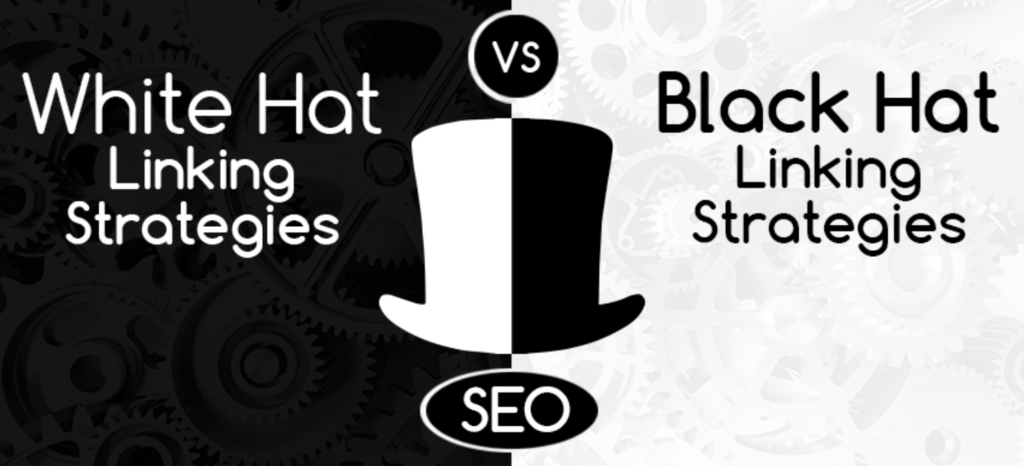
White, gray, and black hat philosophy is link building. White hat is being very thorough in following Google’s guidelines; however, gray and black hats have fewer rules.
The strategies used within black hat link building are completely against Google’s standards. To mention a few, use of PBNs (see more about PBN links in our article), link farms and automated comment links should be avoided by individuals. They can be useful and effective, but you should also consider the risks as search engines get better and better at detecting such techniques. These approaches have some risks to manual penalties and therefore are not always ideal for long-term business development.
Gray hat link building lies somewhere in-between white and black hat SEO techniques. Such practices are not explicitly classified as spam but do not fully adhere to the spirit of what it means to be white hat. For example, one could buy a link that came from white hat outreach campaign, which Google frowns at. This method is less risky and can help achieve your goals, but caution should be exercised and thoughtful consideration should be given to such techniques. Web 2.0 links can also be considered as one of the gray methods of link building.
Though grey hat strategies may work, they entail risks and are only suitable for selected industries. However, the understanding of these risks and having an SEO skills is crucial while using grey hat methods. Outsourcing to companies that do this and have expertise in this niche can be a solution.
⚙️ SEO 2025: White Hat Linkbuilding Strategies
As previously mentioned, White Hat link building focuses exclusively on using honest, 100% Google-compliant strategies to acquire backlinking. By adhering to the White Hat SEO link building principle, you can be confident that this approach will not tarnish your website’s reputation, and Google will show greater trust in your site.
In 2025, White Hat Link Building has become more sophisticated, with a strong emphasis on content quality, topical authority, and genuine relationship-building. Following Google’s recent algorithm updates, including enhanced spam detection through SpamBrain, tactics like buying links or using PBNs are being penalized more aggressively than ever. To stay competitive, SEO professionals now focus on earning backlinks through valuable, informative content that aligns with user intent and demonstrates real expertise. Collaborating with authoritative publishers and earning mentions through PR, guest contributions, and expert quotes have become key methods.
🔵 Strategy 1: Building Authoritative Site Backlinks with HARO

2025 UPD: As of December 9, 2024, the Connectively (HARO) platform has been permanently discontinued and not working.
Using Help a Reporter Out (HARO) and similar platforms, such as Qwoted or Source Bottle, can be an excellent way to acquire White Hat links. These white hat link building services are highly popular and enable the establishment of a quality White Hat link building process.
HARO connects journalists with information sources for their articles. If you have expert knowledge in a particular niche (related to your website), you can provide useful and comprehensive information on a journalist’s topic. In return, the journalist will likely mention you when publishing the article. This method is a highly effective link acquisition strategy, but it is also quite complex.
Regarding the main challenges of HARO, I would note:
➖ Low conversion rate: The conversion largely depends on your recognition or expertise. The more knowledgeable you are about the topic, the higher the conversion.
➖ Long publication process: The process, from providing comprehensive information to a journalist to the final placement of the article with your mention, can take two weeks or more. The more authoritative and popular the site where the journalist intends to publish, the longer the waiting time.
Advantages of HARO:
➕ High authority of websites, blogs, online magazines: Publishing through HARO can significantly enhance your website’s authority in Google’s eyes, as you are referenced by a highly authoritative site.
➕ Increased traffic: Publishing through HARO can significantly boost traffic to your site by obtaining a link in a popular blog on an interesting and competitive topic.
➕ Google’s trust: Google will trust you more, as through HARO, you are writing useful and engaging content aimed at the reader.
These links are considered “White Hat” because they naturally fit into the content and have valid reasons. Renowned sites like Business Insider and Forbes use these services, making HARO a valuable tool for acquiring high-quality links.
↔️ The Key to HARO Is Optimizing Your Process
To be successful with HARO, it’s all about making your response process better. Here are some tips:
✔️ Answer quickly. Being one of the first to respond can give you an edge.
✔️ Choose wisely. Only reply to requests that really fit your expertise.
✔️ Keep it short and to the point. Make sure your response directly addresses the journalist’s question.
🔵 Strategy 2: Digital PR
Digital PR is an extremely clever and original way to obtain links from major publications. For it to work, first, you need to create something that will definitely capture readers’ attention, and then inform journalists about it. This method sounds professional, doesn’t it?
If done correctly, this is guaranteed to help you quickly gain numerous links from various authoritative publications, and your reputation and recognition will grow alongside the popularity of your news. This method works well because each subsequent publication that notices the high popularity of your story will want to share it too (with the aim of increasing their own reach and popularity). Thus, a network of well-known online publications is formed, leading to a wide reach of readers in relation to your article. This, in turn, significantly increases the value of your link.
The links you get in this way are very “White Hat”. They are added by the site because it believes its readers will find them interesting and they will not cause any harm.
The key is to create content that is truly worth linking to and that many will want to do so. It should be something that attracts attention or literally screams in your face “read me, it’s worth your time!” and fits your theme.
However, like all other methods, this one is not without flaws. The main difficulty of this method lies in the fact that not all ideas “take off” and not all stories gain enough popularity. Moreover, if you don’t have close acquaintances in major publications, you’ll initially need to spend time building such connections, which is a challenge in itself.
But it’s difficult to come up with the right idea and make it interesting enough to get noticed. And if you don’t have contacts in major publications, getting your story there can be challenging.
🔵 Strategy 3: Guest Posting method
And here we approach a universal and practical method – Guest Posting. This method is extremely effective and focused on increasing backlinks and the continuous growth of your site’s link mass.
Guest Posting is the process of acquiring link mass by publishing articles on medium-authority and high-authority blogs with the presence of a dofollow link to the page you’re promoting.
The process here is quite simple:
🔹 You analyze your competitors and see where they have published. Find potential blogs in your sphere of interest and proceed to the next stage.
🔹 You contact the blog owners (or webmasters) to discuss the terms for placing your article with a link in it.
🔹 Once an agreement is reached (this could be a fee for placement or a reciprocal link from your site), you start writing the article.
🔹 You provide the article with a link to the page you’re promoting, and the webmaster checks the article and publishes it on their site.
🔹 Over time, the article gets indexed, and you gain the coveted backlinks to your site from other sources.
However, like any other method, Guest Posting has its drawbacks:
❗ It requires the skill to analyze sites from which you want to get a link. Ignoring analysis, you might not achieve the anticipated growth, or you could even harm your site.
❗ There’s a high chance of encountering fraudsters who will publish your article but change the attribute from dofollow to nofollow, forbid indexing, remove the link, etc.
❗ Often, the high cost for such guest posts can be off-putting, and the constant need to ensure that your links or articles are not removed leads to a number of complications.
‼️ Guest Post Warning

Stay away from dubious sites. Black Hat sites may offer guest posting at an attractive and low price, but this is bad news. Getting links from such sites can harm the reputation of your site. How to recognize them?
✅ Pay attention to the overall design and poorly written content. Black Hat sites are often created solely for the purpose of selling guest posts. On such sites, niches and categories are often blurred, and the diversity of topics is striking.
❌ Avoid sites with a large number of unrelated links.
❌ Do not overdo it, be consistent. Google does not favor large-scale campaigns for placing guest links. It is important to maintain a balance and gradually build up your link mass.
✅ Focus on a few high-quality sites, rather than a multitude of low-quality ones. Publishing on 20 low-quality sites can bring significantly less benefit than publishing on 2 more authoritative and high-quality sites.
🔵 Strategy 4: Creating Linkable Assets
Creating linkable assets involves developing something so valuable that others will want to link to it. Ever since Brian Dean introduced the “Skyscraper Technique” in 2015, it has been widely adopted. To stand out, your content needs to be top-notch, easily readable, and useful to as many readers as possible.
Ideas for linkable assets:
🔹 Conduct unique research or studies. Provide quality analysis, potential solutions, and ideas related to your topic.
🔹 Create useful tools or software.
🔹 Develop detailed guides or explanations. The clearer and more informative the problem is described, the higher the likelihood that other sites will want to link to your content.
🔹 Use SEO tools to see what works for your competitors, then do something better. For example, if you are in the business of selling websites, look at a site like Empire Flippers. Identify their most referenced content, such as a valuation tool, and use it as inspiration.
🔹 After creating your asset, find relevant sites to work with them. But be cautious – paying for links can theoretically lead to link building problems with Google.
🔹 A well-crafted asset can continue to bring traffic and links even after you stop actively promoting it.
🔵 Strategy 5: Broken Link Building Method
Broken link building is a clever way to turn a common problem into an opportunity. Over time, some links break due to site updates or domain changes. These broken links stop working, which isn’t good for the sites they’re on.
Here’s how to tackle it:
❇️ Utilize Email Outreach: Contact by email site owners, webmasters and content providers to let him know that there’s a broken link on his site and provide your own link as an alternative. In your email, make it personal and tell them why your content is a good fit for their site.
❇️ Track Your Outreach Efforts: Keep a record of the sites you have contacted, track your outreach progress and responsesreceived. This will help you to keep order and follow up.
❇️ Offer Link Alternatives: If your suggested link replacement doesn’t appeal to the site owner, suggest other useful options. It could also be a different piece of content, guest post or collaboration.
❇️ Build Relationships: By establishing contacts of site owners and webmasters in your field, you’ll have more opportunities for broken link building in the future. Connect with them on social media, leave comments on their blog posts and provide as much value as you can.
❇️ Provide High-Quality Content: Always make sure that the content you provide to substitute for ads is high-quality, thoroughly researched and based on something of interest to the site owner’s audience. This helps to ensure your link will be accepted and adds value to the site.
❇️ Track Your Success: Measure the effectiveness of your broken link building attempts by counting how many links have been substituted in, logging the amount of traffic and rankings gained as a result, and checking to see if there is some improvement in your website’s SEO.
🔵 Strategy 6: 404 Link Reclamation strategy
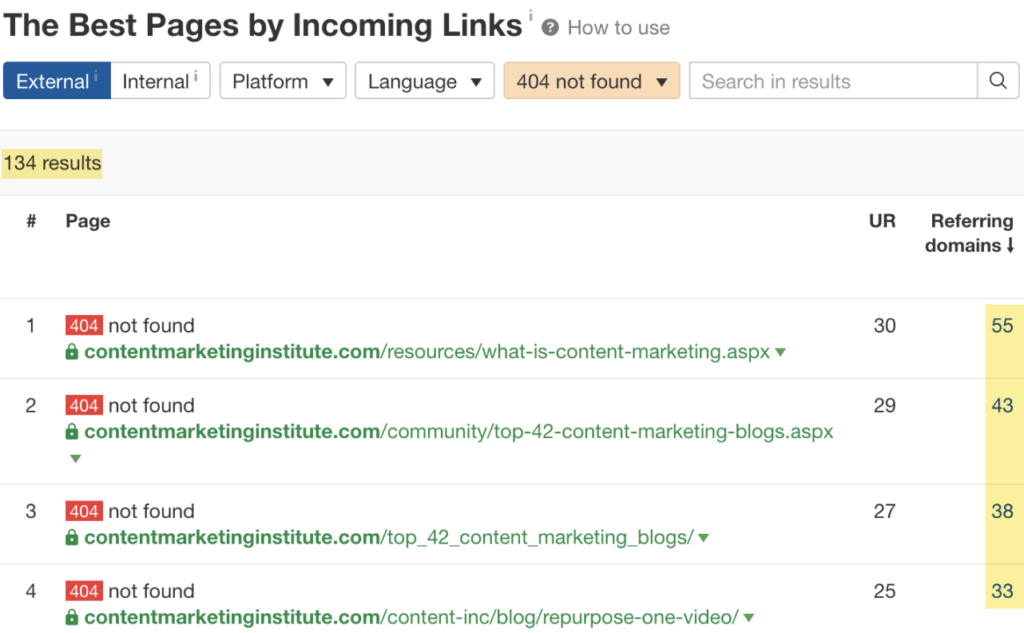
A link reclamation strategy involves replacing broken or dead links and substituting relevant ones. The broken link building method looks to identify and replace dead links. 404 link reclamation was developed for the specific purpose of dealing with errors when a page no longer exists (a 404 error).
To implement a successful 404 link reclamation strategy, follow these steps:
♦️ Conduct Comprehensive Link Analysis and Monitoring: Using tools such as Ahrefs, SEMrush, or Moz, regularly analyze backlinks on your site, competitors’ sites, and other high-authority resources in your niche. This helps uncover valuable placement opportunities — you can quickly identify them with a backlink gap analysis tool.
♦️ Utilize Advanced Search Techniques and Automated Tools: Use advanced search operators and automated scripts to efficiently find broken links and 404 errors. It involves, for example, such Google search queries and creations like the Wayback Machine to understand what was originally hosted on these dead links.
♦️ Engage in Strategic Outreach and Relationship Building: Write customized email templates reminding site owners of broken links or 404 errors, offering them your page as an excellent substitute. Pay attention to nurturing long-term relationships with web masters for future cooperation.
♦️ Adopt a Content-Centric Approach: the information you substitute must be complete, current and valuable. Perhaps you can create resource pages or comprehensive guides as substitutes for the broken links and 404s?
♦️ Prioritize Quality Over Quantity: For high-quality, authoritative link reclamation, focus your efforts. Although a lot of links from low-quality sites may be good, some high-authority links from ones are even better.
♦️ Maintain Detailed Records and Analyze Results: Track your link reclamation efforts, including outreach, responses, and success rates. Study this data to fine-tune your strategy and concentrate on the methods that produce the best results.
By taking this consolidated approach, you can execute a concentrated and effective strategy for salvaging links, as well as the most leverage possible in boosting your site’s SEO and link profile.
📋 White-Hat Link Building Is Tough, But the Long-Term Rewards Are Sweet
Building links through the White Hat link building method might not be the easiest task, but it is certainly worth the effort.
To be successful in White Hat link building, patience and adherence to the rules and recommendations of Google and other search engines are necessary, depending on which search engine(s) you are primarily targeting.
If you do everything correctly, you are more likely to achieve a stronger and more reliable authority for your site. By using the White Hat link building method, you lay the foundation for organic growth in authority and transparency of your site.


