










Results of the Collaboration
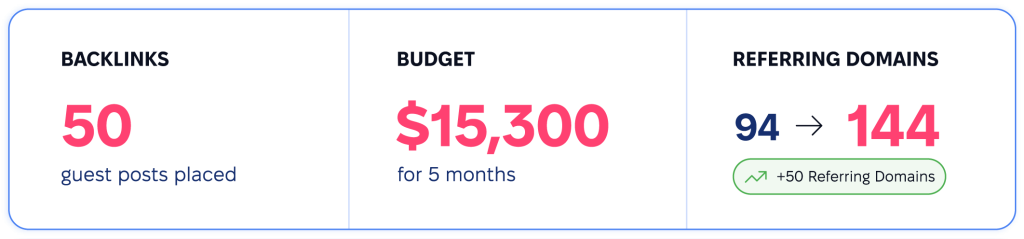
During our partnership, our specialists have published 50 unique guest posts for the client on niche websites targeting the Canadian market. These are blogs about interior design, home improvements, design and much more. Below, we’ll explain exactly how this was done, in great detail.
Who is Our Client?
We were recently approached by a Canadian online store that sells furniture, home furnishings, and home decor. The company had been in business for about three years and had been growing steadily thanks to paid traffic. But at some point, they hit a plateau where the CPA (cost per acquisition) was rising while organic traffic wasn’t growing. That’s when they decided to get serious about SEO, starting with link building.
What were the main challenges at that time? This eCommerce site’s backlink profile relied exclusively on directories and forum backlinks. In Canadian search results for key queries, major American brands such as Wayfair and Article dominated. Therefore, instead of working with freelance outreach specialists, the client’s team decided to reach out to professionals right away.
Objectives and Starting Point
Before getting started, we established baseline metrics: DR, RD, and other key metrics. We then mapped out the scope of work and defined the main objectives for the next few months:
- Conduct a backlink profile audit and identify low-quality links from directories
- Perform a backlink gap analysis tailored to the specific context
- Develop an SEO keyword plan for priority pages
- Identify 50 relevant donor sites in the home decor and lifestyle niche targeting a Canadian audience
- Place links, monitor indexing, and prepare reports
Step-by-Step Process of Our Work
In the client’s industry, the market operates by its own unique rules. For example, lifestyle blogs are very particular about sponsored content. Many are willing to accept links only if they’re labeled “sponsored,” or they refuse them altogether. That’s why we started with a broad shortlist and didn’t promise the client specific domains in advance. It worked out well.
Head of Outreach · NeedMyLink
1. Initial Profile Audit
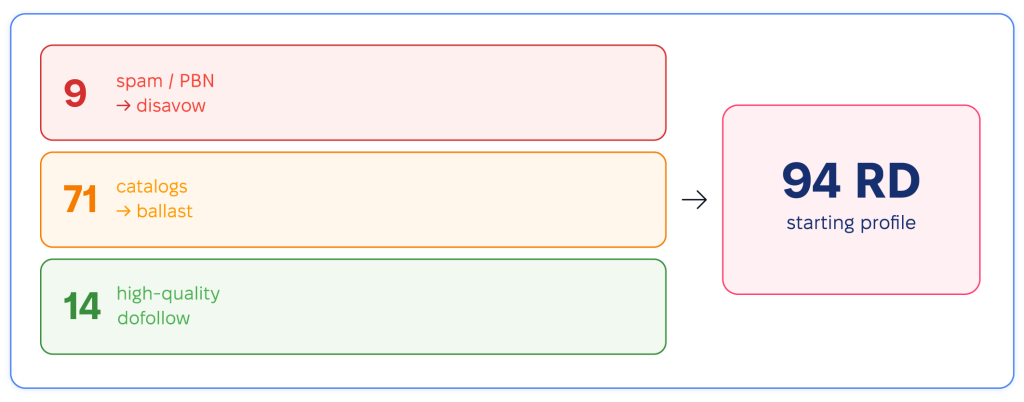
Where did we start? We ran the profile through Ahrefs and Moz. We found 9 spammy links with clear signs of being PBNs, so we submitted them to Google’s Disavow Tool. But there was another problem.
Most of the client’s backlink profile consists of e-commerce directories and aggregators. Technically, they aren’t spammy, but they don’t carry any real weight. We called them “ballast” and created a separate category for this type of link for the client. the context. Of the 24 links flagged by Ahrefs’ automatic filter, only 12 made it onto the final disavow list after manual review.
2. Analysis of Key Competitors
The client’s main competitors in Canadian search results aren’t local stores, but the American brands Wayfair and Article. They simply dominate the top results for queries like “home decor Canada” or “furniture store Canada.”
What did we do? We analyzed the gap against the American brands and identified 110 domains that link to them but not to the client. Of these, 67 were relevant to the niche and actually available for outreach. We filtered them by Canadian or mixed (CA/US) audience, leaving 58 candidates for the shortlist.
3. Keyword Plan and Priority Pages
Together with the client, we compiled a list of pages for guest posting outreach. The main clusters are:
- Category pages (“living room furniture Canada,” “home decor online Canada”)
- Brand-specific searches leading to the homepage
- Comparison searches (“affordable furniture Canada”).
In summary, we also defined an anchor type for each cluster: brand, diluted, or partial match. We finalized the entire list of keywords and approved it with the client’s team.most suitable: brand-based, diluted, or commercial with direct inclusion. This formed the basis of the anchor text plan.
4. Selecting Donors for Guest Posts
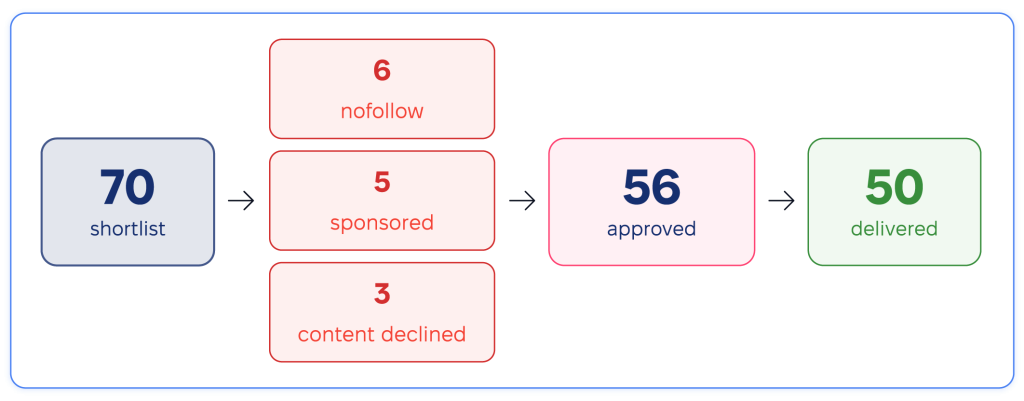
Our specialists compiled an expanded shortlist of 70 domains. Lifestyle and home decor blogs are a special category of contributors. Many are run by individual authors or small editorial teams who are very particular about commercial content. During the outreach process, 14 of the 70 domains were eliminated.
5. Writing Thematic Content
A separate aspect of this case study concerns content creation. Many link builders underestimate this stage, producing low-quality articles using ChatGPT or other AI tools. We, on the other hand, always strive to maximize the value our clients derive from backlinks. That’s why we place special emphasis on content. We have our own team of copywriters with over 5 years of experience across dozens of niches.
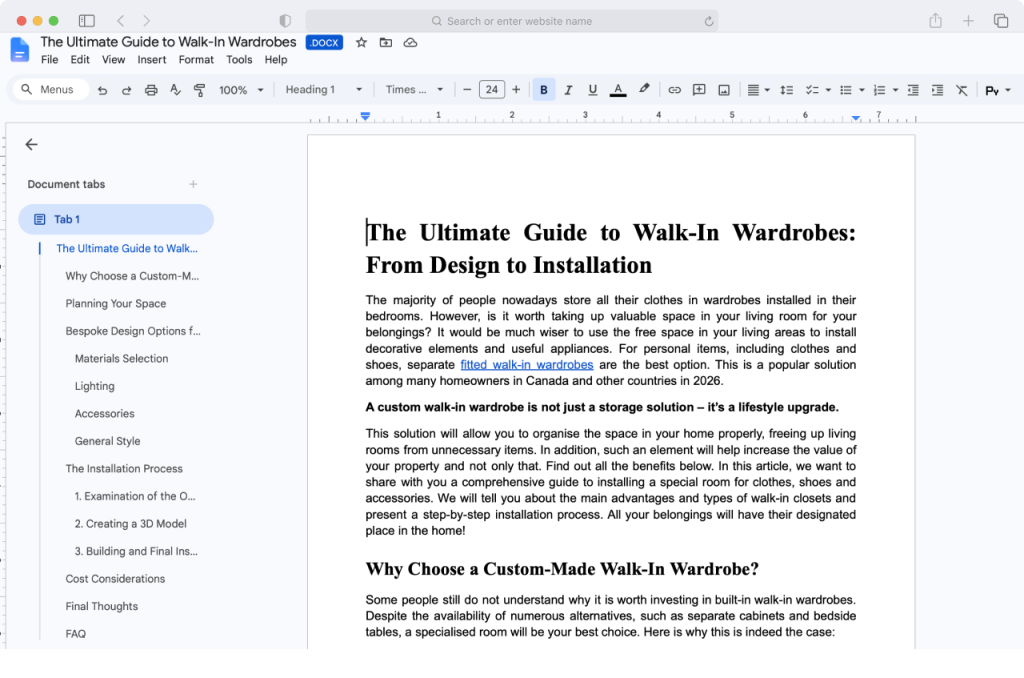
It’s also important to consider what webmasters require. They expect content that provides real value to their audience: roundups, style tips, and guides on choosing furniture. We wrote a separate 1,200-1,500-word article for each donor, taking into account their editorial policy and top-performing content. Here’s an example of one such article:
What else? Every article was always checked for uniqueness using 1text, for grammar using Grammarly, and for AI detection using zerogpt. Out of the first 50 drafts, 8 were sent back for revisions by the contributing editors, which is quite standard practice in the Canadian market.
6. Placement, Indexing, Reporting
After each publication, we checked the following: the dofollow attribute, the correct anchor text, and the placement within the article body. We then submitted the page for indexing via the Google Indexing API. The client received a report for each link, including the donor URL, the post URL, the anchor text, a screenshot of the placement, and Ahrefs metrics as of the publication date. Plus, a general dashboard report every two weeks.
Conclusion
As you may have realized, eCommerce isn’t just about the number of backlinks. When your competitors in the search results are strong brands with a long history of links, the standard approach doesn’t work. You need to understand where their backlinks come from, filter them to suit your audience, and build your profile methodically.
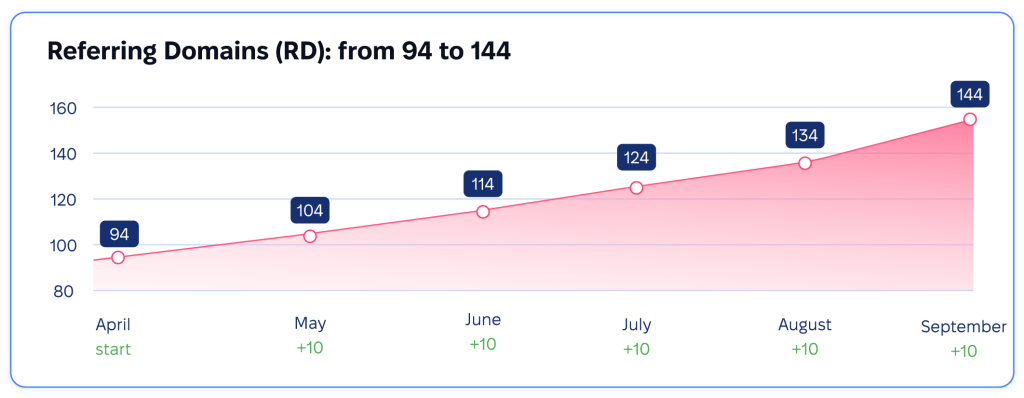
Working with Canadian publishers is a different story. Their editorial policies are stricter, negotiations take longer, and content requirements are more demanding. That’s exactly why 14 out of 70 candidates were eliminated during the process. Over the course of 5 months, we built a backlink profile from scratch to 50 guest posts, and Domain Rating (DR) grew from 19 to 317.

Yevhen Humeniuk, CEO of NeedMyLink