








The Results of Working with Us

We worked with the client for 4 months, and that was enough to deliver significant results. As a result, we resolved the main issues, fixed technical errors, compiled semantic data, optimized the structure, wrote high-quality content, and much more! In addition, we placed over 200 backlinks on relevant websites. What did this achieve? Read on to find out in the case study!
Who is Our Client?
This is a multilingual online store for nicotine pouches and snus built on WordPress/WooCommerce. The website is quite new, and virtually no SEO work had been done prior to our collaboration. Its geographic reach is quite broad, covering major European countries, including France, Poland, and the United Kingdom. See below for a complete list of the countries where our client operates.
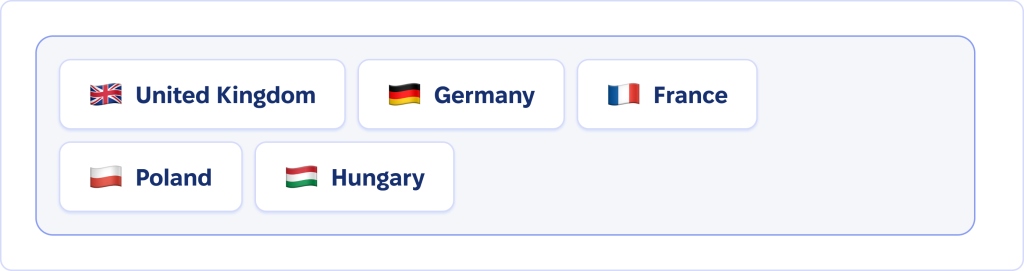
The niche is quite competitive: brands with 20 years of history, strong backlink profiles, and consistent visibility in search results were competing against. Here’s what the client came to us with:
- Plenty of technical issues: indexing errors, duplicate pages, incorrect hreflang tags for five languages.
- Most brand pages lack SEO content.
- The flavor category structure covered only a portion of the actual product range and search demand.
- No backlink profile. DR 8 and the site is effectively invisible to Google.
What else? It’s a very challenging niche because advertising for nicotine products is strictly regulated in Europe, so many platforms turn us down. We’ve documented all the metrics and the website’s “before” status.
Objectives and Starting Point
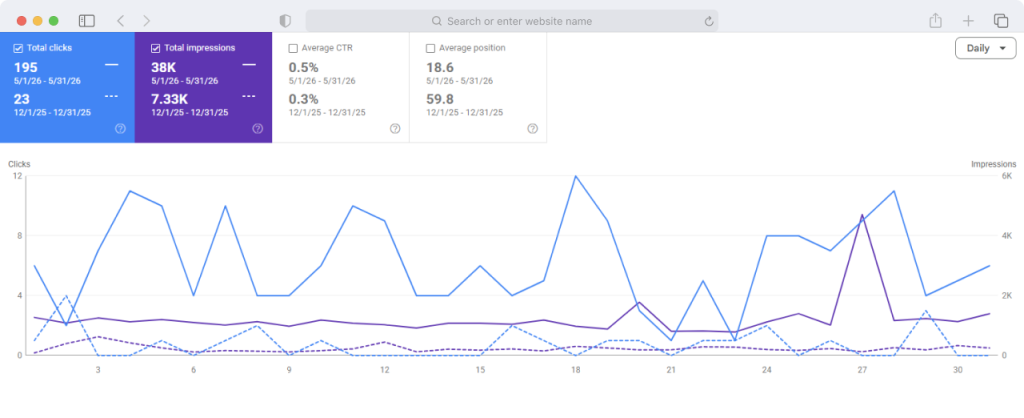
Before starting the project, we recorded the key metrics: DR 8, 58 clicks per month, 19K impressions, an average position of 56.6, and about 30 keywords in the top 10. We agreed on a work plan with the client.
- Conduct a comprehensive SEO audit: technical aspects, indexing, structure, and content.
- Compile a semantic core for 5 language versions: EN, PL, DE, FR, HU.
- Expand the structure of commercial pages: brands, flavors, categories.
- Write SEO-optimized copy and prepare technical specifications for landing pages.
- Set up internal linking with 100+ links.
- Optimize page load speed and strengthen E-E-A-T.
- Launch link building, monitor progress, and provide regular reports.
An important point to note: all tasks were carried out simultaneously and spread out over time. This was done to optimize the budget ($1,450/month for SEO + $2,750/month for link building).
Step-by-Step Project Workflow
What was the challenge? This is an eCommerce project where it’s difficult to find donors who are a perfect fit for the theme. And we have to be very careful when dealing with trust, security, age restrictions, and commercial factors.
CBDO · NeedMyLink
Another challenge was selecting ad partners: due to updated policies in Europe, the promotion of nicotine products is strictly regulated or even banned altogether. As a result, many platforms raised their prices by 2 to 4 times or refused to cooperate. Despite this, we managed to find high-quality ad partners at an optimal, win-win placement price.
We worked closely with the client’s team. We agreed on a step-by-step action plan, provided regular updates on our progress, adjusted our approach, and much more. Below, we’ll go into more detail about how the project unfolded, what we did, and what led to such great results!
1. Comprehensive SEO Audit of a Website
We started with a comprehensive technical analysis using Screaming Frog, Google Search Console, and PageSpeed Insights. The results revealed 52 issues: 8 critical errors, 24 warnings, and 20 areas for improvement.
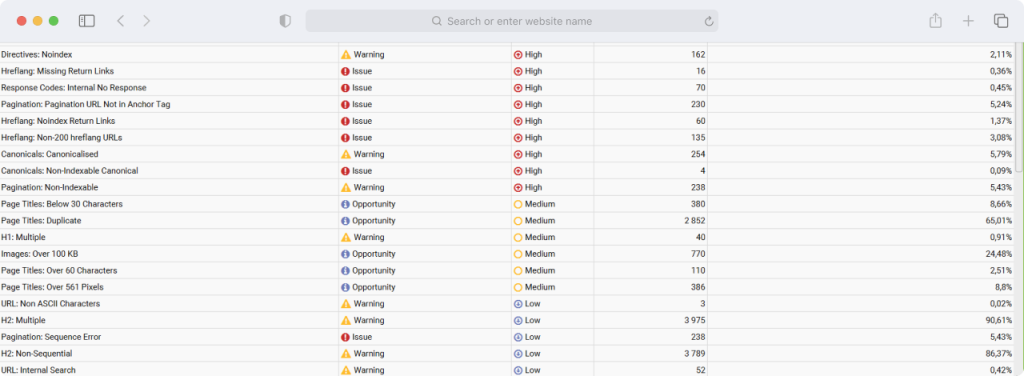
Let’s go into a bit more detail about the errors. For example, there were 162 pages with the “noindex” tag, so Google couldn’t see them. About 65% of the site’s pages had duplicate meta titles, and there were another 770 images larger than 100 KB that were slowing down page load times.
There’s a separate issue with duplicate brand pages. WooCommerce automatically generated /product-tag/brand/ pages alongside the main /brand/brand/ pages. Google saw two nearly identical pages and didn’t know which one to rank. We decided to block the duplicates using robots.txt and the “noindex” tag, and set up the correct canonical tags pointing to the intended versions of the pages.
An important detail regarding hreflang: the site did not specify the x-default attribute or a default page for users whose browser language did not match any of the language versions. This is a small detail, but it affects conversion rates: a user with a Finnish browser was directed to a random version of the site instead of the English one.
At the same time, we fixed some performance issues: converting images to WEBP and properly configuring Cloudflare resulted in a noticeable boost in Core Web Vitals. This is important not only for SEO but also for conversion rates (especially on mobile).
2. Semantic Core for 5 Languages
This is one of the most extensive steps. We gathered semantic data separately for each language version using Ahrefs, top-result analysis, search suggestions, and manual clustering. We covered all page types: homepage, brands, flavors, products, categories, and the blog.
Want the same?
Check out a real-world example of a semantic core from this project: keywords, volumes, and clustering for 5 language versions!
View SemanticsIn the Polish market, the main search clusters are: “snus” (53K/month), “snusy” (42K/month), and “woreczki nikotynowe” (8.1K/month). For the German, English, French, and Hungarian markets, similar work was done, taking local specifics into account. Each market required a separate approach: search queries in Poland are one thing, while in Germany they are completely different (even for the exact same products).
3. Expanding the Website Structure
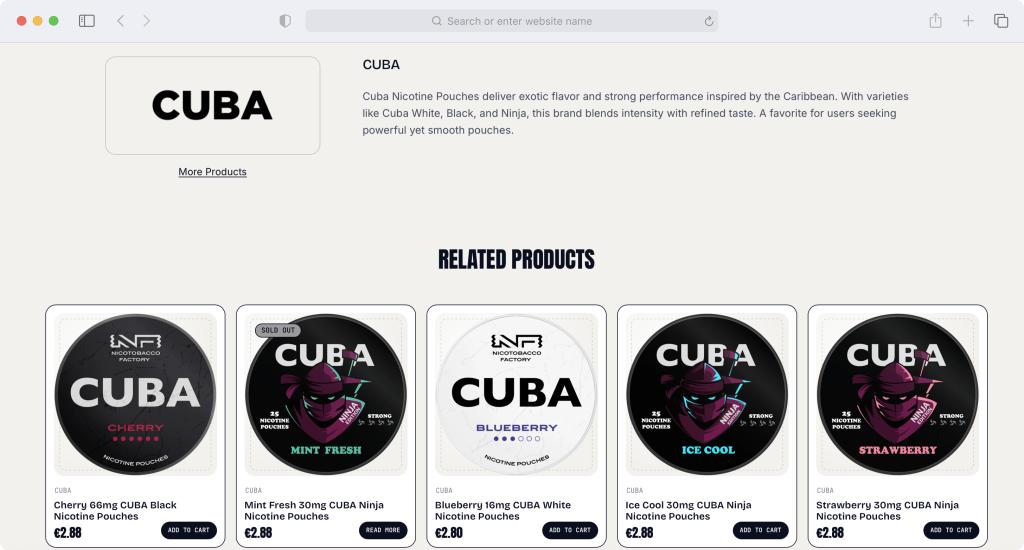
We identified a significant gap here: the flavor structure was limited to 8 categories, even though the actual product range included 64 flavors. We developed an expanded clustering system with 11 flavor clusters instead of 8, each with its own landing page. This provided additional entry points for organic traffic without having to create new content from scratch; the pages were generated automatically by importing tags.
We wrote 15 SEO-optimized texts for the brand pages. Prior to this, most brand pages were empty cards with no content. Competitors at the top of the search results had long since done this, so it was essential to catch up.
We also corrected the meta tags across the entire site. The problem was systemic: 2,852 pages with identical titles. The solution was simple but important. We added the word “buy” to the title of each product in the language of the site version (Kup / Kaufen / Buy / Acheter). This ensured uniqueness and strengthened the marketing aspect.package budget. For each donor, the report was reviewed with the client’s team, and they approved every placement before work began.e most suitable: brand-based, diluted, or commercial with direct inclusion. This formed the basis of the anchor text plan.
4. Writing Unique Content and E-E-A-T
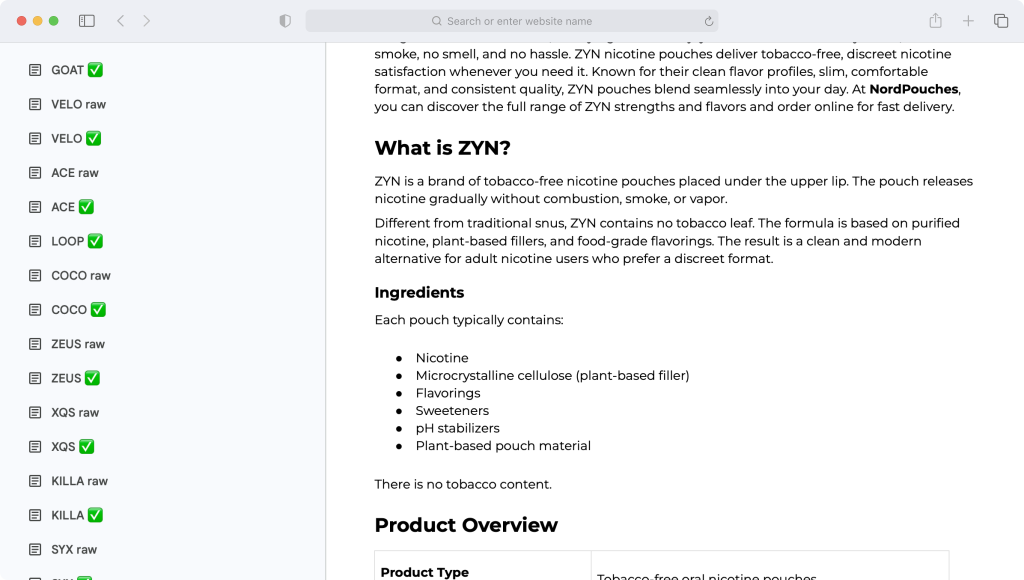
The nicotine patch market is a fairly complex niche. Google takes a stricter stance on it than on regular eCommerce. To strengthen E-E-A-T, we prepared recommendations on trust signals: information about product safety and ingredients, 18+ age restrictions, payment and shipping terms for each country, and customer reviews. We wrote unique content for various pages on the website.
We conducted a separate audit of the shopping cart and checkout process. We compared them with competitors in each GEO and identified specific points where conversions were being lost. These recommendations were incorporated into the redesign, which the client launched simultaneously.
5. Internal Links
We built over 100 links between the website’s pages. The logic is simple: product pages link to categories, and categories link to brands and flavors. This redistributes link equity exactly where traffic from Google is needed. Even without external links, this internal linking structure already has a noticeable effect (especially for a new website, where every bit of link equity counts).
6. Building Backlinks
As we mentioned earlier, nicotine products are strictly regulated in Europe. This means that our standard outreach efforts were rejected by most platforms. How did we solve this?
- In the first phase, we decided against seeking strictly niche-specific donor sites. Instead, we selected high-quality white-hat media outlets and platforms with organic traffic that were open to collaboration.
- The first selection of 12 donor sites for the Polish market, with a budget of $4,400.
- Link distribution: 146 links to the homepage to strengthen the domain’s overall authority, and 76 links to categories to specifically boost commercial pages.
We launched forum links in parallel with our outreach efforts: forums, Q&A platforms, and topic-specific communities. This creates a natural profile: a thriving store always has mentions beyond just guest posts.
7. Website Monitoring and Regular Reporting
We tracked GSC, rankings, indexing, and technical changes on a weekly basis. We didn’t just look at the numbers. This monitoring allowed us to respond quickly to issues. For example, when Cloudflare began partially blocking traffic to the site, we quickly diagnosed the cause and provided the developer with specific instructions on how to fix it.
The client received regular reports detailing what had been done, the results achieved, and our next steps. Here’s how the GSC metrics evolved over the course of our work:
Final Thoughts
What does this case study demonstrate? For eCommerce in a complex niche, it’s not enough to focus solely on backlinks or just the technical aspects. It was the combination of technical SEO, content, and off-page promotion that drove this growth. Each of these tools, on its own, would have yielded significantly fewer results.
Regarding multilingual projects: each language version is a separate market. Poland, Germany, and the UK require different semantics, different backlink sources, and different content. A one-size-fits-all approach doesn’t work here, and this is one of the reasons why a new website quickly falls behind established competitors. Over the course of 4 months, clicks increased by 14.5 times, DR climbed from 8 to 40, the number of keywords in the top 10 grew from 30 to 124, and 843 new search queries appeared in which the site ranks.
Nik Zakharchenko, CBDO of NeedMyLink