


Better positioning and reputation on the search engines mean they require high-quality and relevant backlinks. From such a page, related links should be useful and related to the content focus – niche/industry/topic. The latter are, in turn, employed by most search engines, including Google, in their assessment and ranking of web pages, making them a critical element of off-page SEO.
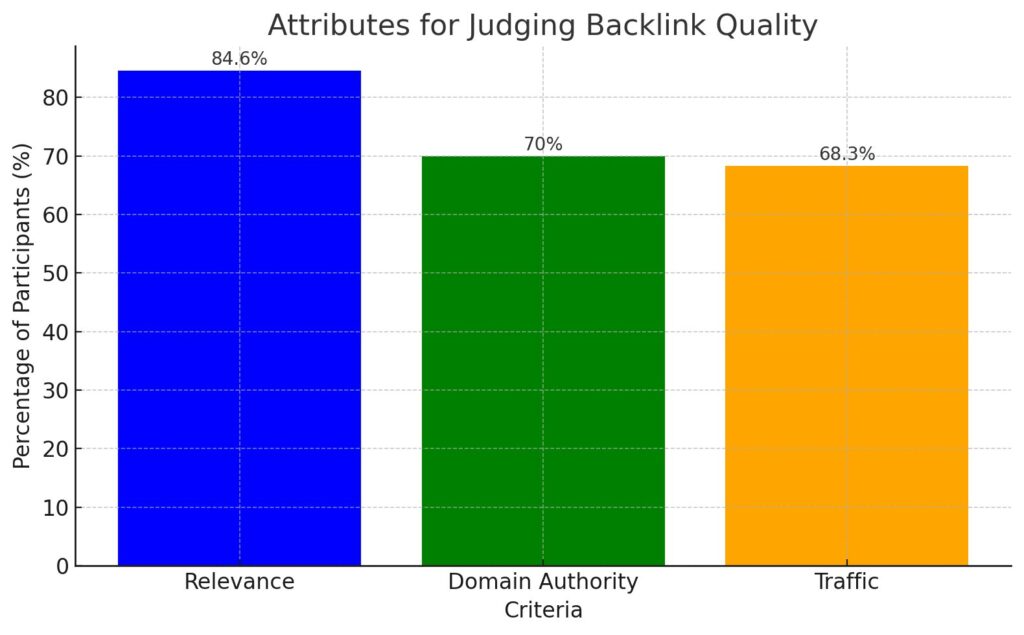
Relevance is the most often used criterion to judge the quality of the backlink; this is supported by the fact that 84.6% of the participants asked this question. The second essential attributes were domain authority (70%) and traffic (68.3%).
❓ What Are Relevant Backlinks?
Consequently, the featured sites are likely to succeed primarily because of many relevant backlinks. Backlink also assists in building credibility as well. Developing is one of the most challenging issues in SEO.
In fact, somehow, the more credible and relevant a source is, the better the SEO performance will be. This strategy will help them rank higher and be more secure in their niche. If you want to advance your link-building campaigns to the next level, you should do so.
In link building, the process of building backlinks comes from other websites that are related to your website. These are links that are relevant and authoritative for our purpose of ranking.
For instance, it matters to have links from a fashion blog because those links are valuable, but links from tech sites are not. Using sales automation tools, the company gets relevant backlinks every time they appear in specific industry reviews.
Last but not least, backlinks extend that bonus by referencing information sources that are highly specialized and niche. This is good for both; you enhance the pages in terms of the search engines while marketing the site as an expert in the given field.
❗️ Understanding Niche-Relevant Backlinks: What They Are
Such backlinks come from related domains or sites that are related to the content of your post. This improves your ranking and helps attract the right people to the site.
The question is, what should we consider ‘niche relevant’? Three key attributes determine its value:
1️⃣ Topical focus. The linking site covers areas of interest with your site.
2️⃣ Industry affiliation. This source has to be accredited within the
3️⃣ Contextual relevance. Links are put in subject-related materials and specific areas of interest.
In the long haul, niche-relevant backlinks establish domain authority achieve competitive keyword access, and thus long-term SEO strategy.
📈 Importance of Niche Relevant Backlinks in SEO Ranking
Niche relevant backlinks involving specific and narrow topics improve SEO because the presented website material could be more qualified to the users’ requests and more trustworthy. Backlinks, for example, are a sign to Google that your website is credible and authoritative. If we look at links from other comprehensively authoritative resources of the same topic as the site’s content, then it can be seen that people do use this particular type of content and so they are ranked higher.
Niche-relevant backlinks maintain high levels of user satisfaction by bringing users to the right content they were searching for. Such targeting enhances the interaction coefficients, time spent on the page, and click-through rate. Besides, these links ensure relative traffic, meaning when the visitors are likely to care, they are likely to convert.
The difference between overly relevant and overly authoritative, as well as niche-relevant backlinks, is always thin. It is known that authority boosts trust and relevance, enhancing the likelihood of relevant content. Together, they create a good link profile, sharpen the SEO result, and ensure you remain relevant in this sphere. So, how to get relevant backlinks?
📊 The Impact of Link Relevance on Search Engine Performance
Another technique is relevant link building, which aims to rank and position your website in search engines in the definite sector or frequency of its appearance.
Link relevance means that the link you get is from a site that has something to do with your site regarding concerns, pathways, or niches. These links are what search engines look for every time they are crawling your website. A search engine gives a high weight to links that are relevant and related to the subject matter of the particular website. They also are understandable to the user base. They are easy to click on.
Associating your site with a specific topic of interest to the user = a sense of trust in the company’s activities = more engagement and better conversion on the site.
If you have the decision to create high-quality and niche relevant backlinks, then you are likely to trap the right kind of visitor traffic, which may add up to sales.
🔁 The Connection Between Relevant Links and Black Hat Techniques
Link builders and anyone involved in SEO have to know black from white. However, it is not desirable in the long term and is then accompanied by sanctions as well as website blocking.
As earlier noted using techniques under White hat takes longer time but will give you the best results once obtained. The kind of good quality links pointing to your site will help your site get ranked in the long run. Follow some recommendations:
1️⃣ Create valuable content.
2️⃣ Surprise your stakeholders and others in the industry.
3️⃣ Participate in guest posting.
4️⃣ Use social media.
5️⃣ Collaborate with other sites.
6️⃣ Look after the backlinks also for optimum SEO results.
By applying this method and not resorting to black hat SEO, good results containing those search terms can be found.
❓ What Are Non-Relevant Backlinks?
Non-relevant backlinks connect your site with other sites or content that has no relation to your business or area of specialization. Most are random and are out of place on the internet. These links are from different sources and are not recognized to add credibility or value to a domain.
Variant: niche relevant backlinks links from directories, forums, or blogs that are not related to your industry. For example, a fashion brand getting links from a tech forum will add no authority to the fashion industry. Likewise, hidden or private links from a PBN are a red flag. They are often considered manipulation of search results.
| Type of Irrelevant Backlink | Description | Example | Consequences |
| Links from unrelated sources | Backlinks from websites that are completely irrelevant to your niche or industry. Such links offer no contextual value for users or search engines. | A home improvement site linking to a cryptocurrency exchange. | This lack of relevance weakens the link’s credibility and SEO impact. |
| Hidden links | Links are deliberately hidden from users (e.g., white text on a white background). This technique violates search engine guidelines and is considered unethical. | A link is embedded in the footer of a page using invisible text. | Misleads users and search engines, potentially triggering penalties. |
| Paid links | Links purchased solely for SEO purposes, not adhering to proper disclosure (e.g., “nofollow” or “sponsored” tags). This can lead to penalties from search engines. | Mass-purchased links from unrelated spammy directories. | This results in lower trust from search engines, weakening the site’s SEO. |
| Links from low-quality directories | Links originating from general directories that accept all submissions are often used for spam. | A directory accepting all websites without validation. | Leads to irrelevant or low-quality backlinks, diminishing SEO value. Only niche-specific, high-quality directories are useful. |
| Reciprocal links | Links exchanged between two websites excessively or without relevance. While limited exchange is acceptable, overuse can trigger search engine penalties. | A travel blog linking back to a car parts retailer. | Creates a pattern of unnatural linking that search engines may penalize. |
| PBN-borne links | Links from Private Blog Networks (PBNs) are created solely to manipulate rankings. Search engines often flag these for being unnatural. | Hundreds of backlinks from domains with the same IP address. | Indicates likely PBN use, reducing trust and increasing the risk of deindexing. |
| Hacked links | Links are inserted into a website without the owner’s consent, usually due to malicious attacks. These can harm the victim site’s reputation and rankings. | A hacked blog with spammy links to gambling or pharmaceutical sites. | Frequently detected and deindexed by search engines, harming both the hacked and linked sites. |
| Automatically generated links | Links created using automation tools or bots are often distributed across low-quality websites or blogs. These links are rarely contextually relevant and are penalized. | Thousands of backlinks were created overnight with automation tools like GSA. | It causes unnatural link profile spikes and raises search engine red flags. |
| Links from comment sections & forums | Links are placed in blog comments or forums to gain backlinks. Often, these comments provide no value to the discussion and are flagged as spam. | A hardware store is in the comments section of an article on CNN.com or a forum about pets, such as the r/pets section of Reddit. | Marked as spam by moderators or search engines, offering no SEO benefit. |
The price scale for this service is relatively low and cheap; however, the consequences of trying to employ irrelevant backlinks are steep. Some of the search engines, including the widely used Google, may either block the websites associated with such a perception or even inhibit them from coming up in search-related productions, depending on how they handle such a perceived flash. High-quality, relevant backlinks from the site and provide information about the rarity of backlinks.
❕Is Relevance Essential for Every Backlink?
Too many irrelevant links = weak strategy + ranking damage. However, not every link should be perfectly in line with the niche of your content. A backlink profile could have different sources. For example, a fashion site may attract relevant links from industry colleagues, as well as from celebrities:
💠 Community news, discussing what the owners accomplished.
💠 Marketing blogs concerning strategic branding of the brand.
💠 Lists of local businesses.
💠 The organic development of the business causes this kind of diversity.
Link value is made up of values determined by authority, relevance, and quality which it has on the internet. High authority niche relevant backlinks that are irrelevant to your site’s topic raise the profile of the site. Similarly to the above, if the local listings contain good content, then the site will benefit regardless of the low authority links.
This balance is evident in news sites. They post news of different types, and the authenticity of the news they receive hardly deserves any doubt. When these links are compiled, they contribute to the popularity of your website, and they are not limited by the type of topics that may be under discussion.
🔶 Factors That Define a Relevant Link
How to get relevant backlinks? This is because one’s backlink value depends on the link, relevance, and quality of the backlink since it is the one that provides the backlink value in SEO. According to Google algorithms, credible links from other related niche site sources serve the purpose of E-E-A-T, that is, experience, expertise, authority, and trustworthiness. Other than click-through traffic, extensive search engine marketing acquires valuable links that produce traffic from possible buyers because link building has shifted from the number of links to quality relevant backlinks.
⚓️ Anchor Text and Its Context
The normal hyperlink is the actual text, which, when placed, can be clicked using the cursor. If an author of an example article on, let’s say, effective relevant link building used the phrase ‘golden rules of link building’ as the anchor text of the hyperlink they made. So, the user will know right away where he is supposed to be if he decides to click on the link. That sends a clear message.
Avoid over-optimization. Exact-match anchor text is when the link wording matches the target keyword exactly. This approach used to be common in SEO, but heavy reliance on it can look manipulative and increase the risk of penalties. There’s no guaranteed direct correlation between exact anchors and rankings — diversity matters more. To keep a balanced mix of variations, you can organize them with our anchor text generator.
An ideal anchor text portfolio includes exact match, partial match, brand, and statistical anchors consisting of generic phrases not like ‘click here,’ ‘read more,’ ‘learn more,’ …etc.
An ideal anchor letter is selected specifically for a particular site in a particular niche (after analyzing competitors and your own site. Yes, there may be different ratios (brand name, common keys, common phrases, commercial [but carefully]), but make sure you keep the right percentage of all types of anchors. For example, an anchor containing a site marketing digital might contain an exact match like ‘SEO best practices,’ a partial match like ‘marketing strategies,’ a brand like ‘Gallop & Write a blog,’ and a generic one like ‘click here to visit.’
The given diversity contributes to the excluding of delivering manipulative signals to the search engine algorithm, which corresponds to the change in Google algorithms that seek quality relevant backlinks. We can maintain contextual corpora and the need for diversity in the anchor text.
⚖️ Relevance (Topical, Semantic, Geographical)
There are three main types of relevant links: In order, tight, connective, thematic, semantic, and geographic. Relevance is keywords in your content and the link page. For example, relevant links from a site devoted to fashion incorporate a timely phrase, such as ‘summer dresses.’
Semantic relevance also refers to the relation between one Web page and another that is taken to be semantically related to the former. Linking an article on climate change with an article on sustainability makes sense since both relate to environmental concerns.
The geographic relevance of relevant links is feasible if the service’s content depends on the location. For instance, in link-building consciousness relevant to a specific local plumbing company, its content needs to be audience and location relevant from sites based in the locality.
🗝 How Keywords Influence Link Relevance
Google and other search engines assess relevancy by analyzing anchor texts, the content, and the words surrounding a site. Say a fashion blog uses a link that says “best boots” to lead to a shopping site. The keywords should be significant to the website being linked to. The surrounding text should lead to the landing site. It is preferable if you use variations and contextual words or phrases.
🔗 How Link Placement Affects Relevance
The relevance of a link is determined by its position in content. This is even more valuable than either footer or sidebar links.
It was also found that navigational links, when provided within the article, are more effective when located at the top of the article than where they are at the bottom. A few links, like an SEO tutorial, which links to an SEO tool article, have more value. External links appear like standard spam.


🔝 How Your Backlink Profile Affects Link Relevance
Link diversity, the presence of links from authoritative and niche-related sites, thus boosts link relevancy. Thus, TechCrunch, for example, will receive credit. The profile should include different sources: It observes a heavy plural in Web 2.0, aiming at specialized and focused blogs, directories, and niche news sites. Using such sources in building your link profile is counter-productive to SEO. To have safe, relevant backlinks from other domains, they will be of great relevance to the other different types of content.
🚀 Social Signals as a Factor in Link Relevance
Liking, sharing, and commenting work as hidden filters for the relevance of the links. It is a sign of how good content is. Thus, as the sites’ attendance grows through interesting material, backlinks from the definite sites with the same subjects may appear. This assists the search engines in the determination of the linked content.
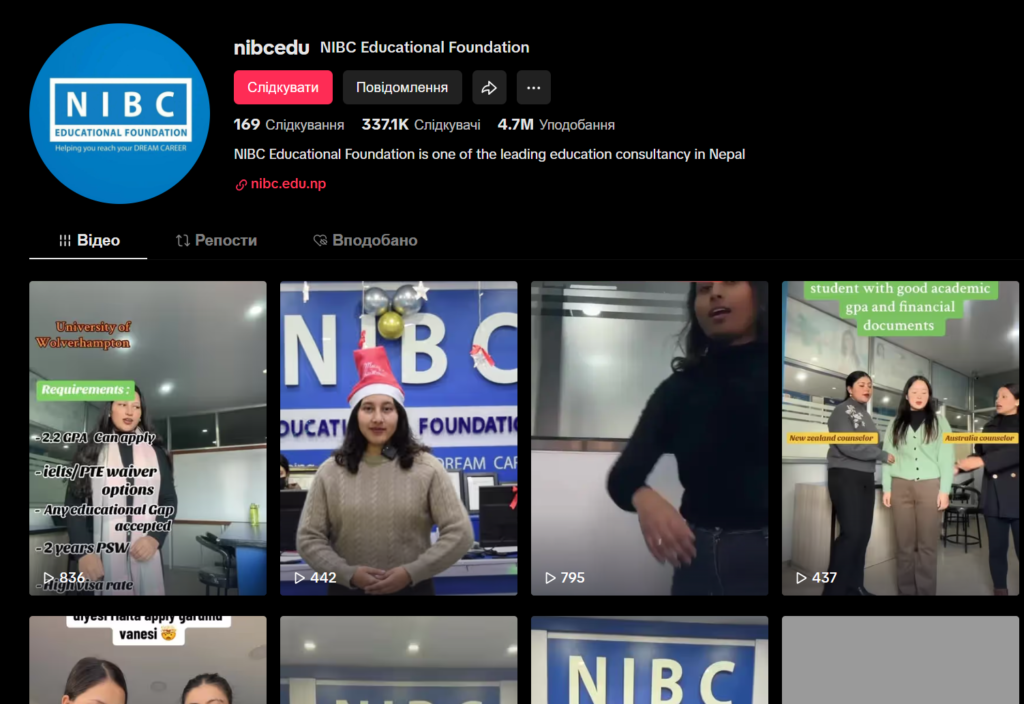
Unfortunately, popularity is not always the best thing to rely on. It cannot increase your SEO 100%; weak links have to be replaced with quality niche relevant backlinks. The popularity of a link source doesn’t always mean that it will help boost SEO. Links from irrelevant sites, even famous ones, can harm your brand image. Instead, you should focus on quality links from sites relevant to your niche, as they look natural to search engines and have a better impact on your site’s authority. By replacing weak links with more relevant ones, you increase the credibility of your resource and your chances of ranking higher in search results.
🎯 How Target Audience Affects Link Relevance
Typically, links from sites your audience visits, regardless of the type- including blogs and authoritative media- will be more valuable than irrelevant links. Healthy lifestyle blogs targeting fitness lovers will provide more links to fitness-related sites than lifestyle sites. It is helpful if you purchase links from sites your target audience frequently visits; in this way, the link is meaningful to both the content and the user.
🚀 Effective Methods for Gaining Relevant Backlinks
Want to get relevant backlinks? Employ techniques that cause reliance on the best quality and credible information. One of those techniques is guest blogging. Another crucial aspect that should not be missed on your blog is the content.
You can also collaborate with another business or influence with the same niche. The benefit of Publishing joint content is that inbound links can be gained. As we have mentioned before, try to include links to your site on those pages. What other methods are there? Let’s explore them!
🔵 Unlinked Mentions: A Source of Relevant Backlinks
Once more, backlinks to your site aren’t tied to all mentions of the brand or your material, but it is a good technique for backlinking. You are required to post a web address located on your website.
If you have spotted that an influential blog has mentioned your blog but hasn’t linked, then you may want to make an offer to them that they could add it. This may lead to an important backlink, making your site more visible to many and enhancing the backlink portfolio.
🔵 Niche Edits as a Strategy for Relevant Backlinks
Niche, or contextual relevant link building, adds link points to existing articles on niche websites. This makes it easy for link builders because they avoid building new pages from the ground. In turn, by working with articles that are already related to the particular topic, niche editing provides natural backlinking that is useful for both site SEO and users. Blog owners also benefit from fresh content, which helps drive organic traffic to the blog. Niche edits usually bring a lot of authority and relevance to the table if the process is done correctly.
🔵 The Benefits of Broken Link Building for Getting Relevant Links
This is a strategy that enables a web developer to replace all the broken links that are on a website with the content that the developer owns. Locate broken links with either Ahrefs or Screaming Frog. Look for content on your site that will address the issue due to the lost link or create new content. This method is a win-win since the site owner gets to fix broken links while your site earns a backlink. The final step for a webmaster is to take back and replace the links that match the appropriate content you offer for relevant link building.
🔵 How Guest Posting Can Earn You Relevant Backlinks
Guest posting is an effective way to get relevant backlinks done right. Work with leading platforms. If you’re in the environmental field, posting on a trusted environmental blog or sustainable development website will get you a backlink and relevant traffic.
What to do:
1️⃣ Find blogs and media outlets that publish guest posts.
2️⃣ Write to the editor offering valuable content.
3️⃣ Create unique articles linking to your website.
Contributing to such a platform will help build your brand’s credibility and attract visitors who want to learn more about the same topic.
✔️Key Tips for Building Relevant Backlinks
How to create relevant backlinks? Here are some basic principles of building safe, relevant backlinks:
🔹 Select sites that are dedicated to the same issues. For example, a site that sells electronics will get much value from links from numerous authoritative blogs on technology products.
🔹 The more authoritative the website is, the more useful the backlink is. One should select platforms with high DA (Domain Authority) and good ranking.
🔹 Create a natural backlink profile by combining different types of content: articles, press releases, forums, and review sites.
🔹 Cooperation with other brands or content providers allows for exchanging links.
Instead of focusing solely on building niche relevant backlinks, constantly create content that naturally attracts attention and motivates users to share it. We hope that these tips help you to get relevant backlinks.


