








Results of the Fully Managed SEO
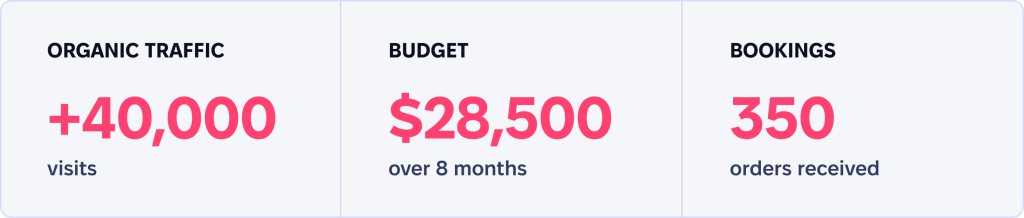
The budget was tight for a project of this scale, so we focused on the biggest problems right away. That let us redirect crawl budget back to commercial pages, eliminate cannibalizing clusters, and rebuild the destination page template from scratch. The result is growth in organic traffic, bookings, and search visibility.
Who is Our Client?
An Australian platform for booking hotels and apartments for domestic trips came to us. Over six years, the company had built a solid position in the Australian and New Zealand markets.
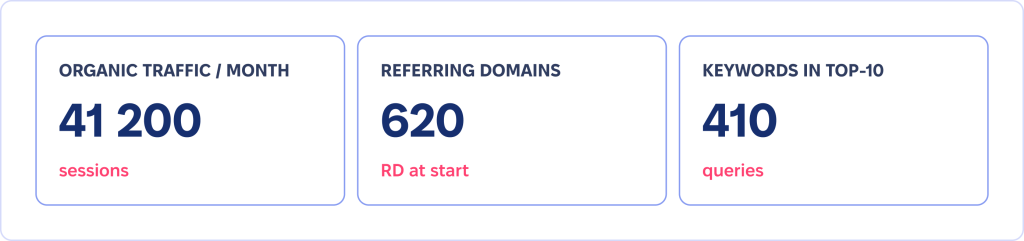
Growth had been relying on paid search, and up to a point, that worked. But acquisition costs kept climbing while organic traffic stayed flat, contributing just 12% of bookings. An earlier attempt to fix this with content didn’t help either. The previous contractor spent eight months publishing 60 blog articles with zero impact on traffic.
So the client was looking for a partner to own the project end-to-end: technical SEO, site structure, keyword research, content, and link building. Another condition was that results had to be measured in bookings, not sessions or rankings.
Goals for the 8 Months
During our first consultation, we agreed on the scope with the client. The budget didn’t cover everything, so some items had to be cut at the planning stage. The final list included:
- Redirecting crawl budget back to commercial pages.
- Eliminating cluster cannibalization and building an intent map.
- A new destination page template: seasonality, practical tips, FAQ.
- Keyword research accounting for seasonal windows and school holidays by state.
- Links from Australian travel media and tourism organizations.
- End-to-end analytics from session to confirmed booking.
That’s how our 8-month engagement began. The client’s team was responsible for implementing technical fixes and signing off on each stage. We handled everything else: audit, structure, content, links, and analytics. What came out of it (and where we got it wrong) read on.
How We Hit Our Goals
The previous contractor tried to fill the platform’s blog with content and got nowhere. That’s not the copywriter’s fault. When over 60% of the crawl budget is going to filter pages, you have to stop that first. Sequencing is everything here.
COO, NeedMyLink
1. Log File Analysis and Technical Foundation
First, we pulled six months of server logs. It turned out that 63% of Googlebot’s crawl activity was going toward filter combinations that should never have been indexed in the first place. And 14,200 property pages hadn’t been crawled even once.
The fixes were clear: blocking filter parameters from crawling, canonicalizing sort variations, trimming the sitemap from 34,100 URLs down to 9,400 priority pages, and rebuilding internal linking from destination pages to property listings. Rolling all of this out on the client’s side took 7 weeks.
In parallel with the dev work, we tackled keyword research: we sorted 2,100 queries into 95 clusters and scored each one by search volume, intent, and seasonal window.
2. Fixing Directory Structure and Cannibalization
To stop pages from competing against each other, we built an intent map. For each of the 95 clusters, we designated one target page, then either repositioned the rest around adjacent queries or merged them into the primary page. Merges like these always carry a risk of ranking drops, and we saw it: 22 pages lost positions and took 6-9 weeks to recover.
We tore down the old destination page template and rebuilt it from scratch. It now has four blocks: a seasonal calendar, practical tips, an FAQ built from GSC queries, and internal links to properties filterable by trip type. Rollout happened in waves of 40 destinations at a time, 120 in total.
3. Content Built Around the Seasonal Calendar
Next came content: 26 articles and 18 landing pages. We only published against the three nearest seasonal windows. To rank at the start of a season, a page needs to go live four to five months ahead of it.
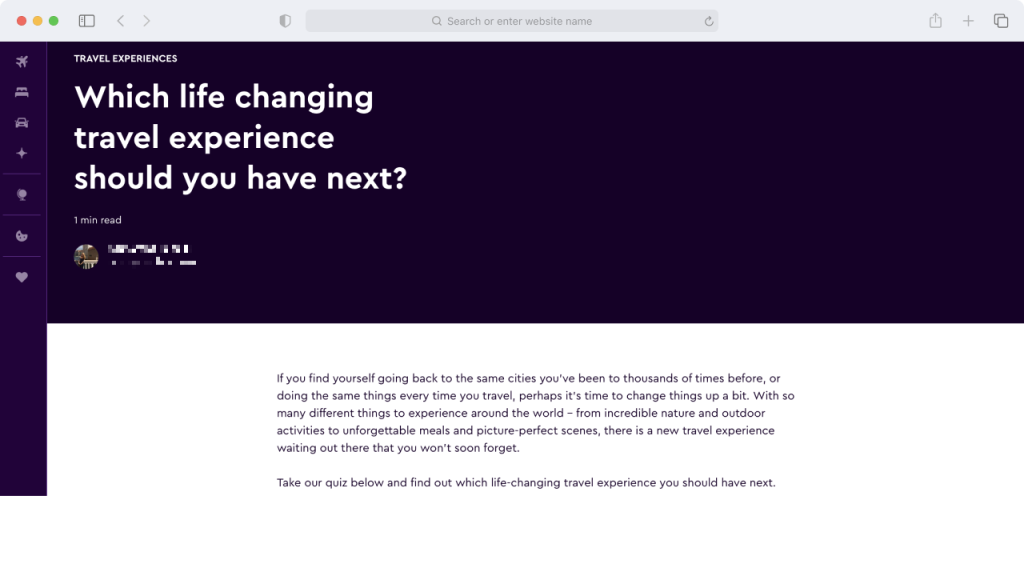
For example, we published the Cairns page in March, targeting the “cairns accommodation” cluster and related seasonal queries. Five weeks later, it hit the top 20, climbed into the top 5 by June, and peaked in traffic in August right at the start of the season.
4. Expanding the Link Profile
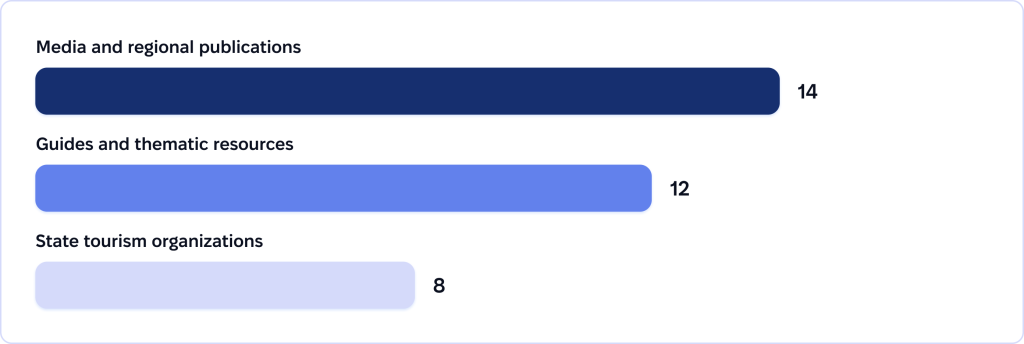
78% of the client’s 620 referring domains were property listing sites and affiliate widgets. Technically, they were relevant, but effectively a closed loop with no outside authority. There were also no links from relevant Australian media. Over eight months, we added 34: 14 from media and regional publications, 12 from guides and niche travel resources, and 8 from state tourism organizations. Anchor text split: 58% branded or URL, 30% mixed, and 12% commercial.
Travel blogger placements were run as a separate test. None of the 7 placements drove any noticeable traffic or referrals. Their audience reads stories, not actively searches for where to book. We shut this channel down after the second month.
5. Analytics and Iteration
From the start, we agreed to measure results in bookings. To do that, we connected GA4 with the booking system: every organic session is tracked through to confirmation, broken down by cluster. On projects like this, traffic without bookings doesn’t mean anything.
Once a month, we reviewed priorities against actual data. In the end, 11 destinations got extra resources, and 8 were put on hold. They are small regional spots where there’s demand, but only three or four properties on the platform, so the conversion rate doesn’t justify the content investment.
Project Takeaways
Comprehensive SEO for a booking platform comes down to one thing above all: directory visibility. We redirected crawl budget back to commercial pages, eliminated cannibalization, and rebuilt page templates around user intent.
Not everything worked, of course: 22 pages dropped after the merges, the bet on travel bloggers didn’t pay off, and the budget didn’t stretch to a full year-round content calendar. But over 8 months, organic traffic grew 96% and brought in +350 confirmed bookings.
Yevhen Humeniuk, CEO of NeedMyLink