










What Did Fully-Managed SEO Change?
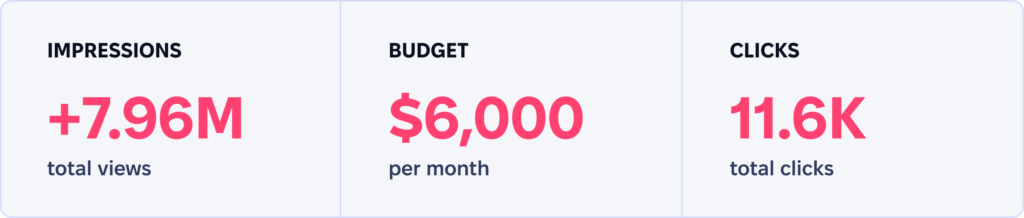
We broke down 12 service lines (everything from custom development and cloud to AR/VR) and put together a list of the landing pages that were missing. The client then built and published them in stages, from August 2025 through January 2026, which is why metrics climbed in waves as each new batch of pages got indexed. Rankings moved first: average position climbed from around 33rd to somewhere in the 17th-20th range. Traffic caught up later, and by the end, daily clicks had settled at 110, up from 65. Over the course of the project, the site picked up 11.6K total visits and 7.96M impressions!
Who is Our Client?
This company builds custom software for clients in the US and Europe, across a wide range of service lines:
- Custom Software Development
- Web & App Development
- Healthcare Software
- AR/VR Development
- Game Development
They came to us with a specific request: link building. That’s exactly what we delivered: sourcing donors in the right niche, running placements, tracking indexing. The link profile grew exactly the way it was supposed to. Organic traffic, meanwhile, didn’t budge. That gap between money going into links and zero movement in analytics is what prompted us to reconsider the approach.
Where We Started
We didn’t come to the client with an upsell pitch for more placements. We came up with a hypothesis: the site wasn’t getting traffic on a chunk of commercial queries because there were no dedicated landing pages targeting them. The only way to test that was research, so that’s what we agreed to do first.
- Keyword research: collecting and clustering commercial queries across the entire service stack.
- Competitor analysis: breaking down the site structure of four major players in the market.
- Merging both lists and identifying which service lines warranted a dedicated page.
- Prioritizing by demand, business relevance, and likelihood of driving commercial traffic.
- Rolling pages out in stages, with a control measurement at each point.
We also nailed down roles from the start. Research, clustering, and the page list were on us. Content, meta tags, and layout were handled by the client’s own team.
How We Did It
In this case, we could have just gone along with it and sold the client another package of placements. Especially since we were doing good work: the links were live, donors were on-topic, and the profile was growing. But links strengthen a page, not a site as a whole, and if the right page doesn’t exist, there’s nothing to strengthen. We noticed the company was selling more service lines than it had landing pages for, and we said so directly.
CEO, NeedMyLink
1. Finding New Service Pages to Build
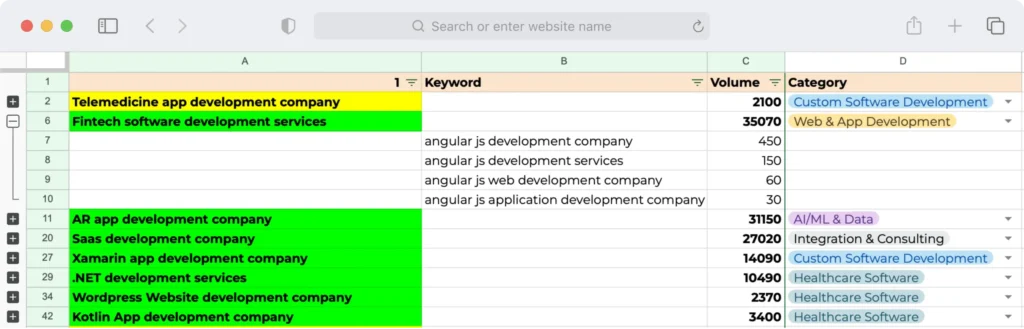
Keyword research in the IT niche produces a deceptively large volume. There are plenty of queries, the search volumes look attractive, and it’s easy to end up with a list of a few hundred “promising” pages. So we worked in two passes. First, we gathered commercial queries across the company’s core service lines, then started filtering. We cut clusters that the company could technically claim but had no real case studies to back up. What was left was demand backed by real expertise and a real shot at getting a quote request. Those clusters became the foundation for the new page list.
2. Competitor Structure Analysis
Alongside the keyword research, we broke down the service structures of four major competitors that consistently rank at the top for commercial queries in the niche.
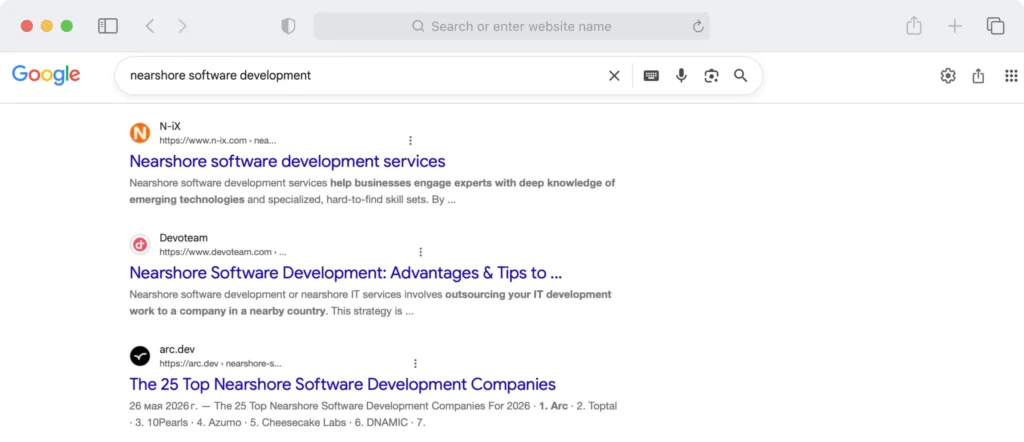
We weren’t looking at content or links here, just the page map itself: which service lines got their own dedicated URL, how adjacent services were separated out, and where a competitor built a page around a technology versus around an industry.
That’s how we found service lines missing from both the client’s site and our initial keyword research: nearshore and offshore development, backend and frontend as standalone services, development consulting, ERP, firmware, PWA, API integration and API consulting, legacy system modernization, cloud data migration, and industry-specific pages for real estate, retail, insurance, and DeFi.
The value of this exercise is that demand for these service lines is already proven. If the niche leaders maintain dedicated pages for offshore development, that means the demand is there, and someone else has already validated it before us.
3. Building the Final Landing Page List
Going into this stage, we had far more candidates than those who ultimately made the final list. Creating a page is easy, maintaining dozens of landing pages, half of which will never bring in a single client, is expensive and pointless.
So every service line had to pass three filters. First, is the service actually relevant to the client’s business? Does the company genuinely offer it? Second, is there established search demand for it? Third, is the page capable of driving commercial organic traffic?
Whatever passed all three filters made it into the final list. We sequenced page creation accordingly: big, high-value core services first, then narrower technology- and industry-specific pages.
4. Reporting and Results
The hardest part of a project like this is the first two months after new pages go live, when the work is done but analytics still show nothing. So we logged baseline metrics before starting and set expectations up front for the order in which results would show up.
That order played out exactly as expected. Rankings moved first: in September, average position climbed from 33rd to the 17th–20th range, a jump of 13 to 16 spots. This happened before traffic showed any noticeable growth, since Google starts ranking a page higher first, and only later does that translate into additional clicks.
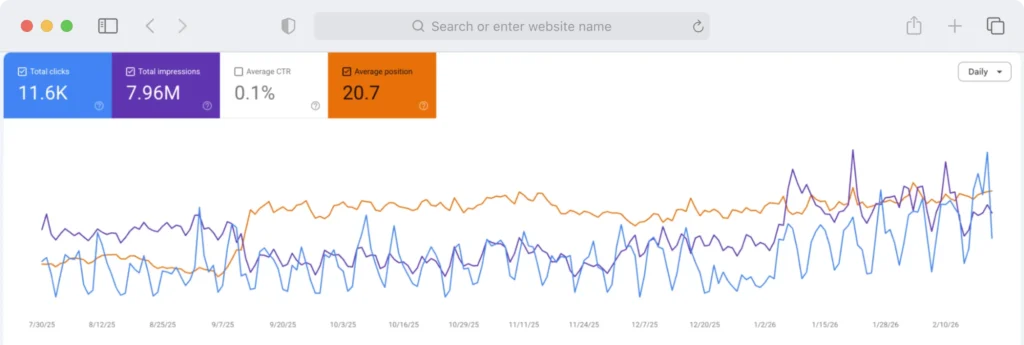
Monthly reporting tracked which pages from the new list were getting indexed, which were gaining ground, and which clusters were still stuck and needed to be supported with the links.
Takeaways
This case is a good illustration that link building isn’t always the main lever for growth. The link profile gave the site a solid foundation, but that authority was hard to put to use as long as some commercial intents had no relevant page to land on at all.
Once the structure expanded, Google had more URLs that mapped precisely to individual queries. The site started ranking for a wider set of clusters, average positions climbed, and that growth translated into a steady increase in organic traffic.

Yevhen Humeniuk, CEO of NeedMyLink